
Quick Answer
A nail dehydrator can contribute to dry, brittle-feeling nails when it is used too often, applied heavily, or combined with aggressive buffing, acetone removal, and repeated gel or acrylic services. The dehydrator’s job is to temporarily remove surface moisture and oils for better adhesion, so careful application matters. If your nails are already fragile, follow dermatologist-backed manicure safety advice and give them time to recover.
Signs your nail-prep routine may be too drying
- Peeling tips: Thin layers begin separating at the free edge.
- Frequent cracking: Nails snap during normal daily tasks.
- Chalky surface: The natural nail looks unusually dry or dull after removal.
- New sensitivity: Filing or pressure feels uncomfortable when it normally would not.
- Repeated splitting: Damage keeps returning between manicures.
What to do first
- Pause dehydrator, aggressive buffing, and enhancements if the natural nail is visibly thin or peeling. Keep nails short, moisturize them regularly, and allow healthier nail to grow forward.
If you’re wondering, “Is my nail dehydrator making my nails brittle?”, you are asking the right question. The answer is possible, but the dehydrator is often only one part of the problem.
I pay attention to the entire manicure cycle: prep, application, wear, removal, and aftercare. A gentle dehydrator step can be useful, while several drying or abrasive steps stacked together can leave natural nails looking rough and fragile.
In This Guide
- Can a Nail Dehydrator Make Your Nails Brittle?
- Nail Dehydrator vs. Primer vs. Acetone
- Why Are My Nails Brittle After a Manicure?
- Are My Nails Dry, Damaged, or Having a Reaction?
- How Should You Use Nail Dehydrator Safely?
- What Should You Do If Your Nails Are Already Brittle?
- When Should Brittle Nails Be Checked Professionally?
- Frequently Asked Questions
- Final Takeaway
Can a Nail Dehydrator Make Your Nails Brittle?
Yes, a nail dehydrator can be part of a routine that leaves nails feeling brittle, especially when fragile nails receive repeated solvent exposure. However, dehydrator use alone is not always the main cause.
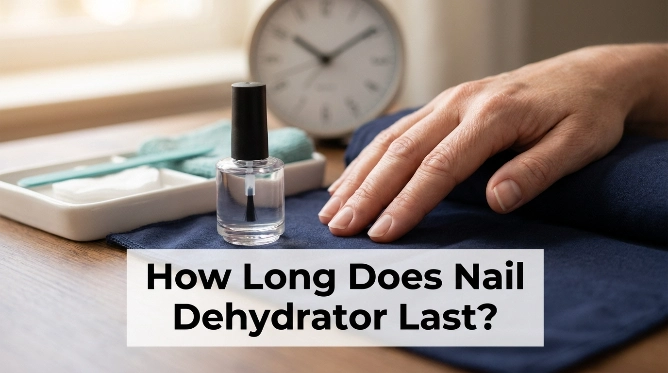
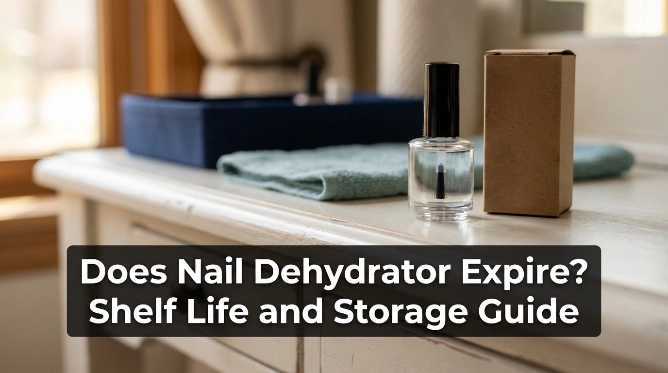
Definition: A nail dehydrator is a prep product designed to temporarily remove surface moisture and oils from the natural nail plate before gel, acrylic, extensions, or another enhancement is applied.
Removing surface oil can improve adhesion. That is useful because excess oil or moisture may make some nail products lift earlier.
The problem starts when “dry enough for adhesion” becomes “keep drying and filing until nothing is left.” More preparation does not automatically mean better preparation.
Why nails can feel drier afterward
Many nail-prep products rely on fast-evaporating solvents. Those products can leave the surface temporarily dry, which is their intended effect.
Problems become more likely when you combine dehydrator with several other stressors:
- Heavy buffing: Removes part of the natural nail surface.
- Repeated prep: Exposes the same nail to drying products again and again.
- Long acetone soaks: Can leave nails and surrounding skin feeling dry.
- Peeling enhancements: May pull superficial nail layers away with the product.
- Back-to-back manicures: Give already stressed nails little time between services.
The American Academy of Dermatology notes that artificial-nail preparation and removal can leave natural nails thin, brittle, and dry. Its guidance on reducing artificial nail damage also emphasizes gentler habits between services.
The nail dehydrator may not be the only culprit
I would not automatically blame one small bottle on the manicure table. Look at everything that happened before and after it.
If you buffed aggressively, applied primer, wore enhancements for weeks, filed them down, soaked in acetone, and scraped off residue, the natural nail has experienced much more than dehydration alone.
That distinction matters. Changing only your dehydrator may not solve brittleness if removal technique is causing most of the damage.
Section Takeaway: Nail dehydrator can contribute to dryness, but repeated filing, solvent exposure, enhancement wear, and forceful removal often create the bigger cumulative problem.
Nail Dehydrator vs. Primer vs. Acetone: What’s the Difference?
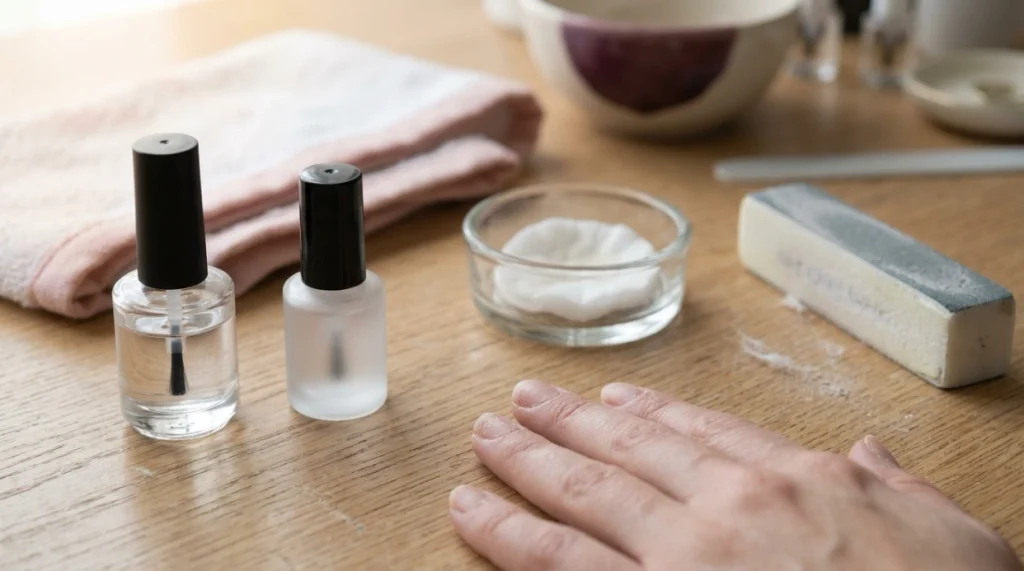
A dehydrator, primer, and acetone are not interchangeable. Each serves a different purpose, even though all three may appear during a manicure.
| Product | Main Purpose | When Used | Main Concern With Overuse |
|---|---|---|---|
| Nail dehydrator | Removes temporary surface moisture and oils | Before enhancement application | Excessive dryness or irritation |
| Nail primer | Helps certain enhancement systems bond | Usually after prep and dehydrating | Skin irritation if misapplied |
| Acetone | Removes or softens certain nail products | Mostly during polish or enhancement removal | Dryness with repeated or prolonged exposure |
| Buffer or file | Shapes or lightly prepares the surface | Prep and removal | Physical thinning from over-filing |
One important difference is that filing physically removes nail material. A liquid dehydrator does not perform that same mechanical action.
That is why a nail that looks paper-thin after several manicures may have been over-filed rather than simply “too dehydrated.” The two problems can also happen together.
Why Are My Nails Brittle After a Manicure?
Brittleness after gel, acrylic, dip, or extensions often comes from cumulative stress. The manicure should be evaluated as a full process rather than one isolated step.
1. The natural nail was over-buffed
Buffing should not leave your natural nail feeling hot, sore, or dramatically thinner. Repeatedly removing surface layers can make the nail flexible and prone to peeling.
If your nails feel unusually tender immediately after prep, reduce mechanical filing at future appointments.
2. Removal was too aggressive
Picking, peeling, scraping, and excessive filing can remove natural nail layers with the enhancement. I consider removal just as important as application.
For gel services, the AAD recommends careful removal and moisturizing between manicures in its healthy gel manicure guidance.
3. Your nails never get a recovery period
Some healthy nails tolerate repeated cosmetic services better than others. Nails that already peel or split deserve a gentler schedule.
A brief polish-free period will not instantly replace damaged nail. It can, however, reduce new cosmetic stress while healthier nail grows.
4. Your everyday routine is drying too
Nail damage does not happen only at the salon. Repeated handwashing, cleaning chemicals, frequent sanitizer use, and wet work can add to dryness.
That combination may explain why the same manicure routine feels fine for one person but leaves another person’s nails cracking.
5. You are using several strong prep products
Using a dehydrator exactly as directed may be reasonable. Reapplying it several times because the nail does not look “dry enough” may be unnecessary.
The same rule applies to primers and solvents. Use the minimum product needed for the system you are following.
Are My Nails Dry, Damaged, or Having a Reaction?
Dryness usually causes roughness, peeling, splitting, or a chalky appearance. Redness, itching, swelling, blistering, or burning around the nail suggests a different problem and should not be dismissed as simple dehydration.
Typical signs of dryness or brittleness
- Edges split or peel into thin layers.
- Nails break before gaining length.
- The surface looks dull after product removal.
- Nails feel less flexible than normal.
- Small cracks keep appearing at the free edge.
Signs that deserve more caution
- Itching around the fingertips or cuticles
- Red, swollen, or blistered skin
- Persistent burning
- Nail lifting from the nail bed
- Unexpected discoloration
- Drainage, warmth, or increasing pain
Nail cosmetics can cause irritant or allergic contact dermatitis in some people. DermNet’s overview of nail cosmetics allergy describes reactions involving products such as nail enamels, removers, adhesives, and artificial-nail materials.
Do not repeatedly expose irritated skin to a product just to see whether the reaction happens again. Stop the suspected product and seek professional advice if symptoms persist or worsen.
Vet note: For this human nail-care topic, the appropriate professional is a dermatologist or other qualified healthcare professional. Seek medical advice for persistent pain, swelling, nail separation, significant discoloration, or suspected allergy or infection.
How Should You Use Nail Dehydrator Safely?
Use nail dehydrator sparingly and only where the manicure system calls for it. A thin, controlled application is usually more sensible than repeatedly saturating the nail.
- Start with clean nails. Remove visible product residue without aggressively grinding the natural nail.
- Keep prep gentle. If surface preparation is required, use light pressure and avoid thinning the nail plate.
- Apply dehydrator to the nail plate. Avoid flooding the cuticle or surrounding skin.
- Use one light application unless directions say otherwise. More product does not guarantee better adhesion.
- Allow it to evaporate. Follow the manufacturer’s system instead of improvising extra prep steps.
- Continue with the compatible primer or enhancement. Do not mix incompatible systems without checking product instructions.
Should you use dehydrator on brittle nails?
If your nails are already peeling, sore, extremely thin, or breaking repeatedly, I would prioritize recovery over maximizing enhancement adhesion. Covering damaged nails can hide a problem without correcting it.
Mayo Clinic’s healthy fingernail guidance recommends limiting harsh nail-care products and seeking professional advice for persistent nail problems.
Do you need dehydrator before every manicure?
That depends on the product system. Some gel, acrylic, extension, and press-on systems specifically call for a dehydrator, while other routines may use different preparation steps.
Follow the instructions for the products you own. Do not automatically add more chemicals because a social-media tutorial includes them.
What Should You Do If Your Nails Are Already Brittle?
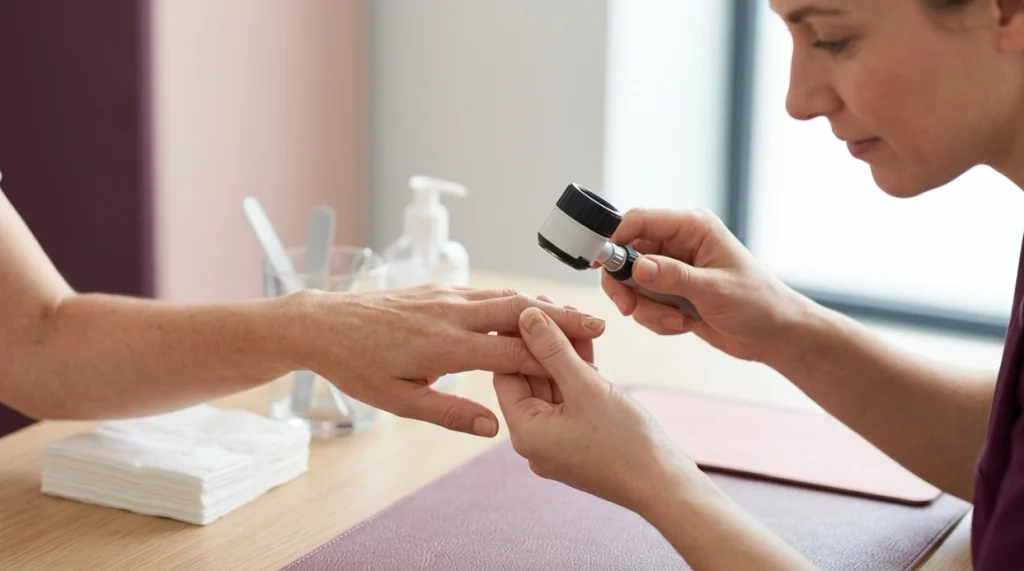
Start by reducing whatever is repeatedly stressing the nail. You cannot glue lost natural nail layers back permanently, so protection while new nail grows is the practical goal.
Try this simple recovery routine
- Keep nails shorter: Short edges experience less leverage and snagging.
- Moisturize daily: Apply hand cream or petroleum jelly to nails and surrounding skin.
- Use cuticle oil: Regular oil can make the nail and surrounding skin feel more conditioned.
- Wear gloves: Protect hands during dishes, cleaning, and prolonged wet work.
- Stop peeling product: Remove enhancements with the method designed for that system.
- Reduce buffing: Smooth obvious snags instead of repeatedly thinning the top surface.
- Pause harsh prep: Give visibly stressed nails a break from dehydrator and repeated enhancements.
Cleveland Clinic’s discussion of brittle nails and nail care also highlights moisturizing, shorter nails, and reducing repeated cosmetic stress.
How long does recovery take?
Do not expect a damaged area to transform in three days. The appearance improves as healthier nail grows from the base and the compromised portion gradually moves toward the free edge.
Your job is to protect that new growth. Constantly buffing the old damage away can create a second problem.
What about nail hardeners?
A hardener may help some nails resist bending, but harder is not always healthier. An overly rigid nail may still crack when stressed.
I prefer to start with gentle protection and moisture rather than stacking several new treatments onto a nail that is already irritated.
Section Takeaway: Recovering brittle nails is mostly about stopping repeated damage, keeping the nail protected and moisturized, and allowing healthier nail to grow forward.
When Should Brittle Nails Be Checked Professionally?
Occasional peeling after a rough manicure is different from a persistent or sudden nail change. Seek professional evaluation when the problem does not improve or comes with other symptoms.
Pay particular attention to:
- Increasing pain or tenderness
- Redness, swelling, heat, or drainage
- A nail separating from the nail bed
- Green, yellow, brown, black, or unusual discoloration
- Significant thickening or crumbling
- Changes affecting several nails without an obvious cosmetic cause
- Persistent itching or rash after gel, acrylic, glue, or primer exposure
- Brittleness that continues despite gentler nail care
Nail changes can sometimes have causes unrelated to manicures. That is why assuming every brittle nail is “just dehydration” can delay the right diagnosis.
Vet note: Persistent or unexplained nail changes should be discussed with a dermatologist or qualified healthcare professional, especially when pain, inflammation, infection signs, or nail separation are present.
Frequently Asked Questions
Can I use nail dehydrator if my nails are naturally dry?
You may be able to use it, but apply it conservatively and follow the manicure system’s directions. If your nails already split or peel easily, consider whether the enhancement requires dehydrator at all and avoid combining it with aggressive buffing or unnecessary extra solvent steps.
Is nail dehydrator supposed to make nails look white?
Some nails may temporarily look matte, chalky, or less shiny after oils are removed from the surface. However, persistent white patches, roughness, peeling, or tenderness after repeated services can indicate that your overall preparation or removal routine is too harsh.
Can I put cuticle oil on immediately after nail dehydrator?
Not before applying the enhancement, because oil can work against the clean, oil-free surface you just created. Use oil during aftercare or between manicures rather than immediately before gel, acrylic, or adhesive application unless your product instructions specifically say otherwise.
Is acetone the same as nail dehydrator?
No. Acetone is commonly used as a remover or solvent, while a nail dehydrator is formulated as a preparation step before enhancement application. They can both leave the nail surface feeling dry, but they serve different purposes in a manicure.
Should I stop gel nails if my natural nails are brittle?
A temporary pause can be sensible when nails are peeling, thin, tender, or repeatedly breaking. Use the break to moisturize and protect them, and reconsider your prep and removal technique before your next gel manicure.
Will brittle nails become normal again?
Cosmetically damaged nails often improve as healthier nail grows out, provided the repeated source of damage is reduced. Persistent brittleness, major discoloration, pain, thickening, or nail separation deserves professional assessment because cosmetic damage is not the only possible cause.
Final Takeaway: Is Your Nail Dehydrator the Problem?
If your nail dehydrator seems to be making your nails brittle, do not focus only on the bottle. Look at your complete routine, especially filing, repeated prep, enhancement wear, acetone exposure, and removal.
A dehydrator should be a small, controlled preparation step. It should not become an excuse to repeatedly strip, scrub, or over-process the natural nail.
For brittle nails, simplify your routine for a while. Keep nails short, moisturize them regularly, protect them during wet work, and avoid peeling or aggressively filing enhancements.
If pain, swelling, discoloration, persistent peeling, or nail lifting appears, stop treating it as a cosmetic problem. A dermatologist or other qualified healthcare professional can help identify whether irritation, allergy, infection, or another nail condition is involved.