
What Hard Gel Is Called at a Nail Salon: A Clear Guide to the Right Service

If you walk into a salon asking for “hard gel,” you may get a few different terms back: builder gel, sculpting gel, structure gel, or sometimes hard gel overlay. The exact wording depends on the salon, the brand they use, and how that technician organizes services. Brand-specific names can vary too, so the same product category may be labeled differently from one salon to another.
The key idea is simple: hard gel is the stronger, non-soak-off gel enhancement used to build structure, add strength, and sometimes add length. If the menu does not say “hard gel” exactly, the salon may still offer it under one of those related names.
A useful comparison point: if a product is soak-off, it is generally categorized as a soft gel; if it is not soak-off, it is categorized as a hard gel. That distinction matters because it affects both the service menu and the removal method. As one educational nail source puts it, “if it is soak-off, it is categorized as a soft gel. If it is not, it is categorized as a hard gel” (Paola Ponce Nails).
What Hard Gel Is and Why Salons Use It
Hard gel is a nail enhancement product cured under a UV or LED lamp. Salons use it when the goal is strength, structure, and a more durable finish than regular gel polish can provide. In practical terms, that means it can help support natural nails that need reinforcement, or it can be used to create an extension when a client wants added length.
A salon may recommend hard gel when a client wants:
– a stronger natural nail overlay
– a structured manicure with more support at the apex
– a nail extension built from gel
– a more refined, natural-looking enhancement than some other systems
One industry source describes hard gel as a rigid gel material cured under a lamp and notes that builder-type structured gel can be used as an overlay (Mars Nails). Another explains that hard gel is used to strengthen, shape, and extend nails (Glitterbels).
The practical takeaway: hard gel is usually chosen for structure first, color second. If your goal is “make my nails stronger and keep them looking natural,” hard gel is often the service category you want to ask about.
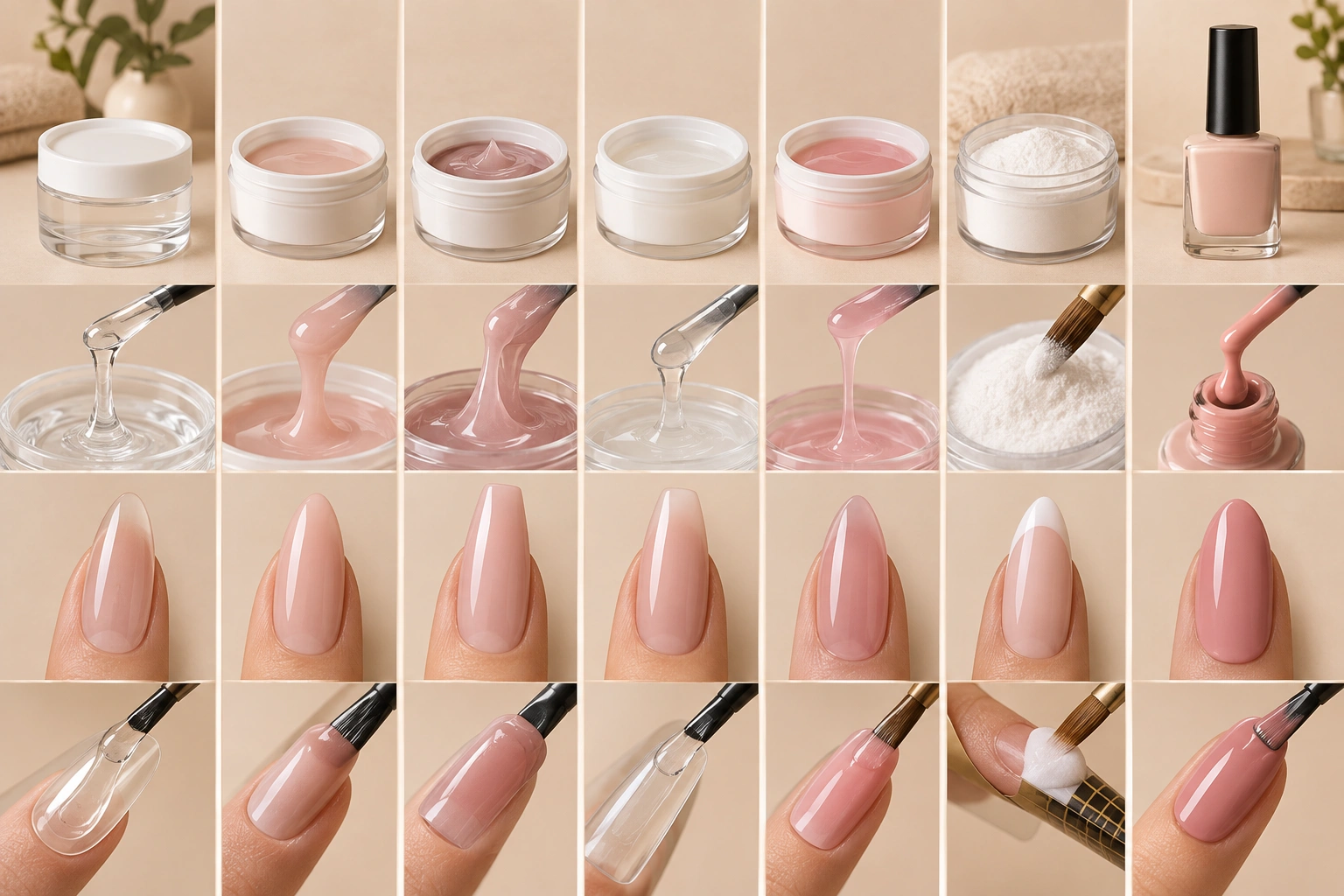
Common Salon Terms for Hard Gel
Salon language is not always consistent. That is where a lot of booking confusion starts.
Here are the terms you may see:
– Hard gel
– Builder gel
– Builder gel overlay
– Sculpting gel
– Structure gel
– Hard gel overlay
These can overlap, but they are not guaranteed to mean exactly the same thing in every salon. Some salons use “builder gel” as the service name, while the technician may be using a hard gel product underneath that label. Others may use “structure gel” to describe the same type of strengthening service.
If the wording feels vague, ask what product they use and whether it is soak-off or not. That matters because “builder gel” can be a broad label. In some salons it may refer to a hard gel service; in others, the product may be a more flexible gel system. Product lines can also use brand-specific names, so the salon may not list the exact technical term you expect.
Hard Gel vs Soft Gel, Builder Gel, Acrylic, and Gel Polish
This is the part that clears up most booking mistakes.
| Service | What it is called in salons | Main purpose | Removal method | Best use case |
|---|---|---|---|---|
| Hard gel | Hard gel, builder gel, sculpting gel, structure gel | Strength, structure, overlays, extensions | Removal depends on the specific product and salon protocol; often filed down or maintained by a technician | Clients who want durable enhancement and a natural-looking finish |
| Soft gel | Soak-off gel, gel overlay in some menus | Color or lighter enhancement | Soak-off with acetone is common | Clients who want easier removal and less structural support |
| Builder gel | Builder gel, builder overlay, structured manicure | Build strength and shape | Depends on the product; may be soak-off or not | Clients who want reinforced nails with a built apex |
| Acrylic | Acrylic nails, acrylic overlay, acrylic extensions | Strong enhancement and length | Usually filed off by a technician | Clients who want a very familiar, rigid enhancement system |
| Gel polish | Gel manicure, gel color | Color and shine | Soak-off | Clients who want polish wear, not structural strength |
Hard gel vs soft gel
The biggest difference is removal and rigidity. Soft gel is typically soak-off. Hard gel is not. That is why hard gel is often better when the client wants structure, while soft gel is usually better when easy removal is the priority.
Hard gel vs builder gel
This is where salon terminology gets messy. Some salons use builder gel as the main menu term for hard gel services. Others separate the two by brand or formula. So if you hear “builder gel,” do not assume it is automatically soft or hard—ask whether it is soak-off and whether it is meant for overlays or extensions.
Hard gel vs acrylic
Acrylic and hard gel both build strength, but they are not the same service. Acrylic is mixed and air-cures; hard gel is cured under a lamp. Acrylic is still a common choice for clients who want a very rigid, familiar enhancement. Hard gel is often preferred by clients who want a smoother, more natural-looking finish.
Hard gel vs gel polish
Gel polish is color. Hard gel is structure. A gel manicure can look polished and last well, but it does not do the same job as hard gel when the goal is reinforcement or length.
If you are comparing hard gel to acrylic or gel polish, a useful internal reference is our guide to what to get at the nail salon, which can help you match a service to your nail goals.
How Hard Gel Is Applied in a Salon
A standard hard gel appointment usually follows a few predictable steps:
-
The technician preps the natural nail
This usually includes shaping, cuticle work, and removing surface shine so the product can adhere properly. -
The gel is applied in layers
Depending on the service, the technician may apply a base layer, then build structure, then refine the shape. -
Each layer is cured under a lamp
Hard gel is set under a UV or LED lamp rather than air-dried like regular polish. -
The nail is shaped and refined
The technician files and smooths the enhanced nail to create the final look. -
Color or top coat may be added
Some clients stop at a natural-looking nude finish; others add gel color on top.
This is why hard gel appointments usually take longer than a basic polish service. The extra time is spent building structure, not just applying color.
When to Choose Hard Gel for Overlays, Extensions, or Fill-Ins
The right hard gel service depends on what your nails need.
Choose a hard gel overlay if:
- your natural nails are already at a length you like
- you want extra strength without added length
- your nails bend, peel, or chip easily at the free edge
An overlay is often the simplest hard gel option. It reinforces the natural nail while keeping the existing length.
Choose a hard gel extension if:
- you want to add length
- your natural nails are very short
- you want a sculpted shape that does not depend on your natural nail length
Extensions require more structure and maintenance, but they give the most dramatic change.
Choose a fill-in if:
- you already wear hard gel
- the new growth is visible
- the enhancement is still intact and not lifting
A fill-in is usually more efficient than full removal and reapplication. This is one reason clients choose hard gel in the first place: it can be maintained over time instead of starting over every visit.
Hard gel can also be a good fit for nails that are thin, flexible, or prone to breaking, since the service is designed to add structure and support. If your main goal is strength rather than a simple color change, that is usually the right direction to explore.
If you are comparing maintenance costs and service types, our guides on how much builder gel costs at a nail salon and how much acrylic nails cost at a nail salon can help you think through the trade-offs before you book.
How to Ask for Hard Gel When Booking or at the Appointment
Use direct wording. The more specific you are, the easier it is for the technician to guide you.
Try these phrases:
– “Do you offer hard gel or builder gel for overlays?”
– “I want a hard gel manicure with strength, not just gel polish.”
– “Do you do hard gel extensions?”
– “Is your builder gel soak-off or a true hard gel system?”
– “I need a fill-in, not a full removal.”
If you are calling a salon, a very practical question is:
“Do you offer hard gel, builder gel, or sculpting gel for nail overlays or extensions?”
That wording gives the front desk enough detail to match you to the right service, even if the menu uses a different term.
If you are booking online, look for phrases like:
– structured manicure
– builder gel overlay
– hard gel extension
– sculpted gel nails
– gel overlay
– enhancement service
If you are unsure whether the salon’s terminology matches your goal, ask what the service is designed to do: strengthen natural nails, add length, or both. That one question usually clears up the confusion faster than asking about product names alone.
How to Tell Whether a Salon Offers Hard Gel
You do not always have to see the words “hard gel” on the menu.
Look for service names like:
– builder gel
– structured manicure
– sculpted gel nails
– gel overlay
– enhancement gel
– nail extension service
Then ask one follow-up question: “Is that a soak-off soft gel service, or a harder builder system?”
That question is useful because some menus are written for marketing rather than technical clarity. A salon may advertise “structured nails” without telling you whether the product is hard gel, builder gel, or another gel system. The technician should be able to explain the difference in plain language.
For removal and upkeep, it is also smart to ask whether the service is usually filled or fully removed. If the answer is “we usually file and refill it,” that is another sign you are dealing with a hard gel-style enhancement rather than a simple gel polish service.
Removal and Maintenance Basics
Hard gel is not treated the same way in every salon. Depending on the specific product and the salon’s protocol, it may be filed down, maintained with fills, or removed in another controlled way by a technician. That is one of the biggest maintenance differences between hard gel and soft gel.
What that means for you:
– Do not peel or pry it off
– Plan for fills if you want to keep the enhancement
– Expect removal to take more care than gel polish removal
This matters because over-filing the natural nail can cause unnecessary thinning. Professional removal or maintenance is usually the safest route when you want to protect the natural nail.
If you want a simpler removal process, soft gel may be the more convenient choice. If you want stronger structure and are comfortable with more involved upkeep, hard gel may be the better fit.
For readers who want to understand removal better, our guide on how to remove salon gel nail polish is a helpful companion read.
When to See a Nail Technician or Dermatologist
See a nail technician if you are unsure which enhancement fits your nail goals, especially if your natural nails are short, flexible, or prone to lifting. A good technician can tell you whether an overlay, extension, or fill is the right starting point.
See a dermatologist if you have ongoing nail pain, major nail changes, or concern about a skin or nail condition. A salon service should not be used to cover up a problem that needs medical attention.
FAQ: Common Questions About Hard Gel at Nail Salons
Is hard gel the same as builder gel?
Sometimes, but not always. Some salons use builder gel as their service name for a hard gel system. Others use builder gel for a different formula. Ask whether it is soak-off and whether it is meant for overlays or extensions.
Can hard gel be used for nail extensions?
Yes. Hard gel can be used for overlays, strengthening, and extensions, depending on the product and the technician’s method.
Does hard gel soak off with acetone?
Usually no. Hard gel is generally not treated like a soak-off product, but removal depends on the specific product and the salon’s protocol.
Is hard gel better than acrylic?
Not universally. Hard gel may feel more natural or look more refined to some clients, while acrylic remains a strong, familiar option. The better choice depends on the look, maintenance, and removal process you want.
How do I know if a salon offers hard gel?
Check for terms like builder gel, sculpted gel, or structured manicure, then ask whether the service is hard gel or soft gel. If the salon can explain the removal method clearly, that is a good sign they understand the difference.
What should I say when booking?
Try: “Do you offer hard gel or builder gel for overlays or extensions?” That phrase is specific enough to help the salon match you to the right service.
Hard gel is one of those salon terms that becomes much easier once you know the language behind it. If you can remember the main idea—hard gel is the stronger, non-soak-off enhancement category—you will be able to read menus, ask better questions, and book with much more confidence.

