
Why Your Nail Polish Stays Wet Too Long: A Beginner’s Guide to Faster Drying

If your manicure still feels soft, sticky, or dentable long after you painted it, the problem is usually not that you “did it wrong” in one dramatic way. More often, it’s a mix of thick coats, too many layers, an older bottle, or a room that makes polish dry slowly.
The good news: most slow-drying polish issues are fixable. Once you know whether the polish is only surface-dry or still soft underneath, you can choose the right next step instead of accidentally making the manicure worse.
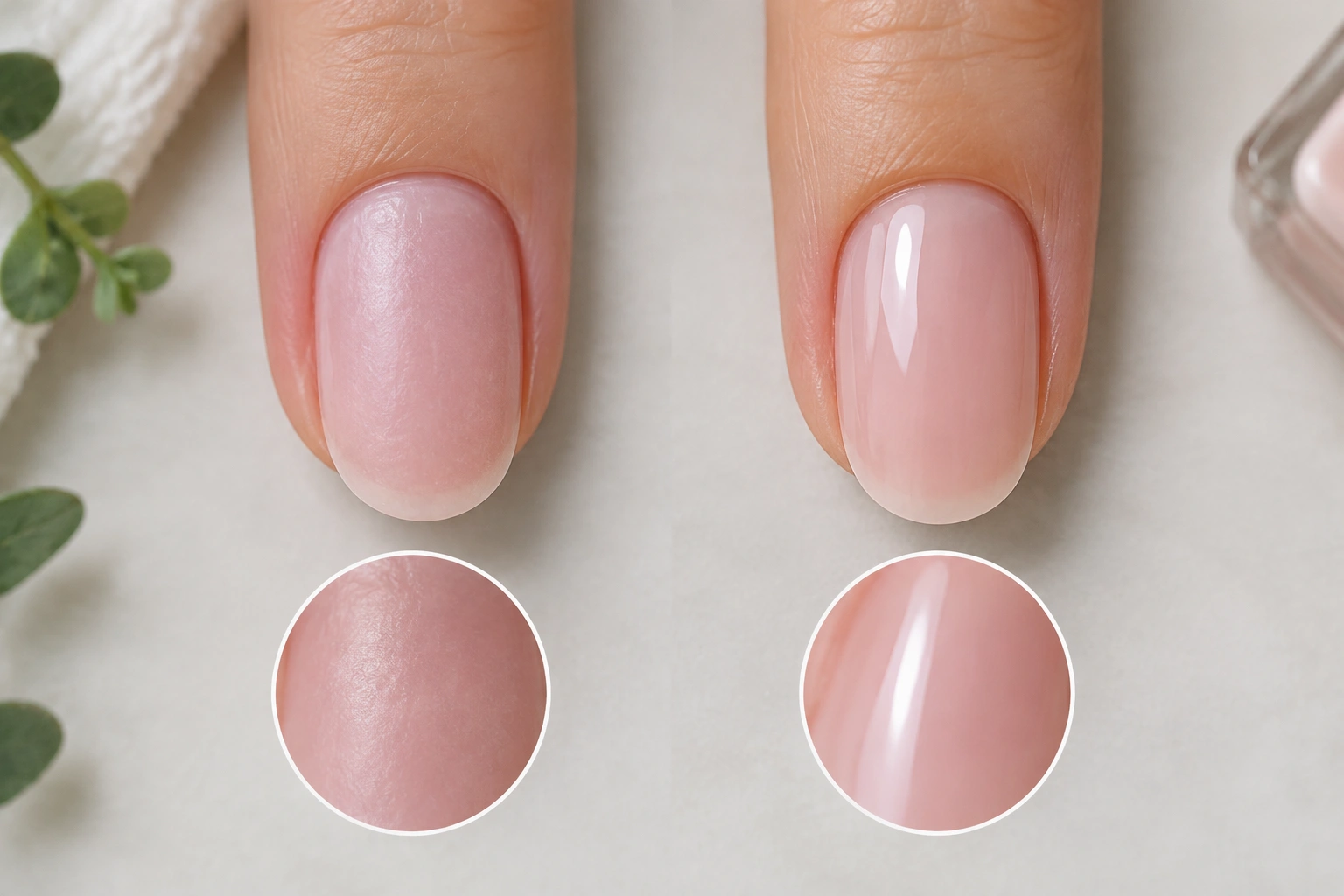
Quick Answer: Why Nail Polish Stays Wet Too Long
The most common reason nail polish stays wet is simple: the layers are too thick to dry evenly.
Nail polish dries as the liquid parts of the formula leave the nail. If you apply heavy coats, the top may seem set while the lower layers remain soft. That’s why a manicure can look fine, then smudge when you press it, bump it, or go to bed too soon.
Other common causes include:
- too many coats in one manicure
- old or thickened polish
- a humid room with little airflow
- oil, lotion, or water left on the nail
- a regular top coat that adds more drying time
If you want a related overview of normal drying expectations, you may also find this guide on how long regular nail polish takes to dry helpful.
Simple Troubleshooting Flow
If your polish is drying too slowly, check the likely causes in this order:
- Coat thickness — if the coats are thick, that is usually the main problem.
- Number of layers — a manicure with base coat, three color coats, and top coat is more likely to stay soft than one with fewer thin layers.
- Polish age and texture — if the polish is stringy, clumpy, or hard to spread smoothly, the bottle may be thickened or too old.
- Room conditions — humidity, poor airflow, or painting right after a shower can slow drying.
- Top coat — a quick-dry top coat can help, but only if the layers underneath are already fairly thin and even.
That order matters because a top coat cannot fully rescue a manicure that was applied too thickly or with an old, gummy formula.
What Drying Actually Means: Surface-Dry vs. Fully Dry
This is the part that confuses most beginners.
A polish can feel dry on top and still be soft underneath. That means the surface is no longer tacky, but the lower layers are still setting. If you touch the nail lightly, it may seem fine. If you press it, you can leave a dent.
Here’s the practical difference:
| Type of dry | What it feels like | Typical timing in normal home use | What can still happen |
|---|---|---|---|
| Surface-dry | The top layer feels dry or only slightly tacky | Often after about 10 to 30 minutes with thin coats, though some formulas take longer | Pressing, bumping, or sleeping on it may leave marks |
| Fully dry | The polish feels firm through the whole layer | Often takes several hours, and thicker manicures can take longer | It resists smudges much better in normal use |
A manicure that still feels a little soft after 20 to 30 minutes can be normal, especially if you used multiple coats. If it still dents easily after an hour, that is slower than most beginner-friendly home manicures should be. Thick layers, an old bottle, or humid conditions are the first things to check.
Beginners often test polish too soon. That “just checking” touch can leave a fingerprint or drag the color. If you need a deeper explanation of this difference, this article on how long nail polish takes to dry completely is a useful companion read.
The Most Common Reasons Nail Polish Won’t Dry Properly
1. Thick coats trap wet polish underneath
Thick coats are the biggest drying problem I see.
A thick coat looks faster in the moment because it covers the nail quickly. But it also holds more liquid, so the bottom takes much longer to set. That can leave the manicure soft for a long time, even if the top seems fine.
A better approach is two or three thin coats instead of one heavy one. Thin coats spread more evenly and dry more predictably.
2. Too many layers slow everything down
Each layer adds more drying time. That includes base coat, color coats, and top coat.
If you use a base coat, three thick color coats, and a heavy top coat, you’ve created a lot of material that has to settle. For beginners, this is one of the easiest ways to end up with polish that stays tacky.
A simple rule: if the color looks opaque after two thin coats, don’t add a third just because you want to “make sure.” A third coat is usually only worth it if the first two were truly thin and the polish still looks patchy. If you already have a base coat and two solid color coats, adding a thick third coat is more likely to cause drying problems than solve them.
3. Old or thickened polish may apply poorly
Polish that has been open for a long time can become thicker, stringier, or harder to spread evenly. When that happens, it often goes on in a heavier layer than you intended.
That doesn’t always mean the bottle is unusable, but it is a warning sign. If the formula drags, clumps, or leaves visible streaks that you keep trying to fix, the polish may be part of the drying issue.
A bottle is a better candidate for replacing than rescuing if it shows signs like:
- persistent stringiness after mixing
- clumping or glooping on the brush
- uneven application that does not improve with thinner coats
- a formula that will not level smoothly even after shaking or rolling
- a texture that stays gummy or lumpy instead of becoming fluid again
If the polish is only slightly thickened, polish thinner may help. If it is clumpy, stringy, or refuses to level smoothly even after you try to mix it, it is usually time to discard or replace it.
For another common polish problem, see why nail polish separates, which often goes hand in hand with thickened bottles.
4. Humidity and poor airflow slow drying
A humid room can make polish feel like it takes forever to set. If the air already holds a lot of moisture, the polish has a harder time drying normally.
This is why polish often seems slower after a shower or in a warm, damp bathroom. A room with better airflow usually gives a better result than a still, humid space.
5. Oil, lotion, or water on the nail can interfere
Nails that still have lotion, cuticle oil, or water on them can make polish behave badly. The polish may slide around, apply unevenly, or seem soft longer than expected.
Before painting, make sure the nail surface is clean and dry. If you’ve just washed your hands, give them a moment to fully dry before starting.
How Application Affects Drying Time
Technique matters more than most beginners realize.
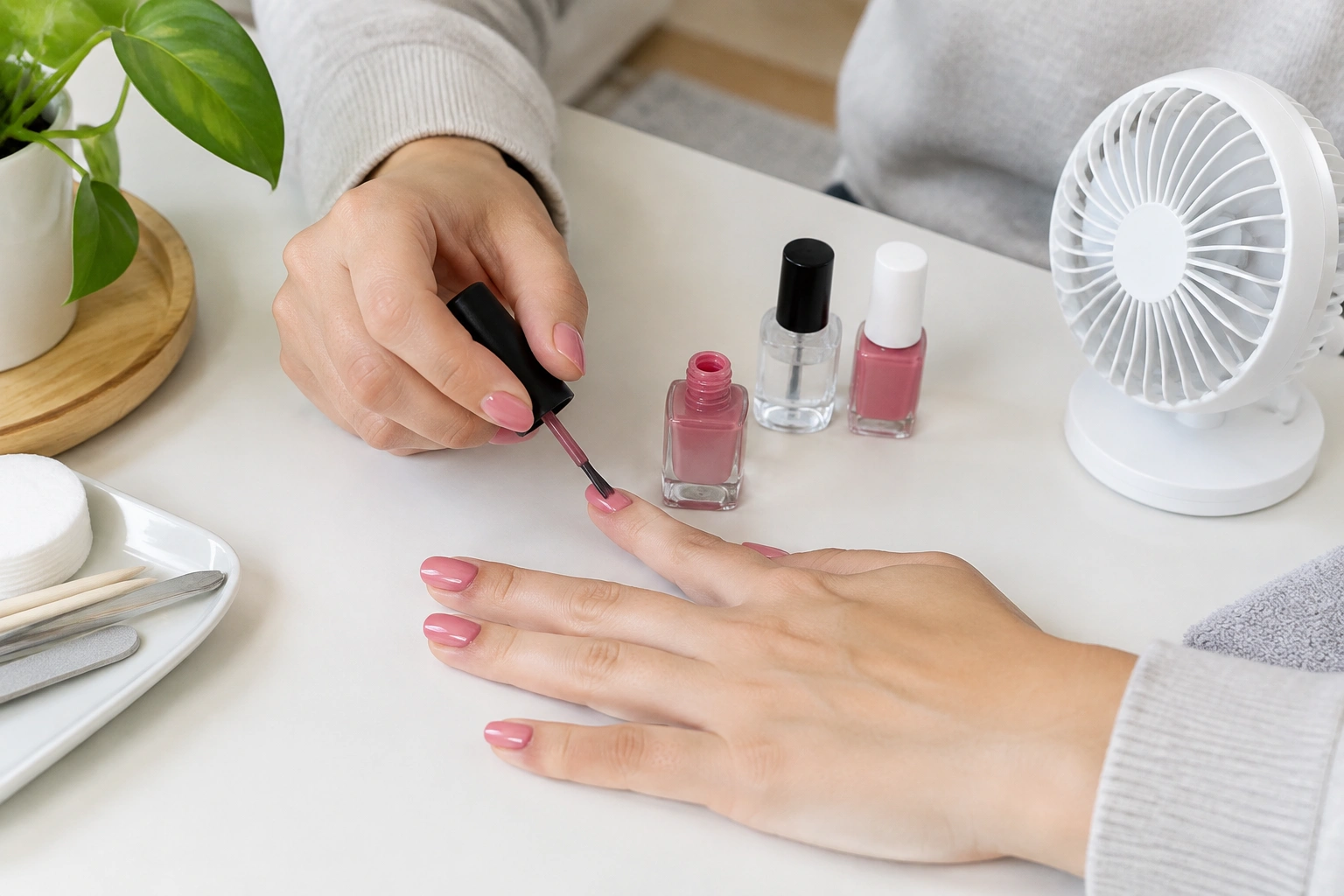
Thin coats dry faster than thick coats
Thin coats are the easiest way to improve drying time without buying anything new. They give the polish less material to set at once, which helps the manicure harden more evenly.
A thin coat should cover the nail without looking goopy. If it pools near the cuticle or sidewalls, there is probably too much product on the brush.
Wait between coats, but don’t overthink the clock
Each coat needs some time before the next one goes on. If you layer too quickly, you can trap wet polish underneath.
You do not need to stare at the clock, but you do want the coat to stop looking glossy-wet before adding the next layer. If it still looks very wet or moves when you tilt your hand, wait a little longer.
Base coat, color coat, top coat: each one adds time
A base coat helps the color grip better, but it also adds one more layer to dry. A top coat protects the manicure, but a regular top coat can also add set time if it’s applied too heavily.
That’s why a neat, thin application matters from the first step to the last.
How to Tell Whether Your Polish Is the Problem
Sometimes the issue is not your technique. Sometimes the bottle itself is the problem.
Look for these signs:
- the polish is stringy when you pull the brush out
- the formula feels thick and gloopy
- the color goes on unevenly even when you try to apply it lightly
- the finish stays soft longer than usual, even with thin coats
- the bottle has been open a long time and no longer mixes smoothly
If you notice several of these at once, the polish may be too old or too thick to perform well. In that case, repainting with a fresher bottle may save you more time than trying to rescue the manicure.
If the bottle still spreads smoothly after shaking or rolling and only seems a little thick, it may still be usable with thinner coats or a small amount of polish thinner. If it stays stringy, clumpy, or lumpy no matter what, replacing it is the safer bet.
What to Do Right Now to Help Nails Dry Faster
If your nails are already painted and still not setting well, use a rescue sequence that starts with the easiest fixes first.
1. Stop touching the nails
The first step is to leave the manicure alone. Every test touch risks dents or smears.
2. Move to better airflow
Use a fan, open a window, or move to a less humid room if you can. Gentle airflow is often the quickest low-effort help.
3. Add a quick-dry top coat only if the polish is not already too thick
A quick-dry top coat can help seal the surface faster than a regular top coat. It is most useful when the color coats were thin and the manicure is close to drying normally.
It will not fully fix a manicure that was painted too thickly or with old, gummy polish. If the lower layers are still soft, the top coat may make the surface feel better sooner, but it cannot instantly dry what is underneath.
4. Use drying drops if the surface is only lightly tacky
Drying drops can help when the manicure is mostly set but still has a sticky surface.
They are less helpful if the polish is still wet through the layers. In that case, time and airflow matter more than any add-on product.
If you want a broader timing reference, this guide on how long regular nail polish takes to fully dry can help you judge whether your manicure is simply still setting.
What Not to Do While Polish Is Drying
A few common habits make slow-drying polish worse.
Do not:
- touch the nails to “test” them every few minutes
- add lotion or oil too soon
- try to smooth a smudge while the polish is still soft
- layer on another coat because the first one looks uneven
- go to bed before the manicure is truly set
The biggest mistake is trying to fix a problem while the polish is still movable. One small touch can create a dent that is harder to hide than the original issue.
If you paint before bed, give the manicure extra care. A polish that seems dry on top can still pick up sheet marks if it has not fully set.
When to Wait Longer and When to Repaint
Here is the easiest decision rule.
If the manicure was applied in thin coats and only feels slightly tacky after 20 to 30 minutes, waiting longer is usually the right move.
If it is still denting easily after about an hour, or if it was applied thickly in the first place, waiting may not be the best use of time. In that case, repainting is often smarter than hoping the same manicure will suddenly behave.
A fresh start is also smart if the polish bottle is old, stringy, or hard to spread evenly. Sometimes the bottle is the reason the manicure keeps failing.
A Simple Beginner Routine That Dries Better
If you want fewer drying problems next time, use this basic approach:
- Clean and dry the nails fully.
- Apply one thin base coat.
- Paint two thin color coats instead of one thick one.
- Let each coat settle before adding the next.
- Finish with a thin top coat or a quick-dry top coat.
- Keep hands still and avoid touching the surface too soon.
That routine is simple, but it solves most of the drying frustration beginners run into.
When to See a Nail Technician or Dermatologist
If a polish bottle repeatedly behaves strangely, a nail technician can help you figure out whether the issue is the formula, the application, or your routine.
If you notice irritation, redness, or a reaction after using a product, stop using it and wash the area. A dermatologist is the better choice if you think you’re reacting to a nail product or if your nails themselves seem unusually damaged.
For a broader look at whether polish can affect nail condition, you may also want to read does nail polish damage nails.
In most cases, though, slow-drying polish is a technique or product issue, not a mystery. Thin coats, cleaner prep, and the right finishing product usually make a big difference.

