
Why Is My Nail Polish Taking So Long to Dry? A Beginner’s Guide to Faster, Safer Drying

If your manicure still feels soft long after you finished painting, you are not imagining it. Nail polish can dry slowly for a few simple reasons: the layers may be too thick, the room may be humid, the polish may be old, or the application may have trapped solvent underneath. The good news is that most slow-drying manicures can be explained and improved without starting over.
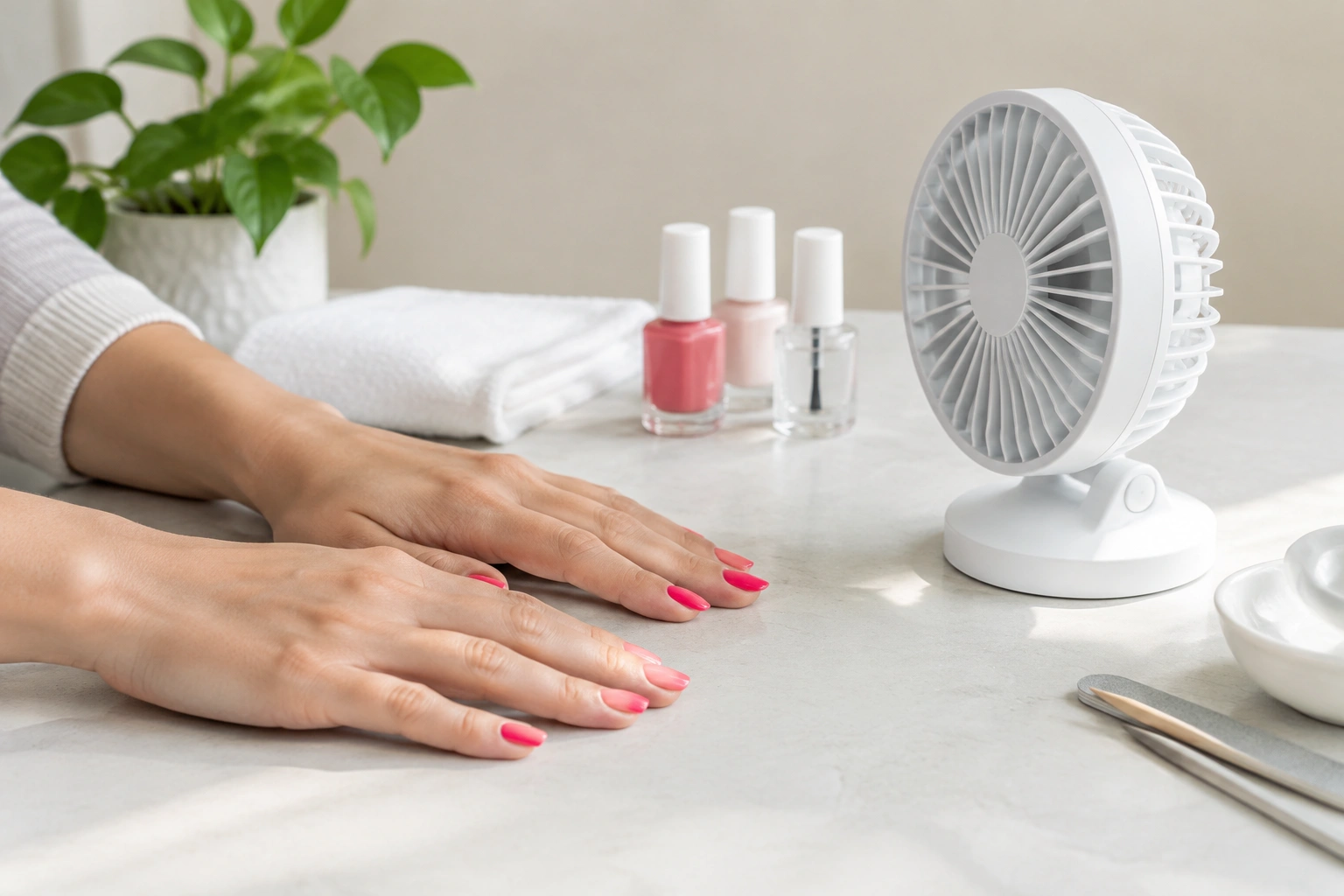
Think of nail polish drying as a gradual evaporation process. The liquid part of the polish has to leave the nail before the film becomes firm. If there is a lot of polish on the nail, or if the air around you makes evaporation harder, the surface may look dry while the layers underneath are still soft.
Why Nail Polish Sometimes Takes So Long to Dry
Regular nail polish dries as its solvents evaporate. That sounds technical, but the idea is simple: the polish starts out as a liquid, and it becomes solid as the liquid part leaves.
That is why thick coats dry slowly. A thick layer holds more liquid, so it takes longer for that liquid to escape. The same thing happens when you apply several coats too quickly. The top may start to set, but the layers underneath can stay soft for a while.
This is also why a manicure can seem dry and still get dented later. The surface may feel fine to the touch, but pressure from socks, sheets, or a hair tie can still leave marks if the polish has not fully set.
If you want a deeper breakdown of drying stages, our guides on how long regular nail polish takes to dry and how long nail polish takes to dry between coats can help you compare your manicure to a normal drying process.
How to Tell Whether Your Polish Is Actually Dry
A lot of frustration comes from using the word “dry” to mean three different things.
Touch-dry
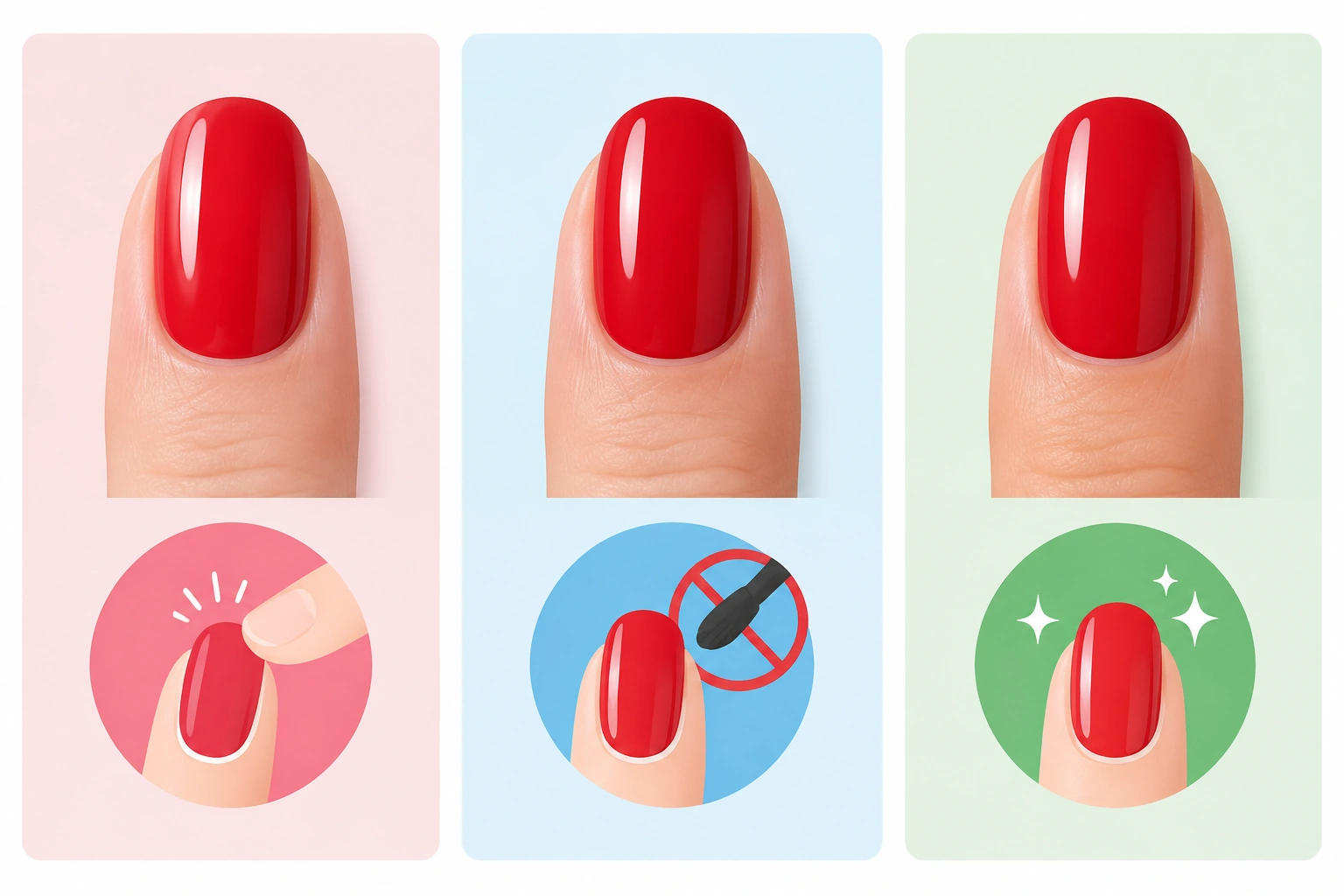
Touch-dry means the surface no longer feels wet or sticky. For regular polish, this is often the first stage you may notice within roughly 10 to 20 minutes if the coats are thin, but it can take longer with thicker layers or humid air. At this stage, very light contact may still leave a mark, so avoid pressure.
Smudge-proof
Smudge-proof means the polish is set enough that light contact is less likely to leave a mark. For beginners, this often takes about 30 to 60 minutes or more, depending on coat thickness and room conditions. You may be able to move around carefully, but it is still smart to avoid tight shoes, heavy hand use, or anything that presses on the nails.
Fully cured
Fully cured means the manicure has finished hardening all the way through. With regular polish, this usually takes several hours and is often safest to think of as overnight. That is why you can think your nails are ready, then wake up with sheet marks or a dent.
Here is a simple rule: if the polish still feels soft when you press very lightly near the edge, it needs more time.
Common Reasons Your Polish Is Still Sticky or Soft
When a manicure stays tacky, the cause is usually one of a few beginner mistakes.
You used thick coats
This is the most common reason. Thick coats look opaque faster, but they slow drying because there is more liquid to evaporate. They also tend to wrinkle or dent more easily.
You used too many layers
More layers can improve coverage, but each layer adds more product to dry. A base coat, two color coats, and a top coat is a normal routine. The problem starts when each layer goes on heavily or before the one below has had a chance to set.
You did not wait long enough between coats
If the first coat is still wet when the next one goes on, the layers can trap solvent between them. That makes the whole manicure feel soft for longer.
The room is humid or poorly ventilated
Humidity can slow evaporation. A warm, steamy bathroom is not the best place to paint nails if you want them to dry quickly. Better airflow usually helps polish set more evenly.
Your nails were oily or had product on them
Nail surfaces with lotion, cuticle oil, leftover remover residue, or heavy treatments can make polish behave unpredictably. Ridge-filling or very oily base layers can also slow drying if they are applied too heavily. The polish may slide around, apply unevenly, or take longer to settle.
The polish is old or thickened
Older polish often becomes thicker in the bottle. That makes it harder to apply in thin, even coats, which can lead to a slow-drying manicure. If the formula is separating, stringy, or gummy, it may be part of the problem.
How Base Coat, Color Coats, and Top Coat Affect Drying Time
Each layer plays a role in how long your manicure takes to set.
Base coat
A base coat can help polish grip the nail and create a smoother surface. But if it is applied too heavily, it can add to the drying time. A thin base layer is usually enough for beginners.
Color coats
Color coats have the biggest effect on drying because they make up most of the polish on the nail. Thin color coats dry faster than one heavy coat that tries to do too much at once.
Top coat
A top coat protects the color and adds shine, but it also adds another layer that has to dry. A regular top coat can be fine if applied lightly. A quick-dry top coat can be a practical choice when speed matters, especially for regular polish, but it works best when the coats underneath are already thin and even.
If you are comparing options for future manicures, our guide to how long regular nail polish takes to fully dry explains why the final layer matters so much.
What You Can Do Right Now to Help It Dry Faster
If your nails are already painted, the goal is to protect the manicure while it finishes setting.
In the first 5 to 30 minutes, do this
- Keep your hands still and separate.
- Use a gentle fan for airflow if you have one.
- Stay away from water, lotion, cuticle oil, and hand creams.
- Avoid tight sleeves, socks, shoes, bags, and anything that can press on the nails.
Do not do this yet
- Do not test the polish by pressing on it repeatedly.
- Do not rub nails together.
- Do not use hot air from a hair dryer.
- Do not assume the manicure is safe just because the surface looks dry.
Give it more time than you think
This is the safest fix. If the polish is still soft, the most reliable move is simply to wait longer before using your hands normally.
Improve airflow
A gentle fan can help move air around the nails. That can support evaporation better than sitting in still air. Keep the airflow light and steady rather than blasting hot air at the nails.
Skip heavy products for now
Cuticle oil, lotion, and rich hand creams are useful later, but they are not the first thing to apply if the polish is still setting. Heavy products can interfere with the finish before the surface has firmed up.
Use a quick-dry product next time
If slow drying happens often, a quick-dry top coat or quick-dry drops may be worth trying. They are most helpful when used with thin, even coats rather than thick polish layers.
For a broader timing reference, our page on how long regular nail polish takes to dry between coats can help you plan the next manicure more carefully.
Quick-Dry Methods: What Helps and What Can Backfire
Some drying tricks are useful. Others can make the manicure worse.
Fan drying
A fan can help because it increases airflow. It is simple, low-risk, and beginner-friendly. The trade-off is that it does not fix a very thick manicure. If the polish was applied heavily, a fan may help a little but not solve the core problem.
Quick-dry top coat
This is one of the most practical options for regular polish. It can help the surface set more quickly and reduce the chance of smudges. The trade-off is that it works best when the polish underneath is applied in thin layers. If the color coats are thick, the top coat cannot fully undo that.
Air drying
Air drying is the easiest method, but it is also the slowest. It works fine if you are patient and your coats are thin.
Hot air
Hot air is a bad shortcut. It can create bubbles, uneven drying, or a wrinkled finish. If you are tempted to use a hair dryer on hot, skip that idea.
Heavy oil too early
Oil can be helpful later, once the manicure has set. Too early, though, it can disturb the surface and make the polish feel slippery or soft.
If you want a quick comparison of timing expectations, this overview of how long nail polish takes to dry completely can help you see why “dry enough to touch” is not the same as “done.”
How to Apply Polish So It Dries Faster Next Time
A better application routine usually solves slow drying before it starts.
Use thinner coats
Thin coats are the easiest way to speed up drying. They spread more evenly and let the solvent leave the polish faster. If a coat looks streaky, resist the urge to load more polish all at once. A second thin coat is usually better than one thick one.
Keep the number of coats reasonable
Most beginner manicures do not need a huge stack of layers. A thin base coat, two thin color coats, and a light top coat is often enough. If you need extra opacity, add another thin coat instead of one heavy one.
Wait between coats
Give each layer a chance to settle before adding the next. The polish should not feel wet and slippery when you continue. If it does, the next coat may trap the first one underneath.
Work in a drier, cooler room if possible
You do not need a special setup, but a less humid room usually helps polish dry more predictably than a steamy bathroom.
Use fresh polish when you can
Fresh polish is usually easier to apply in thin coats. Older or thickened polish often needs more effort to spread, which makes heavy coats more likely.
How to Tell Whether the Manicure Is Safe to Touch
When in doubt, use a simple wait-and-check rule.
Wait until the polish looks mostly even and no longer wet on the surface. Then touch one nail very lightly at the edge, not the center. If it dents, sticks, or feels soft, stop and give it more time. If it feels firm and leaves no mark, it is closer to smudge-proof.
A useful beginner rule: if you would be upset to redo the manicure, do not keep testing it. Every extra touch increases the chance of a dent.
When the Problem Is the Polish Itself
Sometimes the technique is fine, but the product is working against you.
Old polish can become thick, stringy, or uneven in the bottle. When that happens, it is harder to apply in thin coats, and the manicure often dries more slowly because the layers go on too heavy. If the polish is only thickened, it may still be usable after a little thinning or mixing, depending on the product instructions. If it is separated, gummy, or impossible to apply smoothly even after trying to restore it, it is more likely past its best.
A polish formula can also simply be less forgiving. Some regular polishes are easier for beginners because they level well and dry predictably. Others need a lighter hand and better timing between coats.
If your polish is consistently slow, ask yourself three questions:
- Does it go on smoothly?
- Can I apply it in thin coats?
- Does it still separate or feel gummy after shaking?
If the answer is no to most of those, it may be time to replace the bottle rather than keep fighting it.
How to Avoid Dents, Smears, and Sheet Marks While It Finishes Drying
This is where many beginner manicures get damaged.
Keep your nails away from tight clothing, hair, and bedding until the polish has had time to set. A loose sleeve is better than a tight cuff. If you need to move around, use your hands carefully and avoid rubbing the nails together.
Try not to “check” the polish by pressing it over and over. That habit often causes the exact dent you are trying to avoid.
If you are going to rest or sleep, make sure the nails are not pressing into fabric. A soft, loose position is safer than folding your hands under a pillow or curling them against a sheet.
When to See a Nail Technician or Dermatologist
If your polish always seems to stay tacky no matter how carefully you apply it, a nail technician can help you troubleshoot the routine and spot product issues.
See a dermatologist if the nail surface itself looks unusual, if you have persistent nail changes, or if polish problems come with other symptoms like irritation or nail damage. The polish may not be the real issue in that case.
FAQ
Why is my nail polish still sticky after a long time?
It is usually because the coats were too thick, the room was humid, or the layers were not given enough time between coats. Old, thickened polish can also stay soft longer.
Does a base coat make polish dry slower?
It can if it is applied too heavily. A thin base coat usually helps the manicure, but a thick base layer adds more product that has to dry.
Is a quick-dry top coat worth buying?
For regular polish, often yes. It can make the surface set faster and help reduce smudges. It works best when the color coats underneath are thin.
Can I use a fan to dry nail polish?
Yes, a gentle fan can help with airflow. It is better than hot air, but it will not fully fix a manicure that was applied in thick layers.
Why does my polish dry on top but smudge later?
That usually means the surface dried before the layers underneath. The manicure may look ready, but it has not fully cured yet.
Should I remove and redo the manicure?
Only if the polish is very thick, lumpy, or so soft that it keeps denting. If the issue is mild, waiting longer and protecting the nails may be enough.
A beginner manicure gets easier once you understand that drying is about thin layers, patience, and the right environment. Most slow-drying problems are fixable, and the more you practice thin coats, the more predictable your results will become.
