
Does Cold Water Dry Nail Polish Faster? A Beginner’s Guide

If you’ve ever sat there waving your hands around after painting your nails, you’ve probably wondered: does cold water dry nail polish faster?
The short answer is: sometimes it can help the surface feel firmer, but it does not reliably make nail polish fully dry faster. For regular polish, cold water may slightly help the top layer set, but it is not a magic fix. If you put your nails in water too soon, you can still get smudges, dents, or lifting.
For beginners, the safest takeaway is simple: use thin coats, wait a little before any water, and rely on better drying methods when you want the most reliable results. If you want a deeper look at drying time in general, you may also find how long regular nail polish takes to dry helpful.
How Nail Polish Dries: Surface Dry vs Fully Cured
Nail polish does not go from wet to finished all at once. First, the top layer becomes dry enough to touch. Later, the polish hardens more fully.
That difference matters because a nail can feel dry on the outside while still being soft underneath. If you press too soon, the polish may dent even if it no longer feels sticky.
Here’s an easy way to think about it:
- Surface dry means the top feels less tacky.
- Fully dry or cured means the polish has hardened enough to resist dents and smudges.
Regular polish dries as the solvents evaporate. Thicker coats take longer because there is more product for the air to work through. That is one reason thin coats dry better than one heavy coat.
Gel polish works differently. It usually needs a lamp to cure properly, so cold water is not a substitute for that process. If you use gel, follow the product’s instructions rather than trying to speed it up with water.
For a beginner-friendly breakdown of drying time, this guide to how long nail polish takes to fully dry can help set realistic expectations.
What Cold Water Actually Does to Fresh Nail Polish
Cold water can make freshly painted nails feel firmer for a moment. That is probably why the method has become so popular.
But “feels firmer” is not the same as “fully dry.” Cold water may cool the surface and help it set a little, yet it does not meaningfully shorten full cure time for most regular polishes. The polish underneath still needs time to finish hardening.
A simple example: if you paint two thick coats and dip your nails into cold water right away, the outside may seem okay, but the polish can still shift when you touch something later. In that case, the water did not really solve the drying problem.
Cold water can also work differently from one formula to another, so it is best treated as a small helper rather than a dependable shortcut.
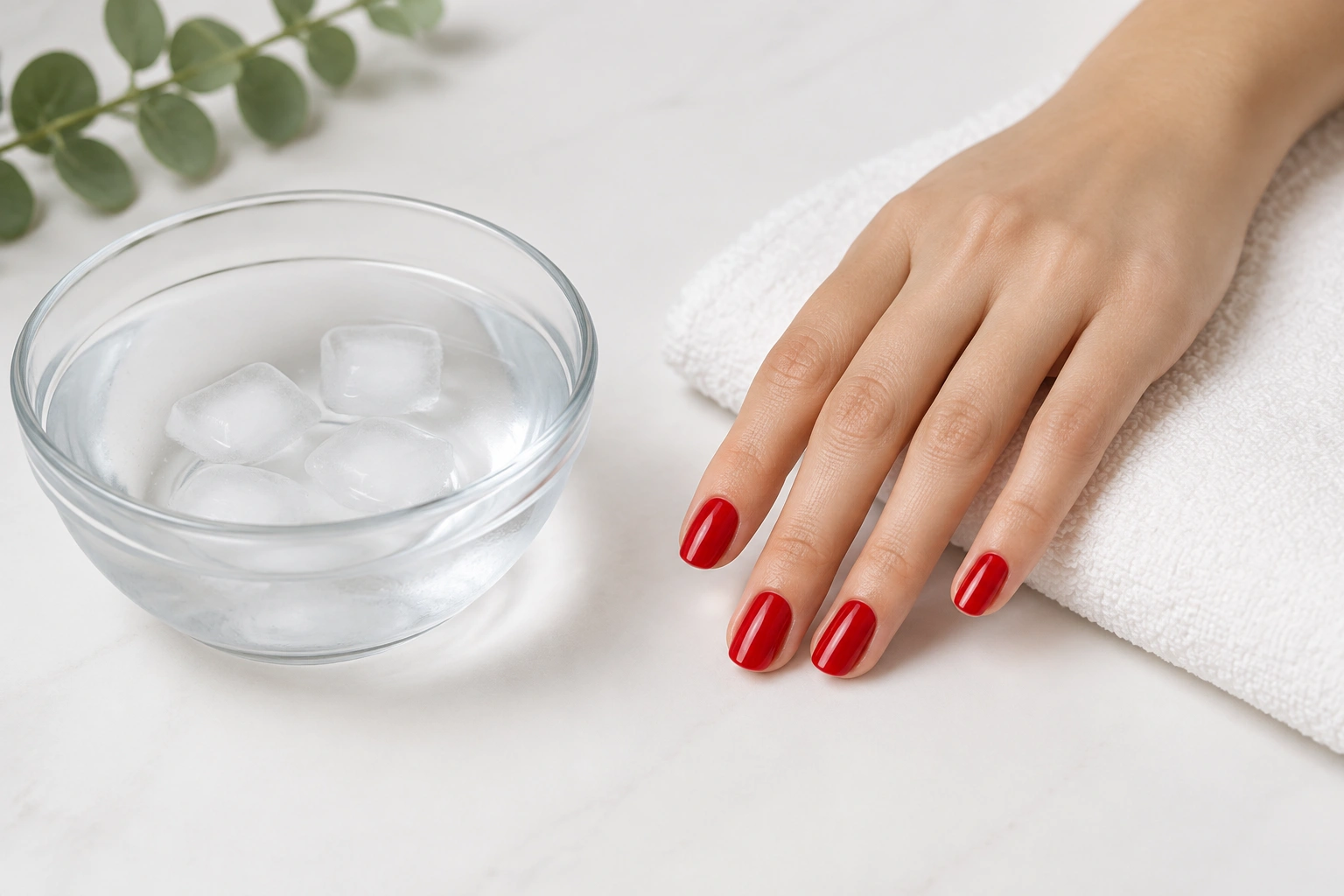
If you want a method that is designed to speed up drying, a quick-dry nail polish article may be more useful than relying on water alone.
How to Try the Cold Water Method Safely
If you still want to use cold water, keep the process gentle.
A simple beginner method
- Paint your nails in thin, even coats.
- Wait about 5 to 10 minutes after the last coat, or longer if the polish still looks very glossy and feels soft.
- Fill a bowl with cool or cold water. Ice water is not necessary.
- If you want, add a few ice cubes, but do not make the water painfully cold.
- Lower your fingertips in carefully and avoid splashing or rubbing.
- Keep your hands still for a short time.
- Lift them out gently and let them air dry for a bit after that.
A few practical tips make a difference:
- Do not use a strong stream of water.
- Do not swish your fingers around.
- Do not test the polish immediately by pressing on it.
- Be careful when drying your hands afterward so you do not drag a towel across soft polish.
Think of cold water as a finishing step, not the main drying method. If your polish is still very wet, water will not save it.
Cold Water vs Air Drying, Ice Water, and Quick-Dry Products
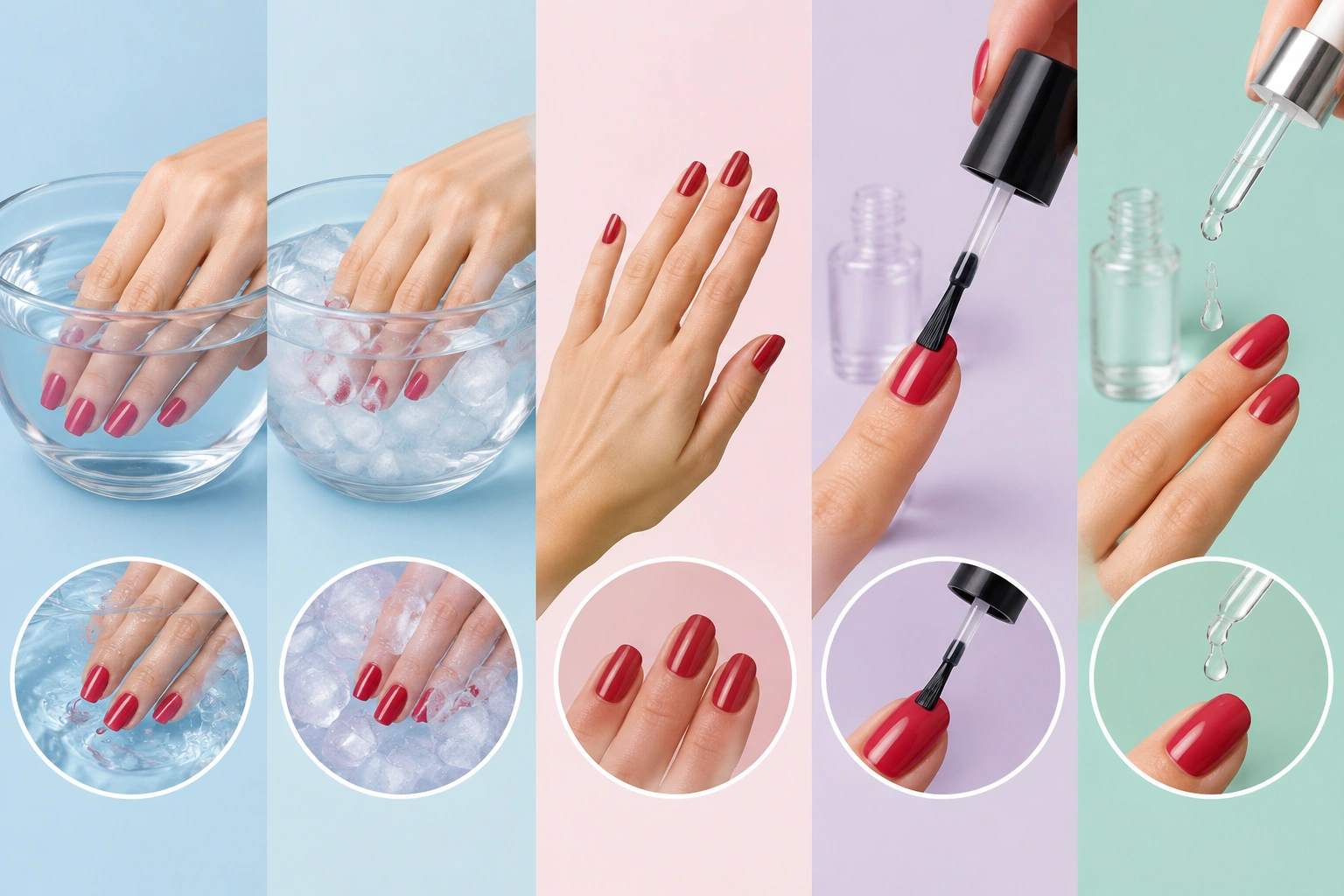
Here is a simple comparison to help you choose.
| Method | How it feels | Best for | Main downside |
|---|---|---|---|
| Cold water | May make the surface feel firmer | A cheap, simple experiment after thin coats | Not very reliable for full drying |
| Ice water | Slightly stronger cooling effect | People who want to test the cold-water method more aggressively | Less comfortable; still not a guarantee |
| Air drying | No extra products needed | The safest basic option | Usually slower |
| Quick-dry top coat | Helps seal and protect the polish | Beginners who want more dependable results | Costs more than water |
| Drying drops or spray | Convenient and easy to use | People who want a faster finish without guessing | Requires an extra product |
If you want the simplest answer, air drying is the safest and most predictable. If you want the fastest improvement for regular polish, a quick-dry top coat is usually a better option than cold water. If you want convenience, drying drops can also help.
Ice water may sound stronger, but colder does not automatically mean better. Very cold water can be uncomfortable, and it still does not replace proper drying time.
For a practical comparison of faster-drying ideas, you may also like how to dry nail polish faster or how to make nail polish dry faster.
What Works Better Than Cold Water for Faster Drying
If your goal is to avoid smudges, these methods usually work better than cold water:
1. Apply thinner coats
This is the easiest fix. Thin layers dry more evenly and are less likely to stay soft underneath.
2. Use a quick-dry top coat
A quick-dry top coat is generally made to help seal the polish and speed up the finish. It is often a better choice than water because it is designed for the job.
3. Try drying drops or spray
These can help reduce the waiting time without needing to dunk your hands in water. They are especially useful if you paint your nails often.
4. Leave more time between coats
Rushing from one thick coat to the next traps wet polish underneath. A short pause between layers can make a big difference.
5. Keep your hands still after painting
Even if polish seems dry, movement can cause tiny dents. Set your hands down and avoid grabbing things right away.
If you are comparing methods and want the fastest option for everyday use, how to make nail polish dry faster is a useful next read.
Common Mistakes That Cause Smudges and Dents
A few small habits cause most polish problems.
Putting nails in water too soon
This is the biggest one. If the polish is still wet, cold water can’t protect it from smearing.
Using thick coats
Thick polish may look smoother at first, but it dries more slowly and is easier to dent.
Touching the nails to “check”
One light test can leave a mark. If you are unsure, give the polish more time.
Forgetting the top coat
A good top coat helps protect the color and can improve wear. Skipping it makes the manicure more fragile.
Drying your hands roughly
Towels, sleeves, and even hair can bump soft polish. Be gentle for the first hour after painting.
Assuming gel works the same way as regular polish
It does not. Gel needs proper curing. Water is not a replacement for that step.
If you want a more complete drying strategy, this guide on making nail polish dry faster can help you build a better routine.
Frequently Asked Questions About Cold Water and Nail Polish
How long should I wait before putting nails in cold water?
Wait about 5 to 10 minutes after the last coat, or longer if the polish still looks very glossy or feels soft. If it still looks wet, give it more time.
Does cold water dry nail polish faster than air drying?
Not reliably. Air drying is slower, but it is more predictable. Cold water may make the surface feel firmer, but that is not the same as fully dry.
Is cold water better than ice water?
Ice water may feel like it does more, but it is not automatically better. Very cold water can be uncomfortable, and the main issue is still whether the polish had enough time to set first.
Can I use cold water on gel polish?
No, not as a drying method. Gel polish needs proper curing, so cold water does not replace the process.
Will cold water cause bubbles or lifting?
It can contribute to problems if the polish is still soft or if you move your hands around too much. Gentle handling matters more than the water temperature alone.
What is the best way to dry nail polish faster at home?
For most beginners, the best mix is thin coats, a quick-dry top coat, and a little patience. Drying drops are also a good option if you want something easy.
Is cold water worth trying at all?
It can be worth trying if you already use thin coats and want a low-cost extra step. If you want the most reliable result, a quick-dry product is usually the better choice.
When to See a Nail Technician or Dermatologist
If your polish consistently stays tacky for a very long time, peels in unusual ways, or reacts badly to products, a nail technician can help you look at your routine and product choices. If you notice skin irritation around the nails, a dermatologist is the better person to ask.
For most beginners, though, the solution is usually simple: use thinner coats, give polish a little more time, and choose a drying method that matches your polish type.

