
Why Are My Toenails Brown? Causes, Warning Signs, and What to Do

You remove your polish, look down at your feet, and notice something you were not expecting: one or more toenails look brown. Naturally, your first thought may be, Why are my toenails brown, and should I be worried?
Brown toenails can happen for several reasons. Sometimes the cause is as simple as old polish staining or repeated pressure from tight shoes. In other cases, brown discoloration can be related to a fungal infection, nail psoriasis, an old injury, or another nail condition.
Most causes are manageable, but a new or changing dark brown streak in a nail should not automatically be treated as fungus or covered with polish. Rarely, dark nail pigmentation can be associated with melanoma under or around the nail.
Here is how to look at the color, texture, location, and other symptoms so you can decide on the safest next step.
Quick Answer
Brown toenails are commonly caused by fungal infection, bruising or repeated shoe pressure, polish staining, or nail psoriasis. A new dark brown or black streak, pigment spreading onto nearby skin, unexplained nail splitting, or a changing spot deserves medical evaluation because unusual nail pigmentation can occasionally be a sign of melanoma.
What Causes Brown Toenails?
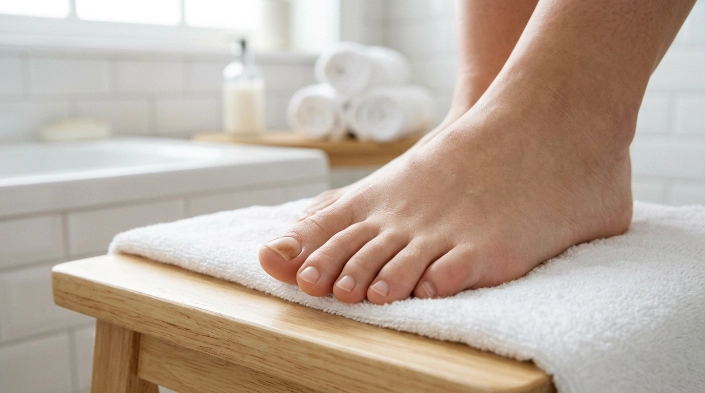
The color alone cannot tell you exactly what is happening. Pay attention to whether the nail is also becoming thicker, brittle, painful, lifted, crumbly, or unusually shaped.
1. Toenail Fungus
Toenail fungus, medically called onychomycosis, is one of the more common explanations for a nail that gradually becomes yellow-brown or brown.
According to the American Academy of Dermatology’s guide to nail fungus symptoms, fungal infections can cause nails to become brown, yellow, white, thickened, brittle, crumbly, misshapen, or separated from the nail bed.
Fungus becomes more likely if you notice:
- Brown or yellow-brown discoloration beginning near an edge of the nail
- Thickening
- Crumbling or rough edges
- Debris underneath the nail
- Nail lifting
- Several nails gradually developing similar changes
- Athlete’s foot between the toes
Fungi prefer warm, moist environments. Sweaty shoes, public locker rooms, damp socks, and shared or poorly sanitized nail tools can increase exposure.
That does not mean every brown toenail is fungal. Injuries, psoriasis, and other conditions can look surprisingly similar.
2. Bruising or Repeated Trauma
Think about what your feet have been through recently.
You may have:
- Stubbed a toe
- Dropped something on your foot
- Started running more often
- Worn shoes with a tight toe box
- Spent hours in heels
- Had repeated pressure against one particular toenail
Blood trapped beneath the nail after an injury can make the area appear reddish brown, dark brown, purple, or nearly black.
Sometimes there is an obvious painful injury. Other times, repeated minor pressure from shoes happens so gradually that you do not remember a specific incident.
The American Academy of Dermatology’s injured-nail guidance notes that toe injuries can happen from sports, stubbing a toe, and poorly fitting shoes. Severe pain or extensive dark discoloration after an injury deserves professional attention.
As the nail grows, an old bruise will often slowly move toward the tip with it. Toenails grow slowly, so this process can take months.
3. Nail Polish Staining
If you love deep reds, burgundy, brown, black, navy, or highly pigmented polish, the explanation may be much simpler.
Repeated polish use can sometimes temporarily stain the surface of the nail plate, particularly when dark colors are worn frequently without a base coat.
Staining is more likely when:
- Several nails have similar discoloration
- The nails remain smooth
- There is no crumbling or unusual thickness
- There is no pain, swelling, or odor
- The discoloration became noticeable immediately after removing polish
Give your toenails some polish-free time and watch how the color changes as they grow.
Do not repeatedly scrape or aggressively buff a stained nail. Over-buffing can thin and weaken the nail plate.
4. Nail Psoriasis
Psoriasis does not affect only the skin. It can also affect fingernails and toenails.
The American Academy of Dermatology reports that nail psoriasis may cause white, yellow, or brown discoloration, tiny pits, nail crumbling, buildup underneath the nail, or separation from the nail bed.
Nail psoriasis becomes more likely if you also have:
- Tiny dents or pits in the nail surface
- Rough or crumbling nails
- Nail lifting
- Skin psoriasis
- Scaly patches elsewhere on the body
- More than one affected nail
Fungus and psoriasis can look very similar. A dermatologist may sometimes need to examine or test the nail rather than relying on appearance alone.
5. Bacterial Infection
Some nail infections are caused by bacteria rather than fungus.
These often create a green, greenish-black, or very dark discoloration rather than a classic light brown color. Redness, warmth, tenderness, swelling, odor, or drainage around the nail also makes infection more concerning.
If the surrounding skin becomes increasingly painful, swollen, warm, or inflamed, avoid DIY digging or clipping and get medical advice.
6. Melanoma Under or Around the Nail
This is much less common than fungus, trauma, or staining, but it is the reason unexplained dark nail changes should not be ignored.
Melanoma can develop underneath or around a fingernail or toenail. The American Academy of Dermatology’s nail melanoma guide describes warning signs such as a new brown or black band, darkening of skin next to the nail, nail lifting, splitting, or a bump underneath the nail.
A dark streak does not automatically mean melanoma. Many benign conditions can create dark pigmentation.
Still, arrange a dermatologist visit if you notice:
- A new brown or black vertical band
- A band becoming wider or darker
- Irregular color within the band
- Pigmentation extending onto the skin beside the nail
- Unexplained nail splitting or lifting
- A bump underneath the nail
- Bleeding without an obvious injury
- A dark area that does not appear to move outward as the nail grows
This is one situation where covering the nail with polish and forgetting about it is not a good plan.
Brown Toenail Causes at a Glance
| Possible Cause | What It May Look Like | Other Clues | Best Next Step |
|---|---|---|---|
| Nail fungus | Yellow-brown or brown, thickened nail | Crumbling, buildup, lifting | Dermatologist or healthcare provider if persistent |
| Bruising/trauma | Brown, reddish brown, purple, or black patch | Recent injury, running, tight shoes | Monitor mild cases; seek care for severe pain or injury |
| Polish staining | Light brown or yellow-brown surface stain | Smooth nail, several nails affected | Polish break and gentle nail care |
| Nail psoriasis | Brown/yellow discoloration | Pitting, crumbling, lifting, psoriasis history | Dermatologist |
| Bacterial infection | Greenish-brown to dark green/black | Odor, redness, swelling, tenderness | Medical evaluation |
| Suspicious pigmentation | Brown/black streak or irregular patch | Changing band, skin pigmentation, splitting | Dermatologist promptly |
How Can I Tell Whether My Brown Toenail Is Fungus?
There is no perfect DIY appearance test.
Fungus becomes more likely when discoloration comes with thickening, crumbling, buildup underneath the nail, or gradual lifting.
However, psoriasis and injury can mimic fungal nails. Dermatologists may take a nail clipping or sample to confirm an infection before choosing treatment.
Ask yourself:
- Is the nail getting thicker?
- Does the edge crumble when trimmed?
- Is material collecting underneath?
- Are other toenails developing similar changes?
- Do I also have athlete’s foot?
- Does the discoloration appear to be spreading gradually?
Several “yes” answers make fungus more plausible, but they still do not provide a definite diagnosis.
What to Do at Home When You Notice a Brown Toenail
If you have no major warning signs, start with observation and gentle nail care rather than aggressive treatment.
1. Remove Nail Polish
Take off polish so you can see the entire nail clearly.
Check the nail in bright natural light.
Look at:
- Color
- Shape
- Thickness
- Cuticle area
- Skin beside the nail
- Any lines or streaks
2. Take a Clear Photo
Photograph the nail today.
Take another photo in a few weeks under similar lighting. This makes gradual changes easier to notice.
3. Keep Feet Clean and Dry
Change sweaty socks and allow damp shoes to dry thoroughly.
Choose breathable footwear when possible.
If you use communal showers or locker rooms, wearing shower shoes can reduce exposure to fungi.
4. Trim Toenails Carefully
Use a dedicated toenail clipper, preferably a sturdy stainless-steel tool that can be cleaned easily.
Toenails should generally be trimmed straight across rather than deeply rounded into the corners. The AAD’s nail-trimming recommendations also recommend cleaning nail tools regularly and avoiding cutting the cuticle.
5. Do Not Dig Under the Nail
It can be tempting to scrape away brown material or buildup.
Avoid using scissors, metal cuticle pushers, needles, or other sharp tools underneath the nail.
You could separate the nail further or create an opening for bacteria.
6. Avoid Sharing Nail Tools
Do not share clippers, files, or other pedicure tools when fungus or infection is possible.
At home, clean reusable tools and let them dry completely between uses.
7. Check Your Shoes
Your shoes should give your toes enough room.
Repeated pressure against the front or top of the shoe can continually traumatize the nail and prevent it from recovering.
Expert Tip: Take a dated photo before treating or polishing a brown toenail. Watching whether the discoloration moves toward the nail tip as the nail grows can provide useful information to show a dermatologist.
Should You Use an Over-the-Counter Antifungal?
Do not buy an athlete’s-foot cream simply because your toenail looks brown.
The AAD specifically notes that nonprescription terbinafine cream made for fungal skin infections cannot effectively treat fungus inside a nail because it does not penetrate the nail plate.
Confirmed nail fungus may require a prescription medication applied to the nail, oral treatment, professional nail thinning, or another approach depending on how much of the nail is involved and your overall health.
Treatment also takes patience. Even after an infection has been controlled, the damaged portion must grow out.
For that reason, spending money on random remedies before confirming the cause can become more expensive than getting appropriate advice from the start.
DIY Care vs. Salon vs. Dermatologist
A salon can improve how healthy nails look, but a nail technician is not a substitute for medical diagnosis.
For simple staining with completely normal-looking nails, regular cosmetic nail care may be reasonable.
For suspected fungus, significant nail damage, unexplained discoloration, or skin inflammation, medical evaluation is more appropriate.
| Option | Best For | Cost Consideration | Limitation |
|---|---|---|---|
| Gentle home care | Monitoring mild staining or minor trauma | Low | Cannot diagnose disease |
| Professional pedicure | Cosmetic shaping and polish on healthy nails | Moderate and recurring | Nail technicians do not diagnose medical conditions |
| Dermatologist/healthcare provider | Fungus, psoriasis, unexplained discoloration, suspicious dark streaks | Higher and varies by insurance/location | Requires appointment |
| Podiatrist | Difficult thick nails, foot problems, painful nail conditions | Varies | Primarily medical rather than cosmetic care |
If you have diabetes, reduced circulation, numbness in your feet, or another condition that affects wound healing, be especially cautious about cutting or treating abnormal toenails yourself.
When to See a Nail Technician or Dermatologist
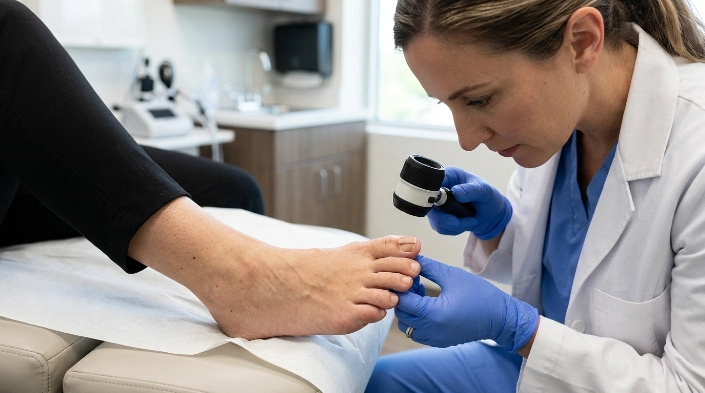
A Nail Technician May Be Appropriate When:
- The nail color clearly appears related to removable polish
- There is no pain, swelling, thickening, lifting, or crumbling
- You want help safely shaping otherwise healthy nails
- You want advice on cosmetic polish application
Tell your technician about any discoloration before a pedicure. A responsible technician should not try to hide a suspicious nail problem.
See a Dermatologist or Healthcare Provider When:
- You do not know why the nail changed color
- Discoloration is getting worse
- The nail is thick, brittle, crumbly, or lifting
- You have pain or swelling
- Skin around the nail is red, warm, or draining
- A dark streak is new or changing
- Pigment extends onto nearby skin
- The nail splits unexpectedly
- You have diabetes and suspect nail fungus
- Home care has not improved the situation
The NHS similarly recommends medical evaluation when a nail changes color or shape without a clear explanation.
Do not wait for a suspicious dark streak to become painful. Melanoma underneath a nail does not necessarily cause discomfort in its early stages.
Common Mistakes to Avoid
- Assuming every brown nail is fungus. Trauma, staining, psoriasis, and other conditions can look similar.
- Covering an unexplained dark streak with polish. This makes it harder to monitor changes.
- Scraping underneath the nail. Sharp tools can injure the nail bed and increase infection risk.
- Using someone else’s clippers or files. Fungal organisms can spread through contaminated tools.
- Wearing tight shoes every day. Repeated pressure can keep traumatizing the toenail.
- Over-buffing discoloration. Removing too much of the nail surface makes the nail thinner and more fragile.
- Trying multiple home remedies at once. Irritation can make the area harder to assess.
- Ignoring changes because they do not hurt. Some important nail conditions are painless.
- Waiting indefinitely for severe fungus to disappear. Persistent thickening, crumbling, or spreading discoloration deserves professional advice.
FAQs
Why are my toenails brown but not painful?
Painless brown toenails can come from polish staining, mild repetitive trauma, fungus, psoriasis, or natural pigmentation. Pain is not required for a nail condition to need attention. Monitor unexplained changes, especially a new dark streak.
Can tight shoes make toenails brown?
Yes. Shoes that repeatedly press or rub against the toenail can cause minor trauma and bleeding underneath the nail. Runners and people who wear tight footwear may notice dark brown, purple, or black discoloration.
Does a brown toenail always mean fungus?
No. Fungus is only one possibility. Bruising, nail polish staining, psoriasis, bacterial infection, and unusual pigmentation can also change toenail color.
Will a brown toenail grow out?
A stain or bruise often moves toward the tip as the nail grows. Toenails grow slowly, so complete replacement can take many months. If the discoloration remains near the nail base, changes shape, or becomes wider, consider a dermatologist evaluation.
Can I paint over a brown toenail?
If you already know the color is harmless staining, polish may be fine. If the discoloration is new, unexplained, or changing, leave the nail visible until you understand what is causing it. This makes monitoring much easier.
What does toenail melanoma look like?
It may appear as a brown or black vertical streak or band. Warning signs can include a changing or widening band, darker skin beside the nail, nail splitting, nail lifting, or a bump underneath. These signs need dermatologist evaluation rather than DIY treatment.
How long does toenail fungus take to clear?
Toenail fungus treatment can take months, and normal appearance may take even longer because the damaged nail has to grow out. The AAD notes that a toenail may take a year or longer to fully grow out after treatment in some cases.
Conclusion
If you have been wondering, “Why are my toenails brown?”, start by looking beyond the color itself.
Brown discoloration with thickening, crumbling, or buildup may suggest fungus. A dark patch after running or wearing tight shoes may be a bruise. Smooth discoloration across several polished nails may simply be staining, while pitting and lifting can point toward psoriasis.
What matters most is recognizing the exceptions.
A new, changing, widening, or unexplained dark brown or black streak—especially with pigment around the nail, splitting, bleeding, or lifting—should be checked by a dermatologist instead of covered up or treated blindly at home.
Take a clear photo, practice gentle nail hygiene, keep your footwear roomy and dry, and seek professional advice whenever the cause is unclear. Your next pedicure can wait until you know the nail underneath it is healthy.

