
Why Do Toenails Have Dark Lines? Causes, Warning Signs, and What to Do

Seeing a brown, black, or reddish line running through a toenail can be unsettling—especially when you do not remember injuring your toe.
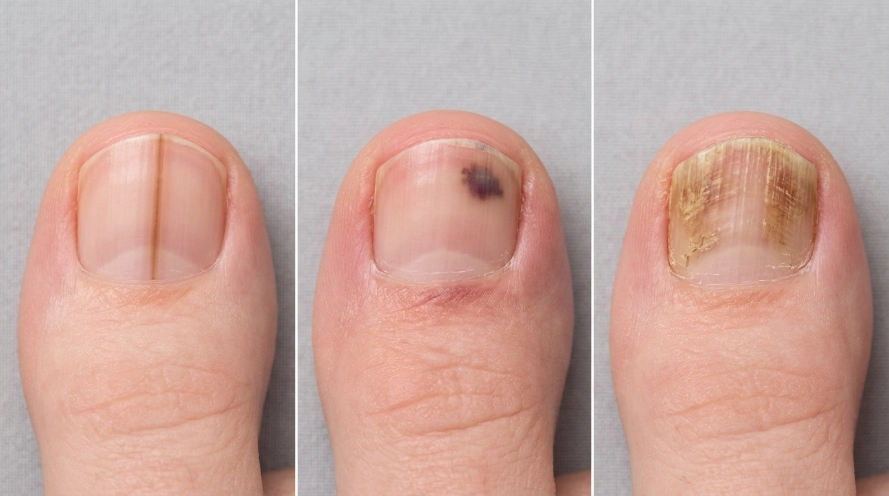
So, why do toenails have dark lines? There are several possible reasons. Some are harmless, such as repeated pressure from tight shoes or natural nail pigmentation. Others may be related to bruising, fungal infection, medication, or an underlying nail condition. In uncommon cases, a new or changing dark streak can be a warning sign of melanoma under the nail.
The appearance of the line alone usually cannot tell you the exact cause. Where it appears, whether it is changing, how many nails are affected, and whether you have pain, thickening, bleeding, or surrounding skin changes all matter.
This guide explains the most common possibilities, what you can safely check at home, and when a dermatologist should examine the nail.
Quick Answer
Dark lines on toenails can come from natural pigmentation, shoe pressure, injury, bleeding beneath the nail, fungal infection, medications, or other nail conditions. Most causes are not cancer, but a new or changing brown or black streak—especially on one nail—should be checked by a dermatologist because melanoma can sometimes appear beneath a toenail.
What Does a Dark Line on a Toenail Mean?

Doctors often use the term melanonychia for brown or black pigmentation within a nail. Longitudinal melanonychia forms a vertical band running from the base of the nail toward the tip.
The Cleveland Clinic’s overview of melanonychia explains that these brown or black bands can be harmless but may also develop because of injury, infection, medication, inflammatory conditions, or, more rarely, melanoma.
Not every dark line is actually pigment, either. Blood trapped beneath a nail after an injury may look brown, purple, or nearly black. A fungal infection can also discolor a nail.
That is why you should not diagnose a dark line from color alone.
Vertical vs. Horizontal Dark Lines
A vertical line runs from the cuticle toward the end of your toe. Pigment-related nail changes commonly follow this pattern.
A horizontal band runs from one side of the nail to the other. Horizontal discoloration can have different causes, including medications or disruptions to nail growth, and deserves medical attention when unexplained.
If you cannot tell which type you have, taking a clear photo in natural light can make changes easier to track.
Common Reasons Toenails Develop Dark Lines
1. Natural Nail Pigmentation
Some people naturally produce more pigment within their nails.
This is particularly common in people with medium and darker skin tones, and more than one fingernail or toenail may show brown or black longitudinal bands. Natural pigmentation can remain stable for years.
A stable line that has looked essentially the same for a long time may be reassuring, but never assume a new streak is normal simply because you have a darker skin tone.
The important question is whether the nail has changed from what is normal for you.
Watch for:
- A new line that was not there before
- Rapid widening
- Increasing darkness
- Irregular borders
- New pigment around the cuticle or surrounding skin
- Splitting, bleeding, or lifting of the nail
These changes deserve professional evaluation.
2. Repeated Pressure or Minor Trauma
Your toenails experience much more pressure than you may realize.
Running, hiking, dancing, sports, long walks, pointed shoes, and footwear with a tight toe box can repeatedly push the nail against the shoe.
Over time, this friction may irritate the nail-producing area and contribute to dark pigmentation.
Minor trauma can be especially easy to overlook because you may never experience one dramatic injury.
Ask yourself:
- Did you recently start running or walking more?
- Are your shoes tight around the toes?
- Does the affected toe repeatedly hit the front of your shoe?
- Have you had an aggressive pedicure?
- Did you recently stub the toe?
If footwear seems responsible, switch to shoes with enough room for your toes to move naturally.
Do not repeatedly buff or file the dark line. If the discoloration comes from beneath or within the nail, removing layers from the surface will not solve the cause and may simply thin the nail.
3. A Bruise or Blood Under the Nail
A dark toenail after an impact is often caused by blood trapped beneath the nail plate. This is called a subungual hematoma.
It can happen after:
- Dropping something on the toe
- Stubbing your toe
- Running downhill
- Wearing tight athletic shoes
- Repeated toe pressure during sports
Fresh bleeding may appear red, purple, blue-black, or dark brown.
As the toenail grows, discoloration caused by an old injury often moves gradually toward the end of the nail. Toenails grow slowly, so that process can take months.
A painful bruise after a major impact may need medical care, particularly if there is intense throbbing, significant swelling, or concern about a fracture. Do not attempt to drill, burn, or puncture your toenail yourself to release pressure.
Important: If you cannot remember an injury, or what looks like a bruise does not seem to move outward as the nail grows, have it checked rather than assuming trauma is the cause.
4. Toenail Fungus
Toenail fungus does not always create a neat dark stripe, but it can produce brown, yellow, white, greenish-black, or black discoloration.
Other clues make fungus more likely.
Look for:
- Thickening
- Crumbling edges
- Brittle texture
- Buildup beneath the nail
- Nail lifting
- Distorted nail shape
- Discoloration spreading from part of the nail
The American Academy of Dermatology’s guide to nail fungus symptoms notes that fungal nail infections can cause several types of discoloration along with thickening, crumbling, lifting, and debris underneath the nail.
Fungal infection is especially common in toenails because shoes create the warm, moist environment fungi prefer.
However, appearance alone cannot reliably confirm fungus. Dermatologists sometimes test nail material because psoriasis, trauma, and other conditions can resemble a fungal infection.
That matters before spending months on antifungal treatments that may not address the real problem.
5. Medication-Related Nail Pigmentation
Certain medications can change nail pigmentation.
Some chemotherapy drugs, antimalarial medicines, antiretroviral therapies, and other medications have been associated with melanonychia or changes in nail color.
Medication-related pigmentation may affect several nails rather than one isolated toenail.
If you noticed dark lines after starting a new medication, do not stop the medicine on your own. Ask your doctor or pharmacist whether nail pigmentation is a recognized side effect.
Bring a list of everything you take, including prescription medicines, over-the-counter drugs, and supplements, when discussing unexplained nail changes with a healthcare professional.
6. Skin or Health Conditions Affecting the Nail
Inflammatory and medical conditions can sometimes change nail pigmentation or structure.
Examples associated with nail changes include:
- Psoriasis
- Lichen planus
- Certain endocrine disorders
- Some nutritional deficiencies
- Connective tissue disorders
- Bacterial or fungal infections
These causes are difficult to identify from a toenail photo alone.
You may have additional clues, such as nail pitting, inflammation around the nail, changes affecting several nails, skin symptoms, or other health concerns.
This is one reason online photos and DIY diagnosis have limits.
One dark toenail line does not automatically mean you have a vitamin deficiency or systemic illness. Testing should be guided by your symptoms and medical history rather than random supplementation.
7. Melanoma Under the Nail
This is the possibility that worries many people most.
Melanoma can develop beneath or around a fingernail or toenail. It may appear as a brown or black vertical band.
Fortunately, a dark streak does not automatically mean melanoma. Many other causes are more common.
Still, melanoma is important enough that suspicious changes should not be ignored.
The American Academy of Dermatology’s guidance on nail changes advises having a new or changing dark streak examined by a dermatologist.
The Mayo Clinic’s melanoma information also notes that melanoma can occur beneath a fingernail or toenail.
Nail Changes That Deserve Prompt Attention
Arrange a dermatology evaluation when you notice:
- A new brown or black streak without a clear explanation
- A stripe that is getting wider
- Increasingly uneven or irregular pigmentation
- Several shades of brown or black within the band
- Pigmentation spreading onto the nearby skin
- Nail splitting or lifting without an obvious injury
- A bump underneath the nail
- Bleeding that keeps returning
- A persistent change affecting one nail
- A supposed bruise that does not seem to grow outward
Melanoma beneath the nail may occur without pain, so lack of discomfort does not rule out a problem.
Dark Toenail Line: Quick Comparison
| Possible Cause | What You May Notice | Practical Next Step |
|---|---|---|
| Natural pigmentation | Stable brown/black vertical bands, sometimes on several nails | Monitor for changes |
| Shoe pressure | Line or discoloration on toes exposed to friction | Improve shoe fit and monitor |
| Bruising | Purple, black, or brown area after impact or repeated pressure | Watch whether it grows outward |
| Fungal infection | Discoloration plus thickening, crumbling, lifting, or debris | Ask a clinician about diagnosis/testing |
| Medication | Pigmentation appearing after certain treatments, sometimes on several nails | Discuss with prescriber |
| Skin/medical condition | Nail changes plus other nail, skin, or health symptoms | Medical evaluation may be needed |
| Nail melanoma | New/changing irregular dark band, possibly surrounding skin changes | See a dermatologist promptly |
This table is a guide, not a diagnostic test. Different conditions can look surprisingly similar.
What Should You Do When You Notice a Dark Toenail Line?
1. Remove Nail Polish
If possible, examine the natural nail without polish, gel, press-ons, or artificial enhancements covering it.
Do not aggressively scrape the nail to remove staining.
2. Take a Clear Photo
Photograph the nail in natural light.
Include the entire toe and nail so you have a baseline for comparison.
3. Check the Other Nails
Look at all ten toenails and your fingernails.
Pigmentation appearing similarly across several nails may have different implications than a brand-new streak on only one nail.
4. Think About Recent Trauma
Consider your shoes, sports, workouts, pedicures, and any accidental impacts.
Even repeated pressure can matter.
5. Watch for Change—But Do Not Delay When It Looks Suspicious
For an obvious minor bruise, monitoring may be reasonable.
For a new unexplained brown or black streak, especially one that is changing, professional evaluation is the safer choice.
Expert Tip: Take a dated photo when you first notice a dark toenail line. If you eventually see a dermatologist, having a clear photo showing how the streak looked weeks or months earlier can help demonstrate whether it has changed.
Should You Treat a Dark Toenail Line at Home?
There is no universal DIY treatment because the line is a sign, not a diagnosis.
Using antifungal polish, filing the nail, soaking your feet in home remedies, or applying oils will not treat every possible cause.
Before treatment, you need to know what you are treating.
Nail-Care Tools and Hygiene
While monitoring the nail:
- Keep toenails neatly trimmed.
- Use clean clippers.
- Do not cut deeply into the corners.
- Avoid digging beneath the nail.
- Do not share nail files or clippers.
- Wash reusable tools and disinfect them appropriately.
- Keep feet dry and change damp socks.
- Wear footwear that does not compress your toes.
If fungus is possible, sharing contaminated nail tools can spread infection.
People with diabetes, reduced circulation, impaired sensation in the feet, or other medical concerns should be particularly careful about DIY cutting and aggressive foot care.
What About Pedicures?
A careful pedicure may improve the cosmetic appearance of healthy toenails, but a nail technician should not be expected to diagnose an unexplained dark streak.
Avoid simply covering a suspicious line with opaque gel polish and forgetting about it.
A technician may notice something unusual, but medical diagnosis belongs with a healthcare professional.
If you are already concerned about a changing dark line, consider leaving the nail uncovered until it has been evaluated.
When to See a Nail Technician or Dermatologist
A Nail Technician May Help With:
- Routine shaping and trimming of otherwise healthy nails
- Cosmetic maintenance
- Advice on reducing mechanical pressure from nail length
- Maintaining hygienic grooming habits
A nail technician should not diagnose melanoma, fungal disease, psoriasis, or other medical nail conditions.
See a Dermatologist or Healthcare Professional If:
- The dark streak is new and unexplained
- It is widening or changing
- Only one nail has suddenly developed unusual pigmentation
- Pigment extends onto surrounding skin
- The nail splits, lifts, or bleeds
- There is a bump under the nail
- You have recurring pain or swelling
- You suspect fungal infection but are unsure
- A dark area remains unexplained after an apparent injury
- You simply cannot tell what caused it
Cost varies depending on insurance coverage, location, testing, and whether treatment is needed. Monitoring an obvious minor injury may cost nothing, while medical evaluation or laboratory testing costs more.
However, cost is not a good reason to delay evaluation of a suspicious changing nail streak.
A dermatologist may examine the nail closely with magnification and, when appropriate, recommend testing or biopsy to determine the cause.
Common Mistakes to Avoid
- Assuming every dark line is fungus. Fungal infection is only one possibility.
- Assuming every line is melanoma. Many dark nail streaks are benign.
- Ignoring a changing streak. A widening or evolving line deserves medical attention.
- Covering it with polish for months. This makes changes harder to monitor.
- Aggressively buffing the line away. Pigmentation may originate deeper than the nail surface.
- Using random antifungal treatments without a diagnosis. Other nail conditions can mimic fungus.
- Taking high-dose supplements because you think you have a deficiency. Nail discoloration alone cannot identify a nutritional deficiency.
- Trying to puncture a painful bruised nail yourself. This can introduce infection or injure the nail bed.
- Waiting for pain before seeking help. Serious nail conditions are not always painful.
FAQs
Can vitamin deficiency cause dark lines on toenails?
Certain nutritional deficiencies have been associated with nail pigmentation, but a dark toenail line by itself cannot tell you that you are deficient. Many more common explanations exist. A clinician can decide whether blood tests are appropriate based on your diet, medical history, and other symptoms.
Does a black line on a toenail always mean melanoma?
No. Black or brown lines can occur because of natural pigmentation, repeated trauma, medication, infection, or other benign conditions. However, because melanoma can also appear as a new or changing dark nail streak, an unexplained or evolving line should be assessed by a dermatologist.
Can toenail fungus cause a dark line?
It can contribute to brown, yellow, greenish-black, or black discoloration, although fungal nails often also become thick, brittle, crumbly, distorted, or lifted. Testing may sometimes be needed to confirm fungus before treatment.
How can I tell a bruise from melanoma under a toenail?
A bruise often follows an injury or repeated pressure and may gradually move toward the end of the nail as the toenail grows. Melanoma-related pigmentation may persist or evolve differently. You cannot reliably distinguish every case at home, so have an unexplained or changing dark area examined.
Why do I have dark lines on several toenails?
Multiple pigmented nails can occur with natural pigmentation, medications, repeated friction, and certain medical or inflammatory conditions. The pattern and your health history matter. If the pigmentation is new or changing, discuss it with a healthcare professional.
Should I cover a dark toenail line with polish?
Temporarily covering a known harmless nail change is usually a cosmetic choice, but it is better not to keep a new unexplained streak continuously covered. Leaving it visible makes monitoring easier and allows a dermatologist to examine it properly.
How long does a bruised toenail take to grow out?
Toenails grow much more slowly than fingernails, so a dark area caused by trauma can remain visible for many months. What matters is whether the discolored area gradually travels toward the nail tip as new nail grows. If it remains suspicious or changes, have it evaluated.
Conclusion
So, why do toenails have dark lines? The answer can range from something as simple as shoe friction, natural pigmentation, or an old bruise to fungal infection, medication effects, or another nail condition.
Most importantly, do not try to identify the cause from color alone.
Pay attention to whether the streak is new, changing, widening, irregular, affecting the surrounding skin, or associated with nail splitting, lifting, bleeding, or a lump.
If you have an obvious minor injury, taking a photo and monitoring the nail as it grows can be useful. But if a brown or black streak has appeared without a clear explanation—or simply does not look normal for you—the smartest next step is to let a dermatologist examine it.
Your toenails can reveal useful clues about what is happening beneath the surface. Notice changes early, keep your nail-care routine gentle and hygienic, and seek professional advice when something does not look right.

