
What Does a Healthy Toenail Color Look Like?

You look down after removing your polish and notice your toenails are not exactly the color you expected. Maybe they look slightly yellow, pale, white at the tips, or darker than you remember.
So, what does a healthy toenail color look like?
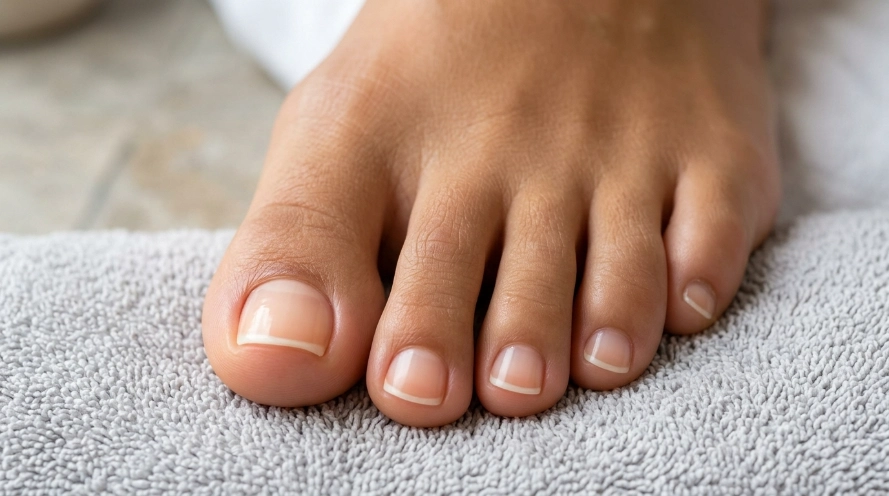
In most people, healthy toenails look translucent or lightly pink because you can see some of the nail bed underneath. The exact shade varies with skin tone, nail thickness, lighting, and even recent polish use.
Color alone cannot tell you whether a toenail is healthy, though. Texture, thickness, shape, pain, odor, and changes over time matter too.
This guide explains what normal toenails usually look like, what different colors may mean, how to check your nails at home, and which changes deserve professional attention.
Quick Answer
A healthy toenail is generally smooth, slightly translucent, and pinkish because the nail bed shows through it. The free edge may look white or ivory. Healthy toenail color varies with skin tone and nail thickness, so the most important sign is a stable appearance without unexplained discoloration, pain, thickening, or separation.
What Color Are Healthy Toenails Normally?
Healthy toenails are not really “pink nails” in the same way that pink nail polish is pink.
The nail plate—the hard part you trim—is made largely of keratin and is naturally somewhat translucent. The pink or peach appearance usually comes from the skin and blood vessels underneath the nail.
A healthy toenail may therefore appear:
- Light pink
- Pinkish-beige
- Peach-toned
- Slightly translucent
- Light brown or deeper pink depending on skin tone
- White or ivory along the free edge
The half-moon shape near the base of some nails is called the lunula. It may look pale or white. Some people have very noticeable lunulae, while others barely see them at all.
There is no single perfect shade that every healthy toenail should match.
Instead, pay attention to what is normal for your feet.
What Does a Healthy Toenail Look Like Besides Color?
Color is only one part of nail health.
A generally healthy toenail tends to have a relatively smooth surface, remain firmly attached to the nail bed, and maintain a consistent thickness.
Look for these characteristics:
| Toenail Feature | Usually Healthy Appearance | Change Worth Watching |
|---|---|---|
| Color | Pinkish, translucent, or natural for your skin tone | New yellow, green, blue, black, or unusual white areas |
| Surface | Mostly smooth | Pitting, deep grooves, or crumbling |
| Thickness | Fairly even | Progressive thickening |
| Attachment | Nail stays attached | Nail lifting away from skin |
| Shape | Consistent with your normal nail shape | Sudden curling or distortion |
| Skin around nail | Comfortable and normal-colored | Redness, swelling, warmth, or drainage |
| Sensation | No significant pain | Tenderness, throbbing, or persistent pain |
Small ridges and minor imperfections do not automatically mean something is wrong.
The American Academy of Dermatology recommends keeping nails clean and dry and watching for meaningful changes in their color, texture, or shape as part of normal nail care.
Why Toenail Color Can Vary From Person to Person
Your toenails do not need to look identical to someone else’s to be healthy.
Several everyday factors affect their appearance.
Skin Tone
Because the nail plate is translucent, the color underneath influences what you see.
Someone with fair skin may have pale pink nails, while someone with a deeper skin tone may naturally have darker pink, tan, brown, or more pigmented areas.
Natural pigmentation can also produce harmless longitudinal bands in some people.
However, a new or changing dark streak deserves more attention than a stripe that has been stable for years.
Nail Thickness
Thicker nails often appear more opaque.
Toenails are naturally thicker than fingernails, especially the big toenails, so they may look less pink.
Toenails can also become thicker with age. Mayo Clinic notes that aging, repeated trauma, tight shoes, psoriasis, and fungal infections can all contribute to thickened toenails.
Nail Polish
Dark red, burgundy, orange, and other heavily pigmented polishes can temporarily stain the nail plate.
If you frequently wear polish without a protective base coat, you might remove it and discover a yellowish tint.
That does not automatically mean fungus.
Giving the nail time to grow out can help you see whether the discoloration is simply staining.
Shoes and Repeated Pressure
Running shoes, high heels, narrow toe boxes, or shoes that are simply too small can repeatedly press against the toenail.
That pressure may cause bruising, thickening, or darker areas under the nail.
A single painful dark patch that appeared after hiking, running, or stubbing your toe may be related to trauma, but unexplained dark areas still deserve attention if they persist or change.
What Different Toenail Colors May Mean
A color change is a clue rather than a diagnosis.
Here are some of the more common changes you may notice.
Yellow Toenails
Yellow toenails can happen for several reasons.
Possible explanations include:
- Nail polish staining
- Fungal infection
- Age-related changes
- Repeated shoe pressure
- Thickening of the nail
Fungal nail infections commonly cause discoloration along with thickening, brittleness, crumbling, or changes in shape. Mayo Clinic explains that nail fungus can begin as a white or yellow-brown area and become more noticeable as the infection progresses.
A slightly yellow nail after months of dark polish is very different from a nail that is becoming increasingly yellow, thick, crumbly, and difficult to trim.
Look at the whole picture.
White Toenails or White Spots
Small white spots can sometimes follow minor trauma to the nail.
For example, accidentally bumping a toe or putting repeated pressure on it can affect the growing nail.
A larger white area may also appear when part of the nail separates from the nail bed.
If much of a toenail becomes unusually white without an obvious explanation, particularly if several nails change together, consider discussing it with a healthcare professional.
Dark Purple or Black Toenails
A dark toenail frequently follows trauma.
Runners sometimes develop dark nails after their toes repeatedly hit the inside of their shoes. Dropping something on your toe can also cause blood to collect beneath the nail.
However, not every dark area should be assumed to be a bruise.
The American Academy of Dermatology advises having a new or changing dark streak in a fingernail or toenail evaluated by a dermatologist, because melanoma can occasionally develop beneath or around a nail.
Do not try to diagnose a persistent dark streak by comparing photographs online.
Green Toenails
Green is not considered a typical healthy toenail color.
Green discoloration can sometimes occur when microorganisms grow in an environment where moisture has become trapped around or under a nail.
Artificial nail products, nail separation, prolonged moisture, or damaged nails can potentially create conditions where microorganisms thrive.
If a green area persists, avoid simply covering it with polish. Have the nail assessed if you are unsure what caused the change.
Blue or Bluish Toenails
A temporary bluish appearance can sometimes occur when you are extremely cold.
Persistent blue discoloration is different.
The American Academy of Dermatology notes that blue nails can sometimes be associated with inadequate oxygen in the bloodstream.
Seek medical attention if blue nails occur with breathing difficulty, chest symptoms, dizziness, confusion, or other concerning symptoms.
Very Pale Toenails
Toenails sometimes look pale because of lighting, nail thickness, or natural variation.
If your nails suddenly become much paler than normal—especially several nails at once—the change may be worth mentioning to your healthcare provider.
Color should always be interpreted together with your overall health and other symptoms rather than used for self-diagnosis.
How to Check Your Natural Toenail Color at Home
You do not need expensive equipment to inspect your toenails.
Use this simple routine.
- Remove nail polish completely. Residual color can make the nail appear yellow, pink, blue, or orange.
- Wash and dry your feet. Dirt and moisture can make color and texture harder to judge.
- Look in natural or bright neutral light. Warm bathroom lighting can distort color.
- Compare matching toes. Notice whether one nail looks dramatically different from the same toe on your other foot.
- Check the surface and thickness. Look for crumbling, grooves, lifting, or thickened areas.
- Look at the surrounding skin. Redness, swelling, drainage, warmth, and tenderness matter.
- Think about recent events. New shoes, running, a pedicure, an injury, or dark polish may help explain a change.
- Watch for progression. A color that continues spreading or changing deserves more attention than a stable mark.
If you are unsure whether something is changing, take a clear photograph under similar lighting and compare it again later.
Expert Tip
Expert Tip: When checking toenail color, look at several signs together. Color + thickness + texture + pain + how quickly the change developed provides far more useful information than color alone.
Healthy Toenail Care That Helps Maintain a Normal Appearance
Basic care can prevent many avoidable nail problems.
Keep Feet Clean and Dry
Fungi and bacteria prefer warm, moist environments.
Dry your feet carefully after showering, including between the toes. Change damp socks rather than leaving your feet wet for hours.
Trim Toenails Straight Across
Use a clean, sharp toenail clipper and avoid digging deeply into the corners.
The NHS recommends trimming toenails straight across rather than cutting down the sides, which can help reduce the risk of ingrown toenails.
Avoid sharing nail clippers or files with other people.
Choose Shoes With Enough Toe Room
Your toes should not repeatedly hit the front of your shoes.
Constant pressure can injure the nail plate and nail bed, especially during running, hiking, dancing, or long periods of standing.
Be Careful With Salon Pedicures
A pedicure can be relaxing, but hygiene matters more than fancy décor.
Look for clean workstations and properly disinfected equipment. Avoid allowing aggressive cutting around the cuticles or injured skin.
The skin around the nail helps protect the area from germs.
Do Not Cover Suspicious Changes With Polish
It is tempting to hide yellow, dark, or uneven nails under an opaque polish.
That can make it harder to watch whether the area is changing.
If a discoloration is new, unexplained, painful, or worsening, investigate the cause first.
Nail Polish Stain vs. Toenail Fungus
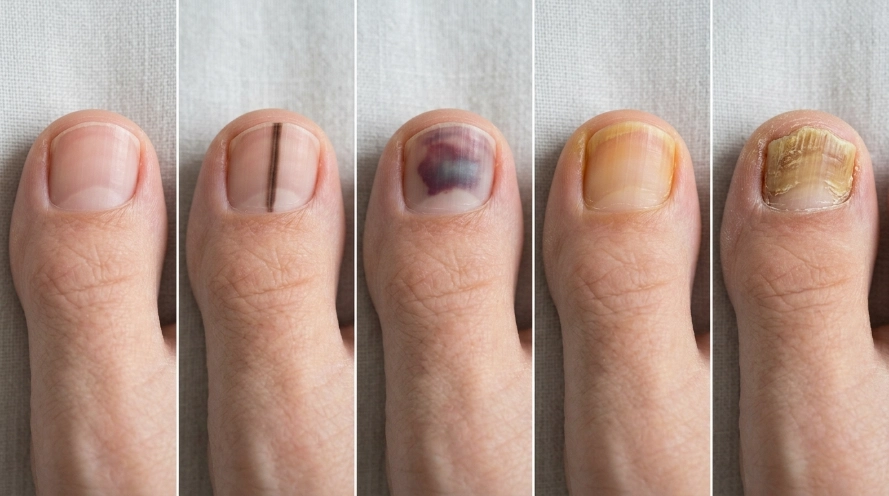
These two can look surprisingly similar at first.
Polish staining is more likely when:
- Several polished nails have similar discoloration.
- You regularly wear dark polish.
- The nail remains smooth.
- There is no crumbling.
- The discoloration gradually grows out.
A fungal infection becomes more concerning when discoloration occurs with:
- Increasing nail thickness
- Crumbling edges
- Brittleness
- Distortion
- Nail lifting
- Debris beneath the nail
- Unpleasant odor
Nail fungus is especially common in toenails, and the infection may gradually become deeper and more difficult to ignore.
Do not assume every yellow toenail needs antifungal treatment. Trauma, polish staining, aging, and other nail conditions can create similar changes.
A professional evaluation can help when the cause is unclear.
Common Mistakes to Avoid
Toenail concerns often become harder to evaluate when people immediately try to fix the appearance.
Avoid these common mistakes:
- Painting over unexplained discoloration. You lose the ability to monitor the nail easily.
- Aggressively filing thick nails. Over-filing can damage or irritate the nail.
- Cutting deeply into nail corners. This may encourage painful ingrown nails.
- Using someone else’s nail tools. Shared tools can spread microorganisms.
- Assuming every yellow nail is fungus. Several conditions can look similar.
- Assuming every dark nail is a bruise. New or changing dark streaks should be taken seriously.
- Picking underneath a lifting nail. This can cause more separation or injury.
- Ignoring surrounding redness or swelling. Skin symptoms can be just as important as nail color.
- Relying only on internet photos for diagnosis. Many nail problems resemble one another.
When to See a Nail Technician or Dermatologist
A nail technician can help with routine cosmetic nail care, trimming, polishing, and appearance when the nails and surrounding skin are otherwise healthy.
A technician should not be expected to diagnose or treat a medical nail condition.
Consider seeing a dermatologist, podiatrist, or another appropriate healthcare professional if:
- A toenail changes color without an obvious reason.
- A dark streak is new or changing.
- Discoloration continues spreading.
- The nail becomes increasingly thick or distorted.
- The nail starts separating from the nail bed.
- The surrounding skin becomes red, warm, swollen, or painful.
- You notice bleeding or drainage.
- Walking becomes painful.
- Several nails suddenly change appearance.
- A suspected fungal problem does not improve.
- You have diabetes, poor circulation, or another condition that makes foot problems more important to address promptly.
The NHS recommends medical assessment when a nail changes color or shape or falls off without a known reason, particularly when the surrounding skin becomes sore, swollen, red, or warm.
DIY cosmetic care has limits. When infection, injury, significant pain, or an unexplained persistent color change is involved, getting the cause identified is more useful than trying to hide the nail.
FAQs
Is a healthy toenail supposed to be pink?
Healthy toenails often appear pinkish because the translucent nail plate allows the nail bed underneath to show through. The exact shade varies with skin tone, nail thickness, and natural pigmentation.
Should healthy toenails be completely white?
No. The free edge that extends beyond the toe often appears white or ivory, but most of the attached nail is usually somewhat translucent. A toenail does not need to be bright white to be healthy.
Why are my toenails slightly yellow but not thick?
Polish staining is one possible explanation, especially after repeatedly wearing dark or strongly pigmented colors. However, yellowing can have other causes. Monitor the nails after removing polish and seek professional advice if the color persists, spreads, or is accompanied by thickening or crumbling.
What color is toenail fungus?
Fungal nails may appear white, yellow, yellow-brown, or otherwise discolored. Color alone cannot confirm fungus. Thickening, brittleness, crumbling, distortion, and separation from the nail bed may also occur.
Is a black toenail always dangerous?
No. Trauma can cause blood to collect beneath a toenail and create a dark purple or black appearance. However, a new or changing dark streak without a clear injury should be evaluated by a dermatologist.
Why is only one toenail a different color?
One nail may differ because of trauma, footwear pressure, staining, infection, or another localized nail problem. If you cannot identify a reason or the change continues to develop, have it assessed rather than assuming it is harmless.
How long does it take for toenail discoloration to grow out?
Toenails grow slowly. A damaged or stained area can therefore remain visible for months while new nail grows forward. The NHS notes that a toenail lost after an injury can take up to about 18 months to fully grow back.
Conclusion
So, what does a healthy toenail color look like? Usually, it is translucent with a pink, peach, beige, or naturally pigmented appearance from the nail bed underneath. The tip commonly looks white or ivory.
But healthy toenails cannot be judged by color alone.
Pay attention to whether your nails remain smooth, comfortably attached, reasonably even in thickness, and free from unexplained pain, swelling, crumbling, or progressive discoloration.
Temporary staining or a minor bruise can happen. A new dark streak, persistent yellowing with thickening, unusual green or blue discoloration, nail separation, or inflammation deserves more attention.
Keep your feet clean and dry, trim toenails carefully, wear shoes with enough room, use clean tools, and resist the urge to hide unexplained changes under polish.
When something looks noticeably different from your normal, monitor it carefully—and when the cause is unclear or the change keeps progressing, let a qualified healthcare professional examine it.

