
How to Clean Your Toenails Properly

Toenails can collect sweat, dead skin, sock lint, product residue, and dirt surprisingly quickly. If you wear closed-toe shoes most of the day, exercise often, or regularly use nail polish, keeping them clean can feel like an ongoing job.
Learning how to clean your toenails properly is not about aggressively scraping beneath the nail. In fact, overly harsh cleaning can irritate the skin, separate the nail from the nail bed, or create tiny openings where germs can enter.
A simple routine using warm water, mild soap, a soft brush, clean clippers, and careful drying is usually enough for healthy toenails.
Below, you’ll learn exactly how to clean your toenails at home, what tools are safest, how to deal with stubborn buildup, which mistakes to avoid, and when a nail problem needs professional attention instead of more scrubbing.
Quick Answer
To learn how to clean your toenails properly, wash your feet with warm water and mild soap, gently clean around and beneath the free edge with a soft nail brush, rinse thoroughly, and dry between every toe. Trim toenails straight across with clean clippers and avoid digging underneath the nail with sharp tools.
Why Proper Toenail Cleaning Matters
Clean toenails are partly about appearance, but hygiene is the more important reason.
Feet spend hours inside socks and shoes where heat and moisture can build up. This creates an environment where odor-causing microorganisms and fungi can thrive.
The CDC’s guidance on healthy foot hygiene recommends washing feet every day, drying them completely, keeping toenails clean, and regularly checking the feet for problems such as sores, swelling, or infected nails.
Proper cleaning can help remove:
- Dirt trapped beneath the free edge of the nail
- Dead skin around the toes
- Sock fibers and lint
- Sweat and surface oils
- Residue from polish or foot-care products
- Debris that may contribute to odor
However, cleaning cannot cure a fungal infection, ingrown toenail, or another medical nail condition. If the nail itself is changing in color, thickness, shape, or texture, the problem may be more than ordinary dirt.
What You Need to Clean Your Toenails
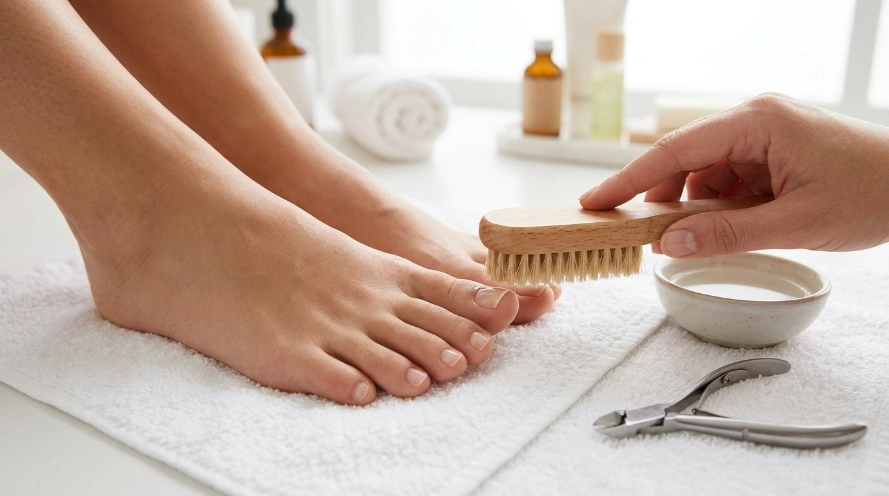
You do not need an expensive pedicure kit.
For most people, a simple home setup works well.
| Tool | What It Does | Best Choice | What to Avoid |
|---|---|---|---|
| Mild soap | Removes sweat, oils, and surface dirt | Gentle liquid or bar soap | Strong irritating cleansers |
| Soft nail brush | Loosens debris around nails | Soft or medium-soft bristles | Hard wire-like brushes |
| Toenail clippers | Keeps nails manageable | Stainless steel toenail clippers | Rusty or shared clippers |
| Nail file | Smooths rough edges | Fine or medium-grit file | Aggressive sawing |
| Clean towel | Removes moisture | Fresh, dry towel | Damp shared towels |
| Moisturizer | Helps dry skin around toes | Simple fragrance-free lotion | Applying heavy cream between damp toes |
A basic nail brush and toenail clipper are usually inexpensive, so there is no need to build a salon-level kit unless you enjoy doing full pedicures at home.
Cleanliness matters more than price.
How to Clean Your Toenails Properly Step by Step
1. Remove Nail Polish if Necessary
If you’re wearing polish and only want to clean your feet, you don’t necessarily need to remove it.
However, occasionally removing polish lets you see the natural nail underneath. This makes it easier to notice discoloration, cracking, thickening, or other changes.
If you use remover, wash and moisturize afterward because acetone-based removers can leave nails and surrounding skin feeling dry.
2. Wash or Soak Your Feet
Start with warm—not extremely hot—water.
You can clean your toenails during a shower or bath, or soak your feet for about 5–10 minutes.
Add a small amount of mild soap and wash:
- The tops of your feet
- The soles
- Around each toenail
- Between the toes
Soaking briefly also softens thicker toenails before trimming.
The American Academy of Dermatology’s nail-trimming guidance recommends trimming nails after bathing or showering when possible because water softens them.
Avoid soaking your feet for unnecessarily long periods. The goal is to soften and clean them, not leave the skin waterlogged.
3. Gently Brush Around the Toenails
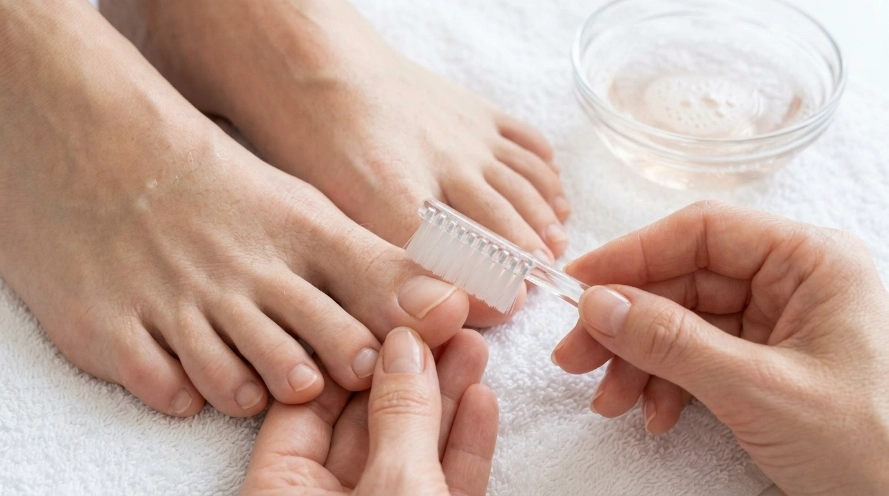
Apply a little soap to a soft nail brush.
Move the brush gently across the top and sides of each toenail. Pay special attention to the area where the nail meets the surrounding skin.
You can also lightly brush beneath the visible free edge—the white or extended part of the nail.
Do not force the brush deep under an attached toenail.
The skin beneath the nail is sensitive. Aggressive cleaning can cause pain, bleeding, or separation between the nail and nail bed.
The CDC’s nail hygiene recommendations emphasize keeping nails short and clean and cleaning nail-grooming tools before use.
4. Deal With Dirt Under the Nail Carefully
Seeing dark material beneath a toenail can make you want to grab a metal tool and dig it out.
Avoid doing that.
If debris does not come away easily with washing and gentle brushing, soak the toe for a few additional minutes and brush again.
Never use:
- Needles
- Pins
- Scissors
- Knife tips
- Metal picks
- Sharp manicure tools
A sharp object can puncture the skin beneath the nail or push debris farther inward.
If something appears stuck beneath the nail and gentle cleaning does not remove it, leave it alone rather than causing an injury.
5. Rinse Away Soap and Debris
Rinse your feet thoroughly with clean water.
Soap remaining around the nail folds or between the toes may irritate sensitive skin.
Check each nail visually. Healthy toenails do not have to look perfectly white or polished to be clean.
Natural toenails vary in color and appearance.
6. Dry Your Feet Completely
This is one of the easiest steps to rush, but it is important.
Pat your feet dry with a clean towel and carefully dry between each toe.
Fungi tend to do well in warm, moist environments. Keeping feet clean and dry is one of the basic hygiene measures recommended for reducing foot and nail problems.
If your feet sweat heavily, putting clean socks onto completely dry feet can also make them more comfortable.
How to Trim Toenails After Cleaning
Cleaning and trimming often work well together because freshly washed nails are softer.
Trim Straight Across
Use clean toenail clippers and make small, controlled cuts.
Toenails should generally be trimmed straight across rather than deeply rounded at the corners.
The American Academy of Dermatology recommends straight-across trimming to help reduce the chance of ingrown toenails.
Do not cut the nail extremely short.
Ideally, leave a small visible edge rather than cutting down into the attached portion of the nail.
Smooth Rough Edges
If the nail feels sharp after clipping, gently smooth it with a nail file.
Use controlled strokes rather than aggressively sawing back and forth.
A smooth edge is less likely to snag on socks.
Clean Your Tools
Toenail clippers and files should not move from person to person without appropriate cleaning.
Shared nail tools can spread microorganisms.
Clean reusable tools according to their manufacturer’s instructions and allow them to dry completely before storing them.
Expert Tip: Clean your toenails after a shower, when both the debris and nail are softer. You’ll usually need less pressure, which makes it easier to clean without scraping or irritating the skin underneath.
What About the Cuticles Around Your Toenails?
The cuticle is the thin layer of protective tissue near the base of your nail.
It can be tempting to cut it away during an at-home pedicure, especially if you’re trying to create a very neat salon-style appearance.
But cutting healthy cuticles is usually unnecessary.
Cuticles help protect the area where the nail grows. The American Academy of Dermatology advises against cutting them because damaging this protective barrier can make it easier for germs to enter.
Instead:
- Wash gently around them
- Moisturize dry skin
- Do not tear loose skin
- Avoid aggressive pushing or cutting
If the surrounding skin becomes painful, swollen, or produces drainage, stop DIY grooming until you know what is causing the problem.
How Often Should You Clean Your Toenails?
Basic foot washing should normally be part of your daily hygiene routine.
That does not mean you need an intensive pedicure every day.
A practical routine might look like this:
Daily: Wash your feet and dry between your toes.
Several times per week: Check beneath and around your toenails for visible debris.
As needed: Use a soft nail brush when ordinary washing does not remove buildup.
When nails become long: Trim them straight across.
Regularly: Clean reusable nail tools.
Your routine may need extra attention if you exercise frequently, wear work boots, have sweaty feet, walk barefoot often, or spend a lot of time in closed shoes.
What If Your Toenails Still Look Dirty After Washing?
Sometimes what appears to be dirt is actually part of the nail.
For example, fungal nail infections can cause toenails to become discolored, thicker, brittle, or crumbly.
The NHS overview of fungal nail infections notes that affected nails may become thicker than usual, brittle, and white or yellow.
That means repeated scrubbing will not necessarily make the discoloration disappear.
Other possible reasons a toenail may look unusual include:
- Previous trauma
- Pressure from tight shoes
- Old blood beneath the nail
- Nail polish staining
- Separation of the nail
- Fungal infection
- Other skin or nail conditions
Do not assume every dark or yellow area is dirt or fungus.
If the appearance is new, unexplained, painful, spreading, or persistent, professional evaluation is safer than repeatedly scraping the nail.
Cleaning Toenails When You Have Sensitive Skin
Sensitive or very dry skin needs a gentler approach.
Choose mild, fragrance-free soap when possible and avoid harsh scrubbing.
After drying your feet, you can apply moisturizer to dry areas around the toes and tops or bottoms of the feet.
Be cautious about leaving thick layers of moisturizer between the toes, especially if that area tends to stay damp.
Stop using a new soap, foot soak, polish, adhesive, or other product if you notice:
- Burning
- Persistent itching
- Swelling
- Blistering
- Rash
- Increasing redness
These symptoms may indicate irritation or an allergic reaction rather than normal dryness.
Home Cleaning vs. Professional Pedicure
Most healthy toenails can be cleaned at home.
A professional pedicure may be more convenient if you have difficulty reaching your feet or simply prefer salon grooming.
| At-Home Care | Professional Pedicure |
|---|---|
| Low ongoing cost | Higher cost per visit |
| Easy for routine hygiene | Convenient for detailed cosmetic care |
| You control your own tools | Tools and equipment may be shared |
| Good for healthy, uncomplicated nails | Helpful when nails are hard to reach |
| Not appropriate for diagnosing disease | Nail techs still do not replace medical professionals |
If choosing a salon, pay attention to sanitation practices.
Tools used on multiple clients should be properly cleaned and disinfected according to applicable salon procedures.
And remember: a nail technician provides cosmetic nail services, not medical diagnosis or treatment.
If a nail appears infected or severely damaged, a dermatologist, podiatrist, or other qualified healthcare professional is the better choice.
Common Mistakes to Avoid
Even a good hygiene routine can cause trouble if it becomes too aggressive.
Avoid these common mistakes:
- Digging deeply beneath the toenail. This can injure the tissue or separate the nail.
- Using pointed metal objects. Sharp tools can puncture the skin.
- Cutting toenails too short. Excessive trimming may cause tenderness and contribute to nail problems.
- Rounding the corners deeply. Straight-across trimming is generally recommended for toenails.
- Cutting healthy cuticles. They provide a protective barrier around the nail.
- Sharing clippers. Personal nail tools should not be casually shared.
- Putting socks onto wet feet. Take time to dry between the toes.
- Scrubbing discoloration aggressively. A nail that stays yellow, brown, white, thick, or crumbly may need evaluation.
- Ignoring pain or swelling. Persistent soreness is not something to scrub away.
When to See a Nail Technician or Dermatologist
A nail technician can help maintain healthy toenails cosmetically, but certain problems should not be treated as ordinary pedicure issues.
Consider professional medical advice if you notice:
- Increasing pain around a toenail
- Red, swollen, or warm skin
- Pus or drainage
- A nail becoming unusually thick
- Persistent yellow, white, brown, or dark discoloration
- A nail becoming brittle or crumbly
- Separation between the nail and nail bed
- Recurring ingrown toenails
- A nail changing shape without an obvious reason
- Symptoms that continue despite careful hygiene
The NHS advises seeking medical attention for unexplained nail changes and for skin around the nail that becomes sore, red, swollen, and warm.
People with diabetes, reduced circulation, loss of sensation in the feet, or immune-system problems may need more cautious foot care. A small cut that seems minor to someone else may be more important in these situations.
When in doubt, avoid aggressive DIY trimming or digging and get professional guidance.
FAQs
What is the easiest way to clean dirt from under toenails?
Soak or wash your feet with warm water and mild soap first. Then gently use a soft nail brush around the visible free edge. Avoid pushing pointed objects deep underneath the nail.
Should I clean underneath my toenails every day?
Daily washing is helpful, but intensive under-nail cleaning is usually unnecessary. Brush underneath only when you can see removable debris. Constant scraping can irritate the skin.
Why is there white stuff under my toenails?
It may be a mixture of dead skin and natural keratin, but persistent buildup can sometimes occur alongside fungal or other nail changes. If the nail is also thick, crumbly, discolored, painful, or lifting, consider professional evaluation.
Can I use a toothbrush to clean my toenails?
A clean, soft toothbrush used only for foot care can work similarly to a nail brush. Use light pressure and do not force the bristles deeply beneath the attached part of the nail.
Should toenails be cleaned with hydrogen peroxide?
Routine toenail cleaning usually does not require hydrogen peroxide. Mild soap and water are normally enough for healthy nails, and stronger products may irritate sensitive or broken skin.
Why do my toenails smell even after washing?
Odor can be related to sweat, damp footwear, bacteria, or fungal skin problems such as athlete’s foot. Keep feet dry, change socks regularly, rotate damp shoes, and seek advice if odor occurs with itching, peeling, redness, or nail changes.
How can I keep my toenails cleaner longer?
Wash and dry your feet daily, wear clean socks, allow shoes to dry between uses, keep toenails appropriately trimmed, and avoid sharing nail tools. Breathable, properly fitting footwear may also help reduce excessive moisture.
Final Thoughts
Knowing how to clean your toenails properly comes down to being thorough without being aggressive.
Wash your feet regularly, soften the nails with warm water, gently brush away visible debris, dry carefully between your toes, and trim the nails straight across with clean tools.
Most importantly, do not try to scrape away every unusual-looking spot.
A toenail that stays thick, discolored, painful, swollen, brittle, or separated from the nail bed may need more than better hygiene. In those situations, stop aggressive DIY care and speak with an appropriate professional.
Keep your routine simple, check your toenails regularly, and focus on keeping both the nails and surrounding skin clean, dry, and comfortable.

