
How to Remove Dirt From Under Toenails Safely at Home

Dirt under your toenails can make otherwise clean feet look neglected, especially when you are getting ready for sandals, a pedicure, or fresh polish. The tricky part is getting the debris out without scraping the skin under the nail or accidentally causing irritation.
Learning how to remove dirt from under toenails is mostly about softening the debris, cleaning gently, and keeping your tools clean. You usually do not need sharp instruments or strong chemicals.
Below, you will learn the safest at-home method, which tools work best, what mistakes to avoid, and when something that looks like ordinary dirt may actually need professional attention.
Quick Answer
To remove dirt from under toenails, soak or wash your feet with warm water and mild soap, then gently clean around and beneath the free edge of each nail with a soft nail brush. Rinse thoroughly and dry your feet well. Never dig deeply under the nail with sharp or metal tools.
Why Does Dirt Collect Under Toenails?
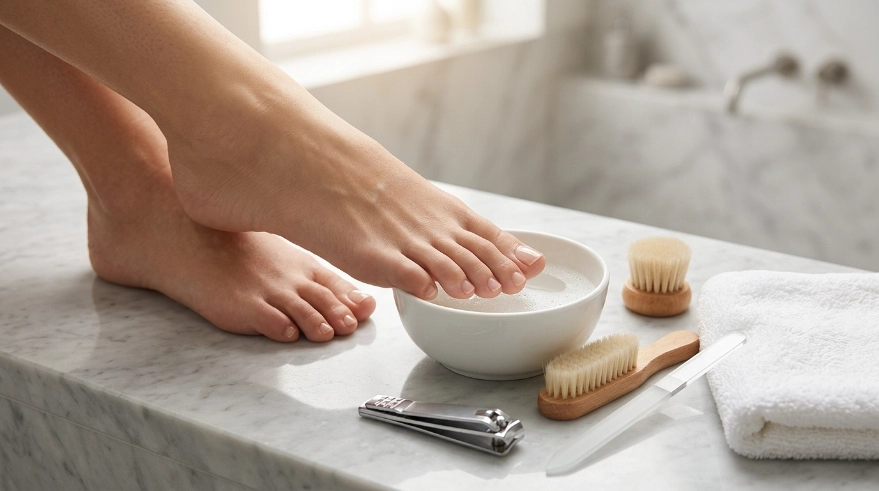
The space underneath the tip of your toenail can trap more than visible dirt. It may collect tiny amounts of dead skin, sock fibers, dust, sweat, soap residue, and debris from shoes.
Toenails also grow much more slowly than fingernails, so debris can remain unnoticed for longer.
You may notice buildup more often if you:
- Wear closed shoes for long periods.
- Exercise or sweat heavily.
- Walk barefoot frequently.
- Have longer toenails.
- Wear dark socks that shed fibers.
- Have thick or curved toenails.
- Apply several layers of polish regularly.
- Do not dry your feet completely after bathing.
A little removable debris is normally a hygiene issue rather than a serious nail problem. However, material that keeps returning, smells unusual, or appears with nail thickening or discoloration deserves closer attention.
The Safest Way to Remove Dirt From Under Toenails
You do not need a professional pedicure kit for routine cleaning. In fact, a simpler approach is usually safer.
Gather:
- Warm water
- Mild soap
- A soft nail brush or very soft toothbrush reserved for foot care
- A clean towel
- Toenail clippers, if trimming is needed
- A nail file for rough edges
The goal is to loosen the debris rather than scrape it out.
According to the American Academy of Dermatology’s nail-trimming guidance, keeping nails properly trimmed can reduce the amount of dirt and bacteria they harbor. Dermatologists also recommend trimming toenails straight across instead of cutting deeply down the sides.
Step 1: Wash or Soak Your Feet
Start with a shower, bath, or short foot soak using comfortably warm water.
Around 5 to 10 minutes is usually plenty for ordinary dirt. The purpose is simply to soften the toenails, surrounding skin, and dried debris.
Add a small amount of mild soap if your feet are especially dirty.
Avoid extremely hot water because it can dry or irritate sensitive skin.
Step 2: Clean the Nail Surface First
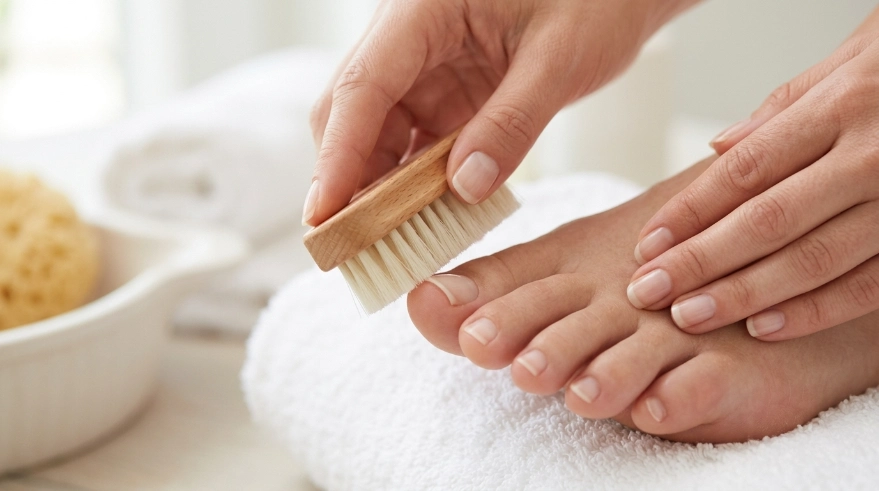
Apply a little soap to your soft nail brush.
Gently brush:
- Across the top of the toenail
- Around the nail edges
- Along the visible free edge
- Around the skin surrounding the nail
Removing surface grime first prevents you from pushing additional debris underneath the toenail.
Use light pressure. Scrubbing harder does not necessarily clean better.
Step 3: Gently Brush Beneath the Free Edge
The free edge is the part of the nail that extends beyond the attached nail bed.
Angle the soft brush toward this edge and use gentle strokes to loosen visible debris.
Do not force the brush deeply underneath the nail.
The skin underneath your nail is sensitive. Aggressive cleaning may separate the nail from the nail bed or create tiny injuries that make it easier for germs to enter.
The NHS specifically advises against cleaning underneath nails with sharp objects.
If something does not come out easily after washing and gentle brushing, resist the temptation to dig for it.
Step 4: Rinse Thoroughly
Rinse your toes with clean water until all soap and loosened debris are gone.
Look beneath the nail in good lighting.
A small amount of natural discoloration or material beneath a nail does not always mean the nail is still dirty. If the area does not change after gentle washing, it may not be surface debris at all.
Step 5: Trim Long Toenails if Necessary
If your toenails extend noticeably beyond the toe, trimming them may make future cleaning easier.
Toenails are usually easier to trim just after bathing because they are softer.
Cut each toenail mostly straight across rather than rounding deeply into the corners. Cutting deeply down the sides can increase the risk of an ingrown toenail.
Do not cut the nail so short that the sensitive skin underneath becomes exposed.
Step 6: Smooth Rough Edges
If trimming leaves a rough corner or sharp edge, smooth it gently with a clean nail file.
There is no need to aggressively file underneath the nail.
The goal is simply to remove snagging edges that may trap sock fibers and debris.
Step 7: Dry Your Feet Completely
This final step matters more than many people realize.
Dry:
- The nails
- Around the nail folds
- Between every toe
- The soles of your feet
Warm, damp conditions can encourage fungal growth. The NHS guidance on fungal nail infections recommends keeping feet clean and dry as part of prevention.
Put on clean socks only after your feet are dry.
Which Toenail Cleaning Tools Are Safe?
You may see dozens of pedicure tools online, but more tools do not automatically mean cleaner or healthier toenails.
| Tool | Best Use | Safety Consideration | Cost Level |
|---|---|---|---|
| Soft nail brush | Everyday cleaning | Use gentle pressure | Very low |
| Soft toothbrush | Alternative nail brush | Reserve it only for foot care | Very low |
| Toenail clippers | Shortening long nails | Cut mostly straight across | Low |
| Nail file | Smoothing edges | Do not aggressively file underneath | Low |
| Metal nail cleaner | Removing debris | Can scrape or puncture skin; best avoided for routine DIY cleaning | Low |
| Sharp cuticle tool | Cuticle work | Should not be pushed beneath toenails | Low to moderate |
For most people, mild soap and a soft brush are enough.
You do not need an expensive electric drill, metal scraper, or professional pedicure instrument just to remove ordinary dirt.
What If the Dirt Will Not Come Out?
If dark or yellow material remains after washing, soaking, and gentle brushing, stop cleaning aggressively.
What appears to be dirt can sometimes be:
- Dried blood after an injury
- Nail staining
- Thickened nail material
- Keratin or skin buildup
- Debris caused by nail separation
- A fungal nail infection
Trying to scrape these materials away may damage the nail.
For example, fungal nail infections can make toenails yellow, white, thick, brittle, crumbly, or distorted. Mayo Clinic notes that an affected nail may also begin separating from the nail bed.
If the appearance does not improve after normal cleaning, treat it as a nail change rather than simply stubborn dirt.
Should You Use Hydrogen Peroxide or Other Strong Cleaners?
For routine dirt, usually not.
Ordinary soap and water are generally sufficient for everyday toenail hygiene.
Repeatedly applying harsh chemicals can dry the skin surrounding the nail and may cause irritation, especially if you already have sensitive or cracked skin.
Avoid experimenting underneath the nail with:
- Household bleach
- Undiluted disinfectants
- Strong cleaning solutions
- Acetone
- Highly concentrated essential oils
Acetone has a place in removing certain nail products, but it is not a toenail dirt remover.
If your concern is infection rather than ordinary debris, cleaning harder is not the same as treating the underlying problem.
How to Keep Dirt From Building Up Again
Removing dirt is easier when you prevent heavy buildup in the first place.
Keep Your Toenails a Comfortable Length
Long nails provide more space for debris to collect underneath.
Trim them regularly, but avoid cutting them extremely short.
Wash Your Feet Daily
During a shower or bath, gently wash the tops, bottoms, and sides of your feet.
Pay attention to the nails and spaces between your toes.
You do not need aggressive scrubbing every day.
Change Socks Regularly
Fresh socks help reduce moisture, odor, lint, and debris around your toes.
If your feet become sweaty after exercise, consider changing into a dry pair rather than staying in damp socks for hours.
Choose Shoes That Fit Properly
Shoes that repeatedly squeeze your toes can irritate the nails and surrounding skin.
They may also contribute to nail trauma, which can make the area underneath the nail look darker or irregular.
Keep Nail Tools Clean
Do not repeatedly use dirty clippers or brushes.
The American Academy of Dermatology recommends cleaning and disinfecting nail-grooming tools because contaminated tools can contribute to the spread of infections such as nail fungus.
Allow tools to dry completely before storing them.
And ideally, do not share personal toenail clippers with family members or friends.
Expert Tip: Clean your toenails after your shower rather than trying to scrape away dry debris beforehand. Warm water softens the buildup, so a soft brush can usually remove it with much less pressure.
What About Dirt Under Acrylic or Polished Toenails?
Polish can make it harder to see what is happening underneath or around a toenail.
If you regularly wear toenail polish, occasionally removing it gives you a chance to look at the actual nail plate.
Watch for unexpected:
- Yellowing
- Dark patches
- Thickening
- Crumbling
- Lifting
- Pain
- Redness around the nail
Do not cover an unexplained nail change with another coat of polish simply because it looks unattractive.
If the nail has lifted slightly from the nail bed, water and debris may become trapped underneath it. Trying to dig beneath that lifted area can worsen the separation.
DIY Cleaning vs. Professional Pedicure
Routine dirt usually does not require professional treatment.
Home cleaning is the lowest-cost option and gives you full control over which tools touch your feet.
A salon pedicure may be useful when you have trouble reaching your feet or safely managing very thick nails. However, salon hygiene matters.
The American Academy of Dermatology advises checking whether pedicure stations, tools, and foot baths are properly cleaned and sanitized between clients.
A nail technician can help with cosmetic grooming, but she should not be expected to diagnose unexplained nail disease.
For pain, infection, significant nail changes, or persistent discoloration, a healthcare professional is more appropriate.
Common Mistakes to Avoid
Cleaning under toenails should never hurt.
Avoid these common mistakes:
- Digging with scissors, pins, needles, or tweezers. These can injure the sensitive tissue under your nail.
- Using a metal tool aggressively. Even professional-looking tools can cause damage when pushed too far beneath the nail.
- Cutting toenails extremely short. This may expose sensitive skin and create discomfort.
- Rounding deeply into the nail corners. This can encourage ingrown toenails.
- Scrubbing until the skin feels sore. More pressure does not mean better hygiene.
- Ignoring persistent discoloration. Material that will not wash away may not actually be dirt.
- Sharing nail tools. Clippers and other grooming tools can carry microorganisms between people.
- Putting damp socks on after cleaning. Dry your feet completely first.
- Trying to treat suspected fungus by scraping it away. A fungal infection involves the nail itself and cannot simply be cleaned off.
When to See a Nail Technician or Dermatologist
A nail technician may be helpful for routine grooming when you cannot comfortably trim or clean your own toenails.
Choose a salon that appears clean and follows proper tool-disinfection practices.
A dermatologist, podiatrist, or other qualified healthcare professional is a better choice when the problem looks medical rather than cosmetic.
Consider getting medical advice if you notice:
- Increasing redness or swelling
- Warmth around the nail
- Pus or drainage
- Persistent pain
- Bleeding around the nail
- A nail becoming unusually thick
- Crumbling or brittle toenails
- A nail lifting away from the nail bed
- Persistent yellow, white, green, brown, or dark discoloration
- An unexplained new or changing dark area
- Several toenails changing at once
- Difficulty walking because of the nail
Mayo Clinic recommends medical evaluation when nail changes become increasingly discolored, thickened, or misshapen, particularly when there is pain, swelling, bleeding, or difficulty walking.
You should also be more cautious about DIY foot care if you have diabetes, poor circulation, reduced feeling in your feet, or a weakened immune system. Small foot injuries can be more significant in these situations.
FAQs
Why do I keep getting dirt under my toenails?
Closed shoes, sweaty feet, long toenails, sock fibers, barefoot walking, and everyday debris can all contribute. Keeping your nails comfortably short and washing and drying your feet regularly can reduce buildup.
Can I use a toothpick to clean under my toenails?
It is better not to. A toothpick can scratch or puncture the sensitive skin beneath your nail. Warm water, mild soap, and a soft nail brush are safer for routine cleaning.
How often should I clean under my toenails?
Gentle cleaning during normal bathing is usually enough. You do not need to scrape beneath the nails every day. If visible dirt remains, clean it gently after the nail has softened in warm water.
Why is there black stuff under my toenail?
It may be ordinary debris, but dark material can also come from dried blood, trauma, staining, or changes within the nail. If it does not wash away easily or you do not know why it appeared, avoid digging at it and consider having the nail examined.
Why is there white material underneath my toenail?
White material may be softened skin or keratin buildup, but persistent white debris can also occur with certain nail conditions, including fungal infections. Thickening, crumbling, lifting, or spreading discoloration are reasons to seek professional advice.
Can toenail fungus look like dirt?
Yes. A fungal nail infection can cause discoloration, thickening, crumbling, or material beneath the nail. Unlike ordinary dirt, these changes usually do not disappear after normal washing.
Should I clean underneath my toenails before a pedicure?
You can gently wash your feet beforehand, but you do not need to aggressively scrape underneath the nails. A reputable nail technician should perform routine cosmetic cleaning using properly sanitized tools.
Conclusion
If you are wondering how to remove dirt from under toenails, the safest method is also one of the simplest: soften your feet with warm water, wash with mild soap, use a soft brush around the free edge, rinse, and dry thoroughly.
Avoid digging underneath the nail with sharp or metal tools. Keep your toenails comfortably trimmed, wear clean socks, and clean your grooming tools regularly to make future buildup easier to manage.
Most ordinary dirt comes away without much effort. If something will not wash away, especially when the nail is painful, thick, discolored, crumbly, swollen, or lifting, stop treating it like dirt. A nail technician can help with cosmetic grooming, while unexplained or concerning changes should be checked by a dermatologist, podiatrist, or other qualified healthcare professional.
Make gentle cleaning part of your regular foot-care routine, and pay attention to changes rather than trying to scrape them away.

