
How Often Should You Clean Your Toenails? A Simple Hygiene Routine

Toenails are easy to forget until dirt collects underneath them, polish starts looking rough, or one nail suddenly seems different from the others. Because feet spend so much time inside socks and shoes, sweat, lint, dead skin, and everyday debris can build up faster than you might expect.
So, how often should you clean your toenails? For most people, gentle daily washing is enough, with a little extra cleaning under the nail edges whenever you see visible buildup. You do not need to scrape aggressively under your nails every day.
The goal is simple: keep your feet and toenails clean and dry without irritating the skin or damaging the nail. Below, you’ll learn how often to clean them, the safest tools to use, how to build an easy routine, and which nail changes deserve professional attention.
Quick Answer
For most people, toenails should be gently cleaned every day when washing the feet. Use mild soap and water, then dry thoroughly. More detailed cleaning around and beneath the free nail edge can be done once or twice a week, or whenever visible dirt appears. Avoid aggressive scraping or sharp tools.
How Often Should You Clean Your Toenails?
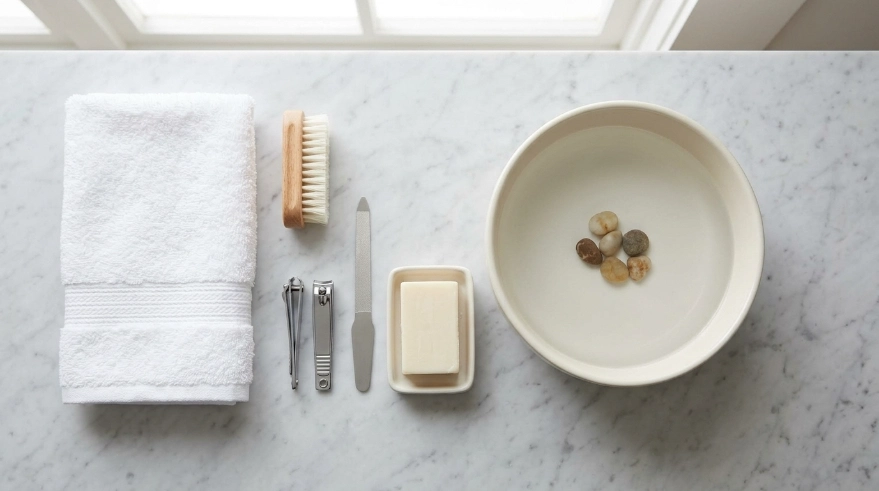
A good everyday rule is to wash your feet and toenails once a day.
The CDC recommends washing the feet daily, drying them completely, keeping toenails clean, and regularly checking the feet for cuts, swelling, sores, or infected nails. CDC healthy foot hygiene guidance
That does not mean you need to perform a mini pedicure every evening.
Your routine can be divided into two levels:
- Daily: Wash your toes and nails with mild soap and water.
- Once or twice a week: Give the nail edges a little extra attention with a soft nail brush if debris tends to collect there.
- As needed: Clean your toenails after gardening, walking barefoot, exercising heavily, swimming, or any activity that leaves visible dirt around the nails.
There is no universal medical schedule requiring everyone to scrub underneath toenails a certain number of times per week. Your lifestyle, footwear, sweating, nail length, and skin sensitivity all affect how much cleaning you need.
Most importantly, cleaning more aggressively does not automatically mean better hygiene.
Digging under the nail can irritate the sensitive skin beneath it and may even cause the nail plate to separate slightly from the nail bed.
A Practical Toenail Cleaning Schedule
Here is an easy routine you can adjust to your lifestyle.
| Situation | Suggested Routine | What to Do |
|---|---|---|
| Normal everyday activity | Daily | Wash feet and nails with mild soap and water |
| Visible dirt under nails | As needed | Use a soft nail brush after washing |
| Frequent workouts | Daily and after heavy sweating | Wash, rinse, and dry feet thoroughly |
| Regular closed-toe shoe use | Daily | Pay extra attention to drying between toes |
| Barefoot outdoor activity | After exposure | Wash off soil and visible debris |
| Weekly home pedicure | About once a week | Clean, inspect, and trim nails if needed |
| Nail polish wearer | Daily surface hygiene | Occasionally remove polish so you can inspect the natural nail |
| Sensitive or easily irritated skin | Gentle daily washing | Avoid harsh brushes and strong cleansers |
The important difference is between routine washing and deep cleaning. Routine washing should be frequent and gentle. Deeper cleaning should be occasional and careful.
Why Daily Toenail Hygiene Matters
Feet spend hours in an environment that can become warm and damp, especially when you wear socks, sneakers, boots, or other closed shoes.
Moisture itself does not mean you have an infection. However, fungi associated with athlete’s foot and fungal nail problems tend to do well in warm, moist environments. The CDC recommends keeping feet clean and dry and changing socks regularly as basic foot-hygiene measures.
Regular cleaning also helps remove:
- Sweat
- Dead skin
- Sock fibers
- Dust and dirt
- Residue from lotions or foot products
- Debris trapped near the free nail edge
Cleaning also gives you an opportunity to look at your toenails.
That matters because discoloration, thickening, cracking, swelling, or changes in nail shape may be easier to notice when you regularly check your feet.
How to Clean Your Toenails Safely
You do not need expensive tools or a salon-quality pedicure kit to keep healthy toenails clean.
1. Start With Warm Water
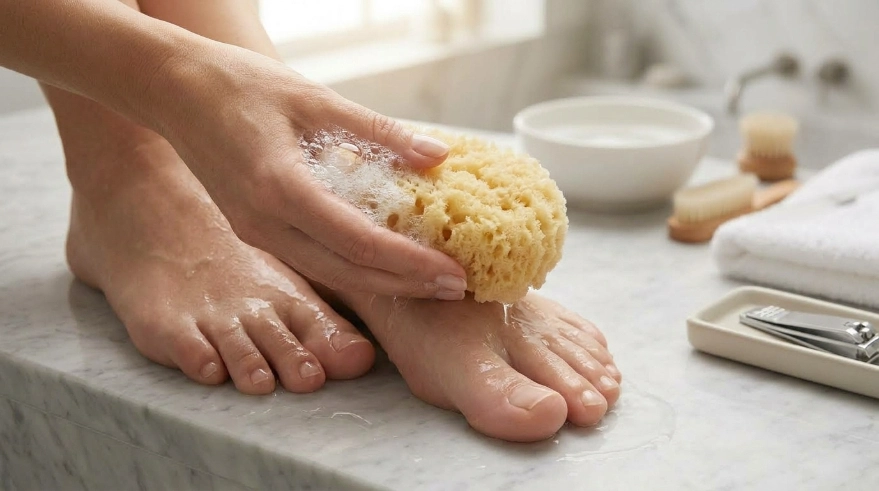
Wash your feet in the shower, bath, or a basin of comfortably warm water.
Avoid extremely hot water, especially if your skin tends to become dry or irritated.
If dirt is stuck around the nails, letting your feet stay in warm water for several minutes can soften the debris and make it easier to remove gently.
2. Use Mild Soap
Apply a mild soap to your feet and carefully wash around each toenail.
Clean:
- The top of the nail
- The sides of the nail
- The tip of the toe
- Between the toes
- Beneath the exposed free edge when accessible
You do not need antibacterial soap for routine cleaning unless a healthcare professional has specifically recommended it.
3. Use a Soft Nail Brush if Needed
If normal washing does not remove visible debris, use a clean, soft nail brush.
Move the brush gently around the nail and across the exposed underside of the free edge.
Do not force the brush deep beneath the toenail.
The CDC’s general nail-hygiene guidance recommends keeping nails short and clean and cleaning grooming tools before use. CDC nail hygiene recommendations
4. Rinse Thoroughly
Rinse away soap, loosened dirt, and debris.
Soap left between the toes or around sensitive skin can sometimes contribute to dryness or irritation.
5. Dry Your Feet Completely
Drying is just as important as washing.
Pat your feet dry with a clean towel and carefully dry between every toe.
Avoid immediately putting socks on damp feet.
6. Inspect Your Toenails
Take a few seconds to look at each nail.
Check for:
- New discoloration
- Cracking
- Thickening
- Swelling
- Redness
- Tenderness
- Separation from the nail bed
- Drainage or bleeding
Not every cosmetic change means something is wrong, but persistent or worsening changes deserve attention.
What Tools Should You Use?
A very basic toenail-cleaning kit is enough for most people.
Useful items include:
- Mild soap
- Clean towel
- Soft nail brush
- Stainless-steel toenail clippers
- Nail file
- Moisturizer for dry surrounding skin
Stainless-steel clippers are a practical choice because they are durable and relatively easy to clean.
A dedicated nail brush is also useful if debris frequently becomes trapped beneath longer toenails.
Cost does not need to be high. Soap and towels are items most people already own, while a simple brush, nail file, and reusable clippers can serve as long-term grooming tools.
Avoid using needles, pins, knife tips, scissors, toothpicks, or other sharp objects to clean beneath your toenails.
They can puncture the skin or push debris farther underneath the nail.
How Often Should You Trim Toenails?
Cleaning and trimming are related, but they are not the same thing.
Toenails should be trimmed when they become long enough to extend beyond the comfortable edge of the toe or begin catching on socks and shoes.
How quickly this happens varies from person to person.
Keeping nails reasonably short can make them easier to clean. The American Academy of Dermatology also recommends keeping toenails short when discussing ways to reduce the risk of nail fungus. American Academy of Dermatology nail-fungus prevention tips
When trimming:
- Use clean clippers.
- Cut the toenail mostly straight across.
- Do not cut extremely short.
- Smooth rough edges gently with a file.
- Clean the clippers after use.
Avoid aggressively cutting down the corners because overly deep trimming can irritate the surrounding skin.
Should You Clean Under Your Toenails Every Day?
Usually, you do not need to scrape underneath your toenails every day.
Normal washing should remove most surface debris.
If the underside looks clean, leave it alone.
When there is visible dirt beneath the free edge, soften it with water first and use a soft brush rather than digging underneath with a pointed manicure tool.
The skin beneath the nail is sensitive. Repeated scraping can cause soreness and may disturb the attachment between the nail and the nail bed.
Expert Tip: Clean what you can easily reach after washing. If debris will not come out with gentle brushing, do not keep digging. Persistent material beneath a thickened or discolored nail may not be ordinary dirt.
What If You Wear Toenail Polish?
You can still wash your feet every day while wearing polish.
However, polish covers the natural nail, making some changes harder to see.
Consider removing your polish occasionally and checking the natural nails before applying another color.
Look for:
- Yellow or brown discoloration
- White patches
- Crumbling
- Unusual thickness
- Splitting
- Nail lifting
- Changes around the surrounding skin
If everything looks normal, you can continue your usual beauty routine.
If you notice a significant change, repeatedly covering the nail with another coat of polish may make it harder to monitor.
Do You Need to Clean Your Toenails More Often After Exercise?
Possibly.
If your feet become sweaty during workouts, removing damp socks and washing your feet afterward can help keep them comfortable and dry.
At minimum:
- Change out of damp socks.
- Wash sweaty feet when practical.
- Dry thoroughly between the toes.
- Allow shoes to dry before wearing them again.
People who regularly use gyms, locker rooms, swimming pools, or shared showers should also consider wearing protective footwear in these environments. Warm, damp shared areas can expose feet to fungi associated with athlete’s foot and nail infections.
How to Care for Sensitive Skin Around the Toenails
More cleaning is not always helpful if your skin is sensitive.
If your toes become dry, itchy, or irritated easily, use a fragrance-free or mild cleanser and avoid stiff brushes.
After washing and drying, you can apply moisturizer to dry areas of the feet.
Try not to leave heavy moisturizer packed between the toes, where excess moisture may linger.
Also avoid cutting the cuticles simply to make the nails look cleaner.
The cuticle is the thin protective tissue where the nail meets the skin. Dermatologists advise against cutting or forcefully pushing back cuticles because damaging this barrier can make it easier for germs to enter. AAD manicure and pedicure safety guidance
Home Cleaning vs. Professional Pedicure
Most healthy toenails can be maintained at home.
A salon pedicure can be enjoyable and may help when you have difficulty shaping or polishing your own nails, but it is not necessary simply for basic hygiene.
If you visit a salon, pay attention to cleanliness.
Look for clean workstations, properly handled tools, and good hygiene between clients.
For ordinary maintenance, DIY care has several advantages:
- It is inexpensive.
- You control the tools being used.
- You can clean your feet whenever necessary.
- You can avoid unnecessary cutting or scraping.
Professional pedicures can be useful for cosmetic care, but a nail technician should not be used as a substitute for medical treatment when a nail appears infected, painful, or significantly abnormal.
Common Mistakes to Avoid
Even a simple toenail-cleaning routine can become too aggressive.
Avoid these common mistakes:
- Digging deeply beneath the nail. This can injure sensitive tissue.
- Using sharp metal objects. Pins, scissors, knives, and similar tools are not safe cleaning instruments.
- Cleaning until the skin hurts. Pain is a sign to stop.
- Forgetting to dry between the toes. Moisture can remain trapped there.
- Sharing nail tools. Clippers and files should be personal or properly disinfected.
- Using dirty clippers. Clean grooming tools before using them.
- Cutting cuticles. They help protect the area where the nail grows from the skin.
- Assuming every dark area is dirt. Discoloration may sometimes be part of the nail itself.
- Trying to scrub away nail fungus. A fungal infection cannot simply be cleaned off.
- Ignoring persistent nail changes. Thickening, crumbling, swelling, or pain may need professional evaluation.
When Dirt Under a Toenail May Not Actually Be Dirt
Sometimes a dark, yellowish, or crumbly area beneath a toenail looks like trapped dirt but does not wash away.
That is an important clue.
Fungal nail infections can cause nails to become discolored, thickened, brittle, misshapen, or crumbly. The nail may also begin separating from the nail bed. Mayo Clinic nail fungus symptoms and guidance
Other problems can also change the appearance of a toenail, including injury and certain skin conditions.
This is why repeated scraping is not a good solution.
If something remains after gentle washing, especially when the nail itself looks different, consider having it evaluated rather than trying increasingly aggressive DIY cleaning.
When to See a Nail Technician or Dermatologist
A nail technician is appropriate for routine cosmetic services such as shaping, polishing, and maintaining otherwise healthy toenails.
A dermatologist, podiatrist, or another qualified healthcare professional is more appropriate when the nail may have a medical problem.
Consider professional medical advice if you notice:
- Increasing nail thickness
- Yellow, brown, green, or black discoloration that does not wash away
- Crumbling or brittle nail edges
- A nail lifting away from the nail bed
- Pain around the nail
- Swelling or significant redness
- Bleeding
- Drainage or pus
- Difficulty walking
- Repeated ingrown toenails
Mayo Clinic recommends seeking medical advice when nail changes continue despite self-care, particularly when there is increasing discoloration, thickening, misshaping, pain, swelling, bleeding, or difficulty walking.
If you have diabetes, poor circulation, reduced feeling in your feet, or another condition affecting foot healing, it is especially important to follow your healthcare provider’s foot-care recommendations rather than aggressively treating nail problems yourself.
FAQs
Should I clean my toenails every day?
Yes. For most people, gently washing the toenails when washing the feet each day is a practical hygiene routine. You do not need to aggressively clean underneath the nail every day.
How often should I clean underneath my toenails?
Clean underneath the exposed free edge whenever you see debris. A gentle brush once or twice a week may be enough for many people, while people exposed to more dirt may need it more often.
Can I use a toothpick to clean under my toenails?
It is better not to. A toothpick or other pointed object can injure the skin beneath the nail. Warm water, soap, and a soft nail brush are safer choices.
Why do my toenails still look dirty after washing?
What looks like dirt may sometimes be discoloration, thickened nail material, dried blood from an injury, or debris associated with a nail condition. If it does not come away with gentle cleaning, avoid digging and consider professional evaluation if the appearance persists.
Should I soak my feet before cleaning my toenails?
You do not have to, but a short warm-water soak can soften debris and make cleaning or trimming more comfortable. Avoid prolonged soaking if it irritates or dries your skin.
Is it bad to clean under toenails too much?
It can be. Repeated scraping can irritate the skin beneath the nail and may contribute to soreness or separation of the nail from the nail bed. Gentle cleaning is usually enough.
How do I keep my toenails cleaner between washes?
Keep nails reasonably short, change sweaty socks, wear clean footwear, dry your feet carefully after washing, and avoid walking barefoot in dirty or shared damp environments.
Final Thoughts
So, how often should you clean your toenails? A simple daily wash is the best foundation for most people. Use mild soap and water, dry your feet thoroughly, and give the free nail edges extra attention only when they actually need it.
You do not need harsh chemicals, sharp tools, or aggressive scraping to have clean toenails.
Keep your grooming tools clean, trim your nails regularly, change damp socks, and take a quick look at your natural nails from time to time.
Most importantly, know when cleaning is no longer the answer. If a toenail remains discolored, thick, painful, swollen, crumbly, or unusual after washing, stop digging at it and get appropriate professional advice.
A gentle routine protects both the appearance of your toenails and the health of the skin around them.

