
How to Keep Your Toenails Clean Between Pedicures

Freshly pedicured toes look clean, smooth, and polished—but that just-done feeling does not always last until your next salon appointment. Sweat, sock lint, dead skin, polish residue, and everyday dirt can build up surprisingly quickly, especially if you wear closed-toe shoes most of the day.
Learning how to keep your toenails clean between pedicures does not require complicated tools or aggressive scrubbing. A simple routine of washing, gentle brushing, careful drying, regular trimming, and clean footwear can keep your feet looking well cared for while also supporting healthy nails.
The key is knowing what to clean, what to leave alone, and when something that looks like “dirt” may actually need professional attention.
Quick Answer
To keep your toenails clean between pedicures, wash your feet daily with mild soap and warm water, gently clean around and beneath the free nail edge with a soft nail brush, dry thoroughly, trim toenails straight across when needed, and keep socks, shoes, and nail tools clean. Avoid digging deeply beneath the nail.
Why Toenails Get Dirty So Quickly
Toenails spend much of the day inside socks, shoes, sandals, or slippers. That environment can trap moisture and debris even when your feet do not look visibly dirty.
Common sources of buildup include:
- Sweat
- Sock fibers and lint
- Dead skin cells
- Dust and soil
- Foot creams and oils
- Leftover nail polish
- Shoe debris
- Moisture trapped around the nail edges
The area under the free edge of the toenail can collect debris because it creates a small protected space.
Longer toenails tend to give dirt more room to collect. The American Academy of Dermatology’s nail-trimming guidance notes that keeping nails shorter can make it less likely for dirt and bacteria to accumulate.
That does not mean you need extremely short toenails. Cutting too aggressively can create soreness and may contribute to ingrown toenails.
The goal is clean, comfortably trimmed nails—not nails cut down as far as possible.
A Simple Routine for Keeping Toenails Clean Between Pedicures
You do not need to recreate a full salon pedicure every few days. A short maintenance routine is usually enough for healthy toenails.
1. Wash Your Feet Every Day
Wash your feet with warm water and a gentle soap during your shower or bath.
Pay attention to:
- The tops of the toes
- Around the nail folds
- Beneath the visible free edge
- Between each toe
- The soles of your feet
Avoid relying on soapy water simply running over your feet. Gently washing the area removes more sweat and debris.
According to the CDC’s nail-hygiene recommendations, keeping nails clean and short and cleaning underneath them with soap and water can help reduce dirt and germs.
2. Use a Soft Nail Brush
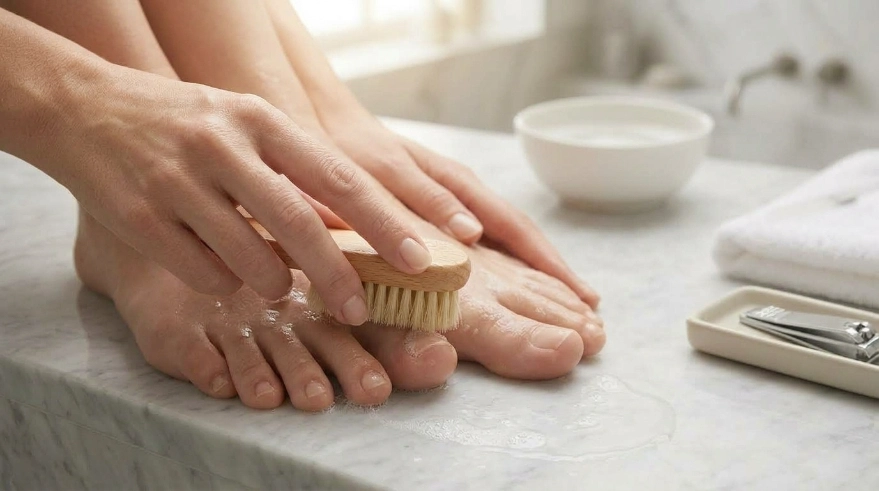
If normal washing does not remove visible buildup, use a clean, soft-bristled nail brush.
Wet the brush, add a little mild soap, and gently brush:
- Across the nail surface
- Along the tip
- Around the sides
- Beneath the free edge that extends past the toe
You do not need strong pressure.
If cleaning hurts, you are probably being too aggressive.
Avoid forcing stiff bristles far underneath the attached portion of the nail. The skin under your toenail is delicate, and repeatedly irritating it can cause tenderness or damage.
3. Rinse Away All Soap
Rinse your toes thoroughly after brushing.
Soap residue left around the nails or between the toes may contribute to dryness or irritation, particularly if you already have sensitive skin.
If you use a foot wash, scrub, or fragranced product and notice itching, burning, redness, or swelling afterward, discontinue it.
4. Dry Your Feet Thoroughly
Drying is just as important as washing.
Use a clean towel and gently dry:
- Each toenail
- Nail folds
- Sides of the toes
- Between every toe
Do not immediately put damp feet into socks or shoes.
The American Academy of Dermatology recommends keeping feet clean and dry because persistently warm, damp environments can encourage fungal growth. Their healthy nail-care tips also recommend regular toenail trimming and properly fitting footwear.
How Often Should You Clean Your Toenails?
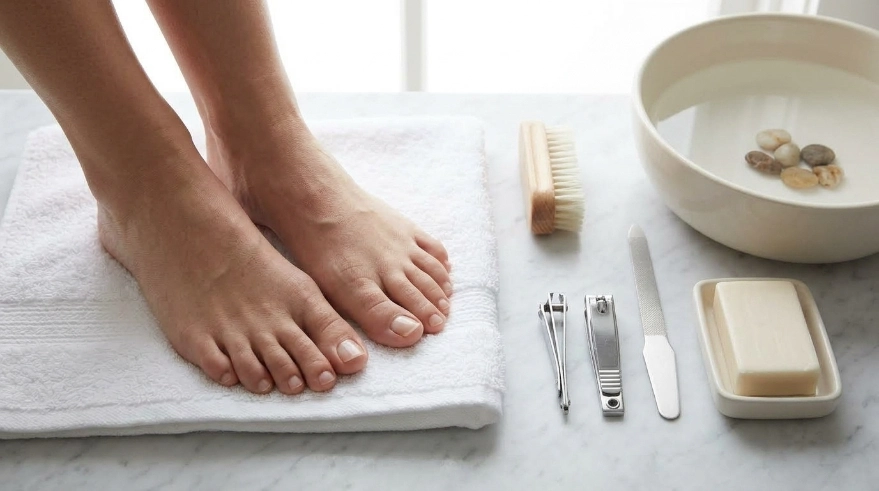
For most people, gentle daily washing is enough.
More detailed brushing does not necessarily need to happen every day. Consider using a soft nail brush a few times a week or whenever you notice visible debris.
Your routine may need more attention if you:
- Exercise frequently
- Sweat heavily
- Wear work boots
- Spend time barefoot outdoors
- Garden
- Wear closed shoes for long hours
- Regularly apply foot creams
- Have longer toenails
More cleaning is not automatically better.
Repeated scraping and aggressive brushing can irritate the skin and nail bed. Keep routine cleaning gentle.
Keep Your Toenails Properly Trimmed
Shorter, neatly maintained toenails are generally easier to keep clean.
Toenails should usually be trimmed straight across rather than deeply rounded at the corners. This helps reduce the chance of the nail growing into the surrounding skin.
A good time to trim is after bathing, when the nails are slightly softer.
Use:
- A clean toenail clipper
- A toenail nipper if the nail is naturally thicker
- A nail file to smooth rough edges
Avoid cutting so close that the skin beneath the nail feels exposed or tender.
If your nails are very thick, unusually hard, painful, or difficult to reach safely, a podiatrist or another qualified professional may be a better option than forcing the clippers through the nail.
What Tools Do You Actually Need?
A between-pedicure routine should be simple.
| Tool | Main Purpose | What to Look For |
|---|---|---|
| Soft nail brush | Removes surface debris | Soft, washable bristles |
| Toenail clipper | Controls nail length | Sharp stainless-steel blades |
| Nail file | Smooths rough edges | Fine or medium grit |
| Clean towel | Thorough drying | Soft and absorbent |
| Mild soap | Everyday cleaning | Gentle, preferably non-irritating |
| Foot moisturizer | Helps dry skin | Use mainly on dry skin, not thickly between toes |
You do not need sharp metal picks or pointed instruments for everyday cleaning beneath toenails.
Those tools can easily be pushed too deeply.
Clean Your Nail Tools Too
Dirty grooming tools can undo an otherwise good hygiene routine.
Remove visible debris from clippers and files after use and keep them clean and dry before storing them.
The American Academy of Dermatology recommends cleaning and disinfecting nail grooming tools. It also advises against sharing personal nail tools, particularly because some fungal infections can spread between people.
Keep your own basic pedicure kit if possible.
Do not casually share:
- Nail clippers
- Files
- Buffers
- Foot towels
- Pumice stones
If you visit a salon, pay attention to whether reusable equipment and work areas appear properly cleaned between clients.
Keep Socks and Shoes Fresh
Clean nails can become sweaty and grimy again quickly if they go straight into damp socks or shoes.
Change your socks daily—and sooner if they become sweaty after exercise.
Breathable or moisture-wicking socks can be useful if your feet become damp easily.
Shoes also need time to dry.
Rotating between pairs can help prevent you from putting clean feet back into shoes that are still damp from the previous day.
For public pools, communal showers, gyms, spas, and locker rooms, wearing shower sandals or flip-flops can reduce direct contact with damp shared floors. The AAD includes this among its recommendations for reducing exposure to fungi that can affect feet and toenails.
What About Toenail Polish?
You can still keep your toenails clean while wearing polish, but polish makes the nail surface harder to inspect.
Between pedicures:
- Wash normally around polished nails.
- Dry the toes carefully.
- Avoid picking at peeling polish with sharp objects.
- Remove severely chipped polish rather than repeatedly peeling it.
- Watch the surrounding skin for redness or irritation.
Once the polish is removed, look at the actual nail.
Temporary staining from dark polish can occur, but persistent yellowing, thickening, crumbling, separation, or unusual discoloration deserves more attention.
Give your nails occasional polish-free time if you want to inspect their condition more easily.
How to Handle Dirt Under Your Toenails Safely
Seeing a dark line of debris under a toenail can make it tempting to grab the nearest pointed object.
Do not.
A safer approach is:
- Soak or wash your feet in warm water.
- Apply mild soap.
- Use a soft nail brush around the exposed edge.
- Rinse thoroughly.
- Dry completely.
- Repeat later rather than digging if some material remains.
Only clean underneath the free edge you can easily reach.
Avoid forcing tools beneath areas where the nail is still attached.
A toothpick, pin, needle, cuticle pusher, scissors tip, or other sharp object can injure the skin beneath the nail.
Small injuries can become painful and may create an opportunity for infection.
Expert Tip: Clean underneath toenails after a shower, when debris and nails are softer. You will usually need far less pressure than when trying to scrape a completely dry nail.
Moisturize Without Keeping Your Toes Damp
Pedicures often include generous amounts of lotion or oil, but you do not have to coat your feet heavily every day.
If the skin around your toes is dry, apply a small amount of moisturizer after washing and drying.
Concentrate on:
- Tops of the feet
- Heels
- Dry skin around the toes
- Cuticle area if dry
Avoid leaving thick layers of moisturizer between your toes if that area tends to stay moist.
People with sensitive skin may do better with a fragrance-free product.
Stop using a product if you develop persistent burning, itching, swelling, blistering, or a rash.
Home Maintenance vs. a Professional Pedicure
Both have a place in a nail-care routine.
| At-Home Maintenance | Professional Pedicure |
|---|---|
| Low ongoing cost | Costs more per appointment |
| Convenient for routine cleaning | Provides detailed cosmetic grooming |
| You control your own tools | Reusable tools require proper sanitation |
| Easy to do regularly | Helpful if reaching your feet is difficult |
| Appropriate for uncomplicated nails | Nail technicians cannot diagnose infections or disease |
Salon visits can make your toenails look polished and tidy, but they do not replace everyday hygiene.
Likewise, home care should not be used to treat something that may actually be a nail disorder.
Common Mistakes to Avoid
Even a well-intentioned cleaning routine can cause trouble if it becomes too aggressive.
Avoid these common mistakes:
- Digging beneath the nail with sharp tools. This can injure the skin or separate the nail from its bed.
- Cutting toenails extremely short. Leave enough nail to protect the tip of the toe.
- Rounding deeply into the corners. Straight-across trimming is generally safer for avoiding ingrown edges.
- Cutting the cuticles. Cuticles help protect the area where the nail grows.
- Putting damp feet into socks. Dry thoroughly first.
- Sharing nail tools. Keep personal tools personal whenever possible.
- Ignoring persistent discoloration. Not everything beneath a nail is ordinary dirt.
- Scrubbing painful areas harder. Pain is a reason to stop, not scrub more aggressively.
- Trying to cover suspicious changes with polish. Examine the nail instead.
When “Dirt” May Not Actually Be Dirt
Material beneath a toenail is not always something that can simply be washed away.
Changes may be associated with trauma, separation of the nail, thickened nail material, fungal infection, or another nail condition.
Possible warning signs include:
- Increasing yellow, white, brown, or unusual discoloration
- Thickening
- Crumbling or ragged edges
- Nail lifting
- Persistent debris beneath the nail
- Unpleasant odor
- Swelling
- Redness
- Pain or tenderness
Mayo Clinic notes that nail fungus can cause thickening, discoloration, crumbling, misshapen nails, and separation from the nail bed. Their nail fungus overview also recommends medical attention when problems become increasingly discolored, thickened, painful, or otherwise concerning.
Do not repeatedly scrape a discolored or thickened nail hoping to “clean” the problem away.
When to See a Nail Technician or Dermatologist
A nail technician can help with cosmetic grooming when your nails and surrounding skin are healthy.
For example, professional assistance may be helpful if you simply want:
- Nail shaping
- Polish application
- Cosmetic cuticle care that does not involve aggressive cutting
- Help maintaining hard-to-reach toenails
A nail technician is not the right professional to diagnose an infection.
Consider seeing a dermatologist, podiatrist, or another healthcare professional if you notice:
- Persistent pain
- Increasing redness
- Swelling
- Pus or drainage
- Bleeding
- A nail becoming very thick or distorted
- A nail separating from the nail bed
- Persistent unusual discoloration
- Recurrent ingrown toenails
- Difficulty walking because of the nail
People with diabetes, poor circulation, reduced sensation in their feet, or other medical concerns that make foot injuries higher risk should be especially cautious about DIY cutting and digging around toenails.
Easy Between-Pedicure Maintenance Schedule
You can keep things simple.
Daily
- Wash your feet.
- Clean visible debris gently.
- Dry carefully between the toes.
- Put on clean socks.
- Allow damp shoes to dry.
A Few Times a Week
- Use a soft nail brush if needed.
- Check for redness, irritation, or unusual nail changes.
- Moisturize dry areas.
As Needed
- Trim toenails straight across.
- File rough edges.
- Clean your grooming tools.
- Remove badly chipped polish.
This routine generally costs very little once you have basic tools. A decent toenail clipper, reusable nail brush, and file can last through many home-care sessions when properly maintained.
FAQs
How often should I clean under my toenails?
Wash your feet daily and gently clean any visible debris. You do not need to scrape deeply underneath the nails every day. Use a soft nail brush when buildup is visible and keep the process gentle.
Can I use a toothbrush to clean my toenails?
A separate soft toothbrush can work in a pinch, provided it is used only for your feet. A dedicated nail brush is usually more convenient and easier to keep separate from personal dental items.
Why do my toenails get dirty even when I wear socks?
Sweat, dead skin, sock fibers, and debris inside your shoes can still collect around and beneath toenails. Socks reduce outside dirt but do not create a completely clean environment.
Should I clean underneath my toenails with a metal tool?
Sharp or pointed metal tools are unnecessary for routine cleaning and can injure the sensitive tissue beneath the nail. Warm water, mild soap, and a soft brush are safer choices for ordinary buildup.
Is yellow material underneath a toenail always dirt?
No. Yellowing or buildup may have several possible causes, including nail changes associated with fungal infection. If the discoloration remains after gentle cleaning or occurs with thickening, crumbling, pain, or lifting, seek professional advice.
How can I make a pedicure last longer?
Keep your feet clean and dry, moisturize dry skin, avoid picking at polish, wear shoes that do not repeatedly rub the nails, and maintain the nail length between appointments.
Can I clean my toenails immediately after a pedicure?
You can continue ordinary gentle foot washing. Avoid aggressive brushing or scraping around skin that feels tender after your appointment. If you develop increasing pain, swelling, or redness afterward, do not assume it is normal pedicure irritation.
Conclusion
Knowing how to keep your toenails clean between pedicures is mostly about consistent, gentle care rather than frequent intensive treatments.
Wash your feet daily, use a soft brush when needed, dry your toes carefully, keep your toenails comfortably trimmed, wear clean socks, and keep personal nail tools clean. Most importantly, resist the urge to dig underneath your nails with sharp objects.
Pay attention to what your toenails look and feel like while you clean them. Persistent discoloration, thickening, pain, swelling, or nail separation should be treated as a reason to seek appropriate professional advice—not a reason to scrub harder.
A few minutes of simple maintenance between appointments can help your toes stay cleaner, neater, and easier to care for until your next pedicure.

