
Why Do My Toenails Smell? Common Causes and What to Do

If you have ever taken off your shoes and wondered, “Why do my toenails smell?”, you are definitely asking the right question. An unusual odor around your toenails can be embarrassing, but it can also give you useful clues about what is happening with your feet.
In many cases, the smell is not actually coming from the hard toenail itself. Sweat, bacteria, trapped debris, damp socks, and skin around or under the nail are more common sources. In other cases, athlete’s foot or a fungal nail infection may be involved.
The good news is that improving your foot and nail hygiene often makes a noticeable difference. However, persistent odor combined with nail discoloration, thickening, pain, swelling, or drainage deserves closer attention.
This guide explains the most common causes, what you can safely try at home, what to avoid, and when it is smarter to see a nail professional or dermatologist.
Quick Answer
Why do my toenails smell? Most toenail odor comes from sweat, bacteria, trapped debris, damp shoes or socks, or a fungal infection around the nail. Wash and dry your feet carefully, keep nails trimmed, and change damp footwear. Persistent odor with thick, discolored, painful, or crumbling nails should be medically evaluated.
Is the Smell Really Coming From Your Toenails?
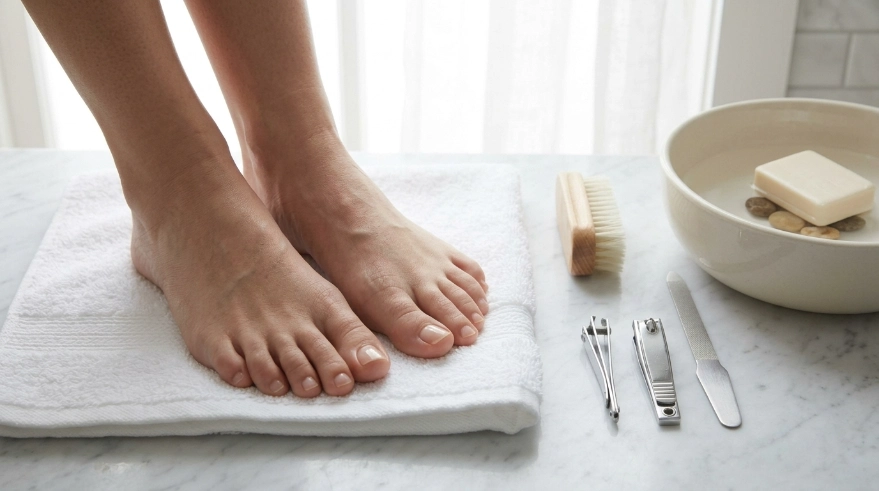
Usually, not entirely.
Toenails are made primarily of keratin, the same tough protein found in fingernails and hair. The nail plate itself does not normally produce an odor.
What can smell is the environment around it.
Your toes spend hours inside socks and shoes where heat and moisture can build up. Sweat mixes with bacteria on the skin, dead skin cells, lint, dirt, and debris that may collect around or beneath a toenail.
The NHS identifies sweat and bacteria as major causes of foot odor and notes that fungal infections such as athlete’s foot can also contribute. NHS guidance on smelly feet
If your toenails smell only after a long day in closed shoes and the odor disappears after washing and drying your feet, ordinary moisture and bacteria are more likely than a serious nail problem.
If the odor stays even after careful washing—or appears along with visible nail changes—look more closely.
Common Reasons Your Toenails Smell
1. Sweat and Bacteria Around the Toes
Sweat itself is not usually the main source of bad odor. The problem develops when moisture remains against the skin and bacteria break down substances in sweat and dead skin.
Closed shoes can make this worse because they limit airflow.
You may notice stronger odor if you:
- Wear the same shoes for many hours.
- Exercise in closed sneakers.
- Have naturally sweaty feet.
- Rewear damp socks.
- Live in a hot or humid climate.
- Wear shoes that do not breathe well.
If the nails look normal and the smell improves after bathing, drying, and changing socks, sweat and bacteria are a likely explanation.
2. Debris Trapped Under the Toenails
Toenails—especially slightly long or lifted nails—can trap tiny amounts of dead skin, sock fibers, soap residue, dirt, and other material.
This buildup can hold moisture and create an environment where odor-producing microorganisms thrive.
You may notice more debris under the big toenails because they have a larger surface area.
Do not dig aggressively underneath the nail with sharp tools. You can accidentally separate the nail from its bed or create a tiny injury that makes infection easier.
Instead, clean gently with warm water and a soft nail brush.
3. Your Shoes Stay Damp
Sometimes the nail gets blamed when the real problem is your footwear.
Shoes can absorb sweat throughout the day. If they do not dry completely before you wear them again, bacteria and fungi have a moist environment in which to grow.
The American Academy of Dermatology recommends keeping feet clean and dry, changing sweaty socks, wearing breathable footwear, and allowing shoes time to dry as part of nail-fungus prevention. American Academy of Dermatology nail-fungus prevention tips
Rotating between two pairs of everyday shoes can be surprisingly helpful if foot odor keeps returning.
4. Athlete’s Foot
Athlete’s foot is a fungal infection of the skin rather than the nail itself.
It commonly affects the areas between the toes and may cause:
- Itching
- Burning
- Peeling or scaly skin
- Cracking
- Soft, whitish skin between the toes
- Unpleasant odor
The American Academy of Dermatology notes that athlete’s foot may produce a foul odor and can spread from the skin to the toenails.
Treating the skin problem early is important because repeatedly ignoring athlete’s foot may allow fungal organisms to reach the nails.
5. Toenail Fungus
Toenail fungus, medically called onychomycosis, is another possible explanation when odor appears together with obvious changes in the nail.
According to the Mayo Clinic, fungal toenails can become thickened, discolored, brittle, misshapen, separated from the nail bed, and sometimes smelly. Mayo Clinic overview of nail fungus
Watch for:
- Yellow, white, or brown discoloration
- Thickening
- Crumbling edges
- Nail lifting
- Material accumulating beneath the nail
- Changes in nail shape
- Odor that persists after washing
However, appearance alone cannot always confirm fungus. Nail injuries, psoriasis, bacterial infections, and other nail conditions can sometimes look similar.
6. A Nail That Has Lifted From the Nail Bed
A toenail can partially separate from the skin underneath because of trauma, tight shoes, repeated pressure, infection, or other nail conditions.
The newly created space can trap water and debris.
You might first notice:
- A pale or whitish area beneath the nail
- A hollow-looking section
- Debris collecting underneath
- Odor
- Increasing discoloration
Avoid trying to scrape deeply beneath a lifted nail. That can make the separation worse.
7. Bacterial Infection
Fungi are not the only microorganisms that can affect nails.
Bacterial infections can occasionally contribute to odor and nail changes. The Mayo Clinic notes that bacterial nail infections may sometimes cause green or black discoloration.
A nail that becomes greenish, increasingly painful, swollen, warm, or drains fluid should not simply be covered with polish.
Get it evaluated.
Toenail Odor: What the Other Symptoms May Suggest
| What You Notice | Possible Explanation | Smart Next Step |
|---|---|---|
| Odor after wearing shoes all day, normal-looking nails | Sweat and bacteria | Wash, dry thoroughly, change socks and rotate shoes |
| Debris beneath otherwise healthy nails | Dead skin, dirt or sock fibers | Clean gently and trim appropriately |
| Itching and peeling between toes | Athlete’s foot may be present | Ask a pharmacist or clinician about antifungal treatment |
| Yellow, thick, crumbly nail | Possible nail fungus | Consider professional evaluation |
| Nail lifting with trapped debris | Trauma, infection or another nail condition | Avoid digging beneath it; monitor closely |
| Green or dark discoloration with odor | Possible bacterial involvement or another nail problem | Arrange medical evaluation |
| Pain, swelling, redness or drainage | Possible infection | Seek medical care promptly |
This table can help you narrow down possibilities, but odor alone cannot diagnose a fungal or bacterial infection.
How to Get Rid of Toenail Odor Safely
If you have no significant pain, swelling, drainage, or severe nail changes, start with basic hygiene.
Step 1: Wash Your Feet
Wash your feet with soap and warm water, paying attention to the toes and spaces between them.
You do not need to scrub aggressively.
A gentle wash is enough to remove sweat, loose debris, and many odor-producing microorganisms.
Step 2: Clean Around the Nails Gently
Use a clean, soft nail brush to clean around the edges of the toenails.
Avoid knives, needles, cuticle nippers, metal picks, or other sharp objects under the nail.
If debris is firmly stuck beneath a nail, soaking your feet briefly in warm water may soften it enough for gentle cleaning.
Step 3: Dry Thoroughly
This part matters just as much as washing.
Dry:
- The nail surfaces
- Around the nail folds
- Under the toe tips
- Between every toe
Leaving your feet damp and immediately putting on socks recreates the warm, moist conditions that bacteria and fungi prefer.
Step 4: Trim Your Toenails Correctly
Keep your toenails reasonably short and cut them straight across.
Do not cut deeply into the corners.
The American Academy of Dermatology recommends keeping nails short because longer nails create more space for bacteria and fungi to collect beneath them.
Smooth sharp edges with a clean nail file instead of repeatedly picking at them.
Step 5: Put On Fresh Socks
Choose clean socks every day.
If your feet sweat heavily, changing socks during the day can help.
Moisture-wicking materials are useful for workouts, long work shifts, or hot weather because they help move moisture away from your skin.
Step 6: Let Shoes Dry
Avoid wearing the same sweaty shoes continuously when possible.
Loosen them after use and allow the inside to dry completely.
Breathable footwear can also reduce moisture buildup.
Step 7: Clean Your Nail Tools
Clippers and files that touch dirty or infected nails can carry microorganisms.
Do not share nail clippers.
The American Academy of Dermatology advises cleaning nail clippers and disinfecting them after use to reduce infection risk.
Expert Tip: If one toenail looks suspicious for fungus or infection, clean and disinfect your tools before using them on your other nails. This reduces the chance of spreading microorganisms from one toe to another.
Should You Use Foot Powder or Antifungal Products?
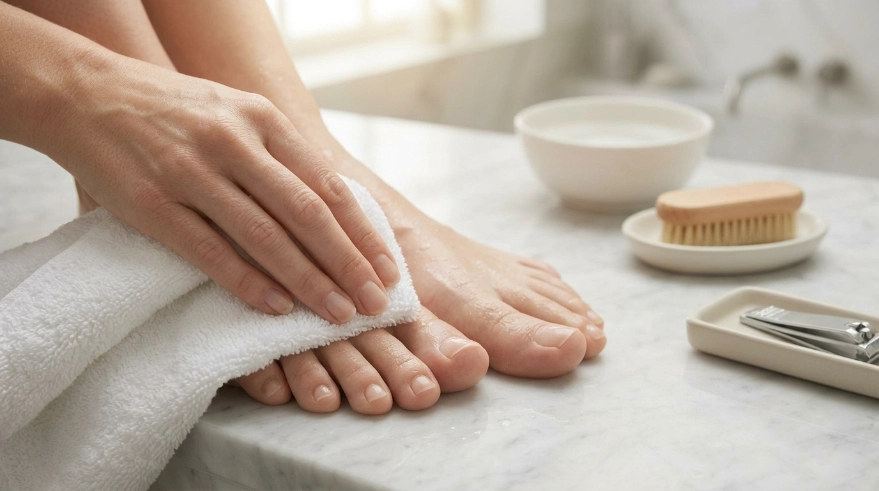
Foot powders or antiperspirant-style foot products can be useful when sweat is the main problem.
Antifungal products are different.
If you have athlete’s foot, an appropriate nonprescription antifungal may help. Ask a pharmacist if you are unsure which type is suitable.
A suspected toenail fungal infection is more complicated. Nail fungus can take months to treat because medication must reach the infection while a healthier nail gradually grows out.
The American Academy of Dermatology notes that prescription treatment may involve topical medication applied for many months or oral antifungal medication depending on the individual case. AAD nail-fungus treatment guidance
That is why repeatedly applying random home remedies to a thick, damaged nail is not always the best strategy.
Can Nail Polish Hide the Smell?
Polish may hide discoloration, but it does not fix the underlying cause of odor.
If a toenail is healthy and the odor is simply coming from sweaty feet, normal polish use is unlikely to be the core problem.
However, if a nail is lifting, crumbling, discolored, painful, or potentially infected, repeatedly covering it can make it harder for you to notice changes.
Remove polish and inspect the nail clearly if something seems unusual.
DIY Care vs. Professional Care
Basic foot odor caused by sweat and mild debris is usually reasonable to handle at home.
DIY care is inexpensive because most people already have what they need: soap, clean towels, socks, clippers, and a basic nail file.
A nail technician can help with ordinary cosmetic maintenance when your nails and surrounding skin appear healthy. However, a nail technician should not be your substitute for medical diagnosis or treatment when infection is suspected.
Medical evaluation becomes more important when there are changes such as:
- Persistent or worsening odor despite good hygiene
- Thickened or crumbling toenails
- Increasing yellow, brown, green, or black discoloration
- Nail separation
- Pain
- Swelling
- Bleeding
- Drainage
- Difficulty walking
Common Mistakes to Avoid
Digging underneath the nail. Deep scraping can injure the nail bed and may create openings for infection.
Cutting toenails extremely short. This can irritate the surrounding skin and increase the risk of ingrown nails.
Sharing nail tools. Fungi responsible for nail and skin infections can spread through contaminated grooming tools.
Putting clean socks on damp feet. Moisture trapped between your toes can quickly undo your careful washing.
Wearing the same sweaty shoes every day. Give shoes enough time to dry.
Ignoring athlete’s foot. A fungal skin infection can spread to your toenails.
Assuming every yellow nail is fungus. Other nail conditions can look similar, and medical testing may occasionally be needed to identify the cause.
Covering a suspicious nail with polish for months. Cosmetic camouflage does not treat infection.
How to Prevent Toenail Odor From Coming Back
Once your feet smell fresh again, focus on controlling moisture.
Wash and dry your feet daily. Wear clean socks and replace them if they become sweaty. Rotate footwear when possible and choose shoes with adequate airflow.
Keep toenails clean and trimmed rather than allowing them to grow far beyond the toe.
Wear shower shoes in communal showers, locker rooms, pool areas, or similar damp public spaces.
Do not share clippers, files, shoes, or towels.
And if you notice athlete’s foot, treat it rather than waiting for it to disappear on its own.
These small habits are usually more effective than trying to cover foot odor with fragrance.
When to See a Nail Technician or Dermatologist
A nail technician is appropriate when your feet and nails appear healthy and you simply need routine trimming, shaping, polish removal, or cosmetic pedicure care.
If you visit a salon, choose one that properly cleans and sterilizes reusable equipment between clients.
A dermatologist, podiatrist, or other qualified health professional is the better choice when the odor seems connected to a nail or skin disorder.
The Mayo Clinic advises seeking medical care when nail changes continue despite self-care or when there is increasing discoloration, thickening, misshaping, bleeding, swelling, pain, or difficulty walking. People with diabetes should also be particularly careful about suspected nail infections.
Do not rely on DIY nail care alone if you have diabetes, reduced circulation, a weakened immune system, significant foot numbness, or an open wound around the nail.
These situations can make seemingly minor foot problems more important.
FAQs
Why do my toenails smell even after I wash them?
Persistent odor can mean moisture or debris is still trapped beneath or around the nail. Athlete’s foot or a fungal nail infection may also be involved, especially if you have itching, scaling, thickening, discoloration, or nail lifting.
Does smelly toenails mean I have fungus?
Not necessarily. Sweat and bacteria are very common causes of foot odor. Nail fungus becomes more suspicious when odor occurs with yellow or white discoloration, thickening, crumbling, nail separation, or debris buildup.
Can fungus make toenails smell bad?
Yes. The Mayo Clinic lists odor among the possible symptoms of nail fungus, although not everyone with fungal toenails will notice a smell.
Why does dirt build up under my toenails?
Material under a toenail may include dirt, dead skin cells, sock fibers, or nail debris. Long, thick, or partially lifted nails may trap more material. Clean gently rather than scraping aggressively beneath the nail.
Can I clean under my toenails with a metal tool?
It is safer to avoid sharp metal objects. They can injure the skin beneath the nail or cause additional nail separation. Try warm water and a soft nail brush instead.
Why does only one toenail smell?
One nail may trap more debris because it is damaged, lifted, thicker, or affected by an infection. If that nail also changes color, shape, thickness, or texture, professional evaluation is sensible.
How long should toenail odor take to improve?
Odor caused mainly by sweat or dirty footwear may improve quickly after thorough washing, drying, fresh socks, and clean shoes. Odor associated with athlete’s foot or nail fungus can last much longer because the underlying condition needs treatment.
Conclusion
So, why do my toenails smell? The most common explanation is usually the environment around your toenails rather than the nail itself. Sweat, bacteria, trapped debris, damp socks, and poorly ventilated shoes can all create odor.
Start with the basics: wash your feet, dry carefully between your toes, keep your nails appropriately trimmed, change sweaty socks, let shoes dry, and clean your nail tools.
At the same time, pay attention to what your toenails are showing you.
Persistent odor accompanied by thickening, crumbling, unusual discoloration, lifting, pain, swelling, or drainage may point to fungus or another nail problem that deserves professional evaluation.
Good toenail care should leave your feet not only looking polished but also healthy. If simple hygiene is not solving the problem, skip aggressive DIY treatments and get the nail checked so you can treat the actual cause.

