
Does Base Coat Prevent Nail Staining? A Beginner’s Guide to Better Protection

If you’ve ever removed a dark manicure and noticed yellow or pinkish marks left behind, you’re not alone. The short answer is: a base coat can help prevent nail staining, but it does not always stop it completely.
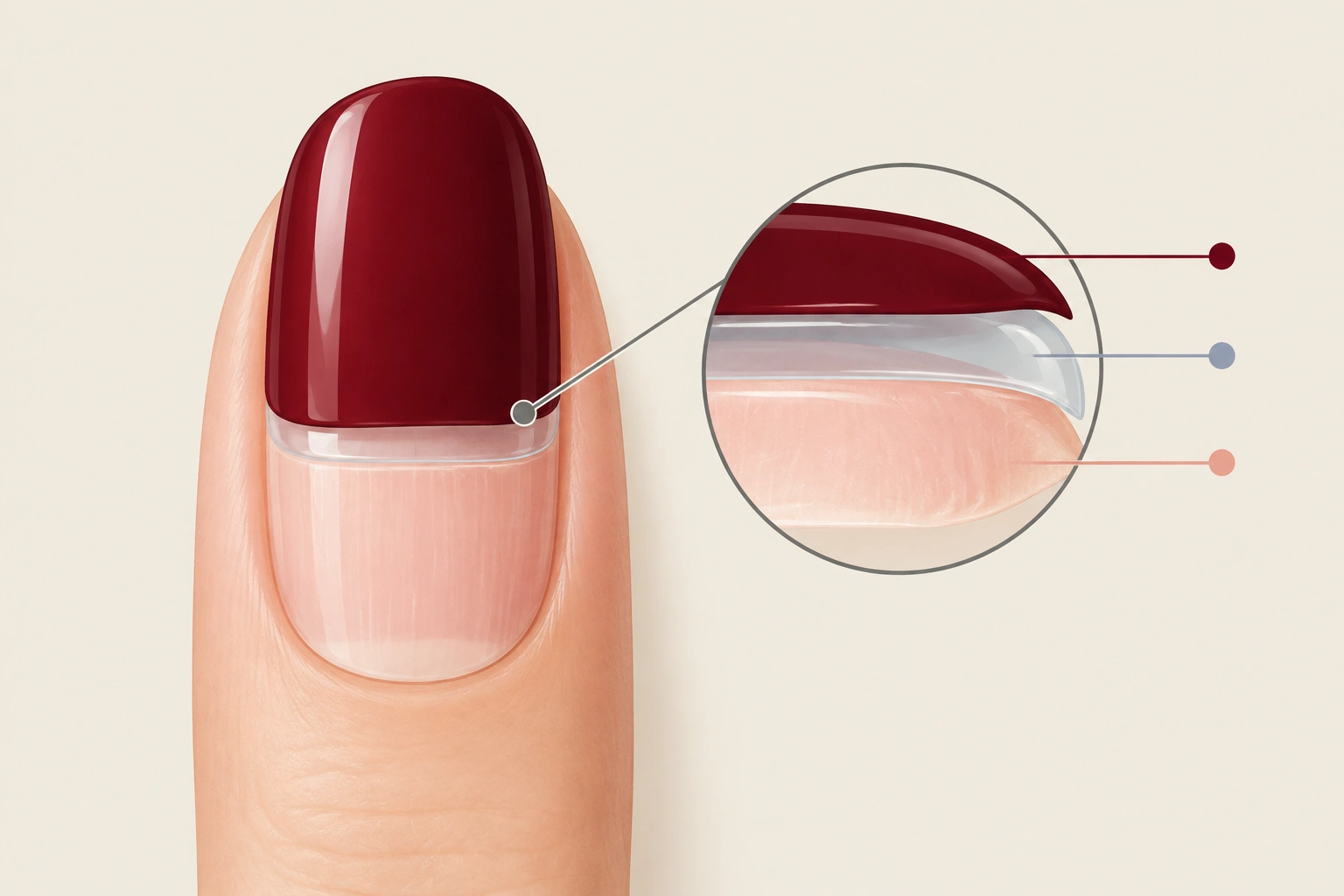
Think of base coat as a protective barrier between your natural nail and the color polish. When that barrier is even, fully dry, and suited to the polish you’re wearing, it can reduce the chance of pigment soaking into the nail plate. But very rich colors, long-wear formulas, and imperfect removal can still leave stains behind.
If you want a broader foundation on polish wear and dry time, you may also find these guides helpful: how long base coat takes to dry, how long regular nail polish takes to dry, and whether nail polish damages nails.
Why Nails Get Stained by Polish
Nails can stain when color pigments sit on the nail surface long enough to leave behind a tint. The nail plate is not perfectly sealed, so some shades can cling more strongly than others, especially if the nail is dry, rough, or already a little porous.
A few things make staining more likely:
- Dark or highly pigmented polish often carries more color deposit.
- Repeated manicures can build up discoloration over time.
- Dry or damaged nails may absorb pigment more easily.
- Leaving polish on too long gives pigment more time to settle.
- Peeling off polish can rough up the nail surface and make future staining worse.
This is why one person can wear the same shade with no issue, while another sees yellowing after just a few uses. Nail condition matters as much as polish color.
What a Base Coat Actually Does
A base coat is the first layer you apply before color polish. Its main job is to create a smoother, more protective surface so the color does not touch the nail directly.
That barrier is the part that matters most for stain prevention. It helps keep pigment on top of the base layer instead of on the nail plate itself.
A base coat can also improve how polish wears, but that grip is a secondary benefit here rather than the main reason it helps with staining.
That said, a base coat is not a perfect shield. If the layer is too thin, uneven, or not fully dry, pigment can still reach the nail. So the realistic expectation is reduced staining risk, not guaranteed prevention.
For beginners, that distinction matters. A base coat is still worth using because it gives your nails better protection than applying polish directly, but it is not magic.
Which Base Coat Works Best for Stain Prevention?
Not every base coat does the same job. Here’s the simplest way to choose.
| Base coat type | Main purpose | Stain protection | Best for |
|---|---|---|---|
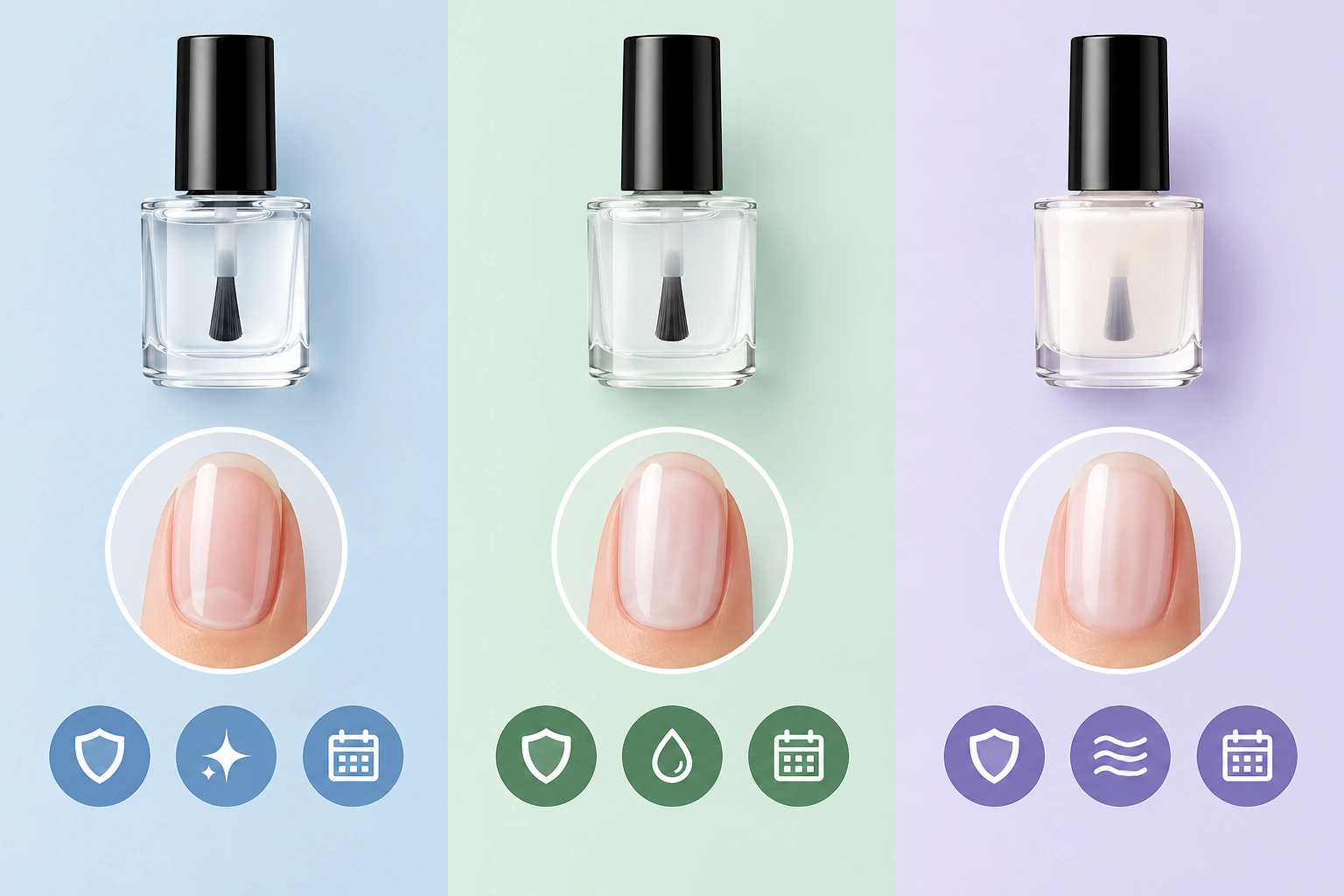
| Regular base coat | Helps polish adhere and adds a basic barrier | Light to moderate | Everyday manicures, lighter shades |
| Stain-preventing base coat | Designed to block pigment more effectively | Better than regular formulas | Dark, bright, or very pigmented polish |
| Ridge-filling base coat | Smooths surface texture and ridges | Not always strong enough on its own | Uneven nails that need a smoother look |
If your main concern is discoloration, look for formulas that are marketed as stain-blocking, anti-yellowing, or protective. Those claims are more relevant than ridge-filling alone.
A stain-preventing base coat is often the better choice when discoloration is your priority, but no single formula is best for everyone. If you want both smoothing and stain protection, a ridge-filling base coat can help with texture, but it may not be enough on its own for dark or long-wear polish.
A few buying tips can help narrow it down:
– Choose a formula that clearly mentions stain protection or color blocking.
– Look for anti-yellowing or protective base coat language if you wear dark shades often.
– If your nails are ridged, consider whether you need smoothing plus stain protection, not just smoothing alone.
– A clear strengthening base coat may be fine for general wear, but it is not always the best option if your main goal is preventing pigment transfer.
If you want a simple rule:
– Light polish most of the time? A regular base coat is usually fine.
– Dark red, navy, neon, or long-wear polish? Choose a stain-preventing base coat.
How to Apply Base Coat for Maximum Protection
A good base coat only works well if it is applied correctly. You do not need a complicated technique, but you do need even coverage.
Simple application steps
- Clean the nail first. Make sure there is no old oil, lotion, or leftover polish.
- Apply one thin, even coat. Cover the whole nail surface.
- Seal the free edge. Brush a little along the tip of the nail so the edge is protected too.
- Let it dry fully according to the product instructions. It should be dry to the touch or tacky only if the brand says that is the correct stage before color.
- Apply polish after the base coat has set.
The most common beginner mistake is using a patchy base coat and then adding color too soon. That weakens the barrier. If you are unsure, give the base coat a little extra drying time before the first color layer.
A thin, even coat is usually better than a thick one that stays gummy underneath. If you want more guidance on timing, this article on how long regular nail polish takes to fully dry can help.
Do You Need a Base Coat Under Every Polish Color?
If you want to protect your nails, the safest answer is yes: use a base coat under every manicure.
That does not mean every shade is equally risky. Light pinks and sheer neutrals are less likely to stain than deep reds, blues, greens, or very bright formulas. But even lighter colors can leave residue if the polish is worn for a long time or removed harshly.
A base coat becomes especially important when you wear:
- dark polish
- highly pigmented polish
- gel polish
- long-wear formulas
- bright neon shades
If you only skip base coat when using light colors, you may still be creating a habit that leaves your nails unprotected the moment you switch to a darker shade.
Why Some Polishes Stain Even When You Use Base Coat
This is the part that surprises many beginners: a base coat can be helpful and still not be enough.
Here are the most common reasons staining still happens:
- The polish is very pigmented. Strong color can be harder to block.
- The base coat was too thin. A weak barrier lets pigment through more easily.
- The base coat was not fully dry. Wet layers do not protect as well.
- The polish stayed on too long. More time means more chance for tint transfer.
- Removal was rough. Scraping or peeling can leave the nail surface more open to staining next time.
So if you notice staining even when you use base coat, that does not automatically mean the base coat “failed.” It may mean the formula was not strong enough for that polish, or the manicure was removed in a way that stressed the nail.
If staining is stubborn, a dedicated stain-blocking base coat plus better removal habits may work better than a standard clear base alone.
Gel Polish, Dark Polish, and Staining Risk
Some polish types are simply more likely to cause problems if you are prone to staining.
Dark polish
Deep red, navy, plum, black, and rich jewel tones often contain more intense pigment. That makes them beautiful, but also more likely to leave color behind if the barrier is weak.
Gel polish
Gel formulas can be long-lasting, which is great for wear time. The trade-off is that removal matters even more. If gel is peeled off, scraped, or removed too aggressively, the nail surface can become rougher. Rough nails are more likely to catch pigment later.
Bright and neon shades
These can also be highly pigmented. Even if they look playful, they may behave like darker colors when it comes to staining.
The practical takeaway is simple: the stronger the color, the more important your base coat and removal habits become.
For readers comparing wear and drying behavior, how long nail polish takes to dry completely is a useful companion read.
How to Remove Polish Without Making Staining Worse
Removal is where a lot of nail staining gets worse. If you remove polish too aggressively, you can leave the nail surface dry or rough, which makes future staining easier.
Better removal habits
- Soak and wipe instead of scraping.
- Avoid peeling polish off in sheets.
- Use a remover that matches the polish type.
- Be patient with dark polish or glitter-heavy formulas.
Acetone vs. non-acetone remover
Acetone remover is usually stronger and better for stubborn polish, including many long-wear formulas. It is often the better choice when you want complete removal of dark or long-wear polish, which can help reduce leftover pigment. The trade-off is that it can be more drying.
Non-acetone remover is gentler and may be a better fit if your nails and skin are already dry. It can work well for lighter polish, but it may struggle more with stubborn color.
If your nails stain easily, a stronger remover can help get color off more completely, but you may need to follow with oil or hand cream to offset dryness. If dryness is already your bigger issue, a gentler remover may be the better choice.
The key is not to rip polish away. A damaged nail plate stains more easily next time.
What to Do If Your Nails Are Already Stained
If your nails already look discolored, the goal is to protect them while the stain grows out.
Here’s the simplest plan:
- Take a break from very dark shades for a while.
- Use a stain-preventing base coat every time.
- Choose lighter polish colors temporarily.
- Remove polish gently.
- Keep nails and surrounding skin moisturized.
If the stain seems minor and superficial, very gentle buffing may help, but only if your nails are already in good condition and you do not overdo it. If you are unsure, it is safer to avoid aggressive buffing and focus on protection instead.
Polish staining often improves as the nail grows out, but not every discoloration should be assumed to be simple staining. If the color change is persistent, spreading, painful, thickened, lifted, or otherwise unusual, it is worth getting professional advice rather than waiting it out.
A Simple Beginner Rule for Choosing the Right Base Coat
If you want the shortest possible decision guide, use this:
- Regular base coat: good for everyday wear and lighter shades
- Stain-preventing base coat: best for dark, bright, or long-wear polish
- Ridge-filling base coat: best for smoothing texture, but not enough on its own if staining is your main concern
If you wear polish often, using a base coat every time is the easiest habit that helps protect your nails. It will not make staining impossible, but it can make a real difference over time.
When to See a Nail Technician or Dermatologist
See a professional if the discoloration does not fade as the nail grows out, if the nail becomes painful, thickened, or lifted, or if you notice changes that do not look like ordinary polish staining.
A nail technician can help you adjust your polish routine and choose a better base coat. A dermatologist can check whether the problem is actually staining or something else that needs medical attention.
FAQ: Base Coat and Nail Staining
Does base coat prevent nail staining completely?
Not always. It can reduce staining risk, but very pigmented polish or poor removal can still leave color behind.
How many coats of base coat should I use?
Usually one thin, even coat is enough for everyday use. The important part is full coverage, including the free edge.
Is ridge-filling base coat the same as stain protection?
No. Ridge-filling formulas smooth the nail surface, but they are not always the best choice for blocking pigment.
Should I use acetone or non-acetone remover if my nails stain easily?
Use the one that fits the polish and your nail condition. Acetone is stronger for stubborn polish, while non-acetone is gentler and may suit dry nails better.
Why do my nails still stain even with base coat?
The base coat may be too thin, not fully dry, or not designed for heavy pigment. Dark polish and rough removal can also increase staining.
Can I use base coat under every polish color?
Yes, and that is usually the safest habit if you want to protect against staining.
A base coat is one of the simplest tools you can use to keep your nails looking cleaner between manicures. It is not a perfect shield, but when you choose the right formula and apply it carefully, it can make a real difference.

