
How Should You Trim a Toenail That Tends to Become Ingrown? A Safe, Simple Guide

If one of your toenails keeps pressing into the skin at the side, the way you trim it matters more than you might think. Cutting too short, rounding the corners, or digging down the sides can make an ingrown toenail more likely to return.
So, how should you trim a toenail that tends to become ingrown? The safest general approach is to cut the nail straight across, leave a little length, keep the corners visible, and gently file any sharp edges without rounding them deeply.
That sounds simple, but small details make a big difference. Below, we’ll walk through the tools to use, the right trimming technique, common mistakes, hygiene, warning signs, and when DIY nail care is no longer the best option.
Quick Answer
If a toenail tends to become ingrown, trim it straight across and not too short, leaving the corners visible instead of rounding them into the skin. Use clean toenail clippers, then gently smooth sharp edges with a nail file. If the toe is painful, swollen, draining, or infected, seek professional care instead of cutting deeper.
Why the Way You Trim Your Toenails Matters
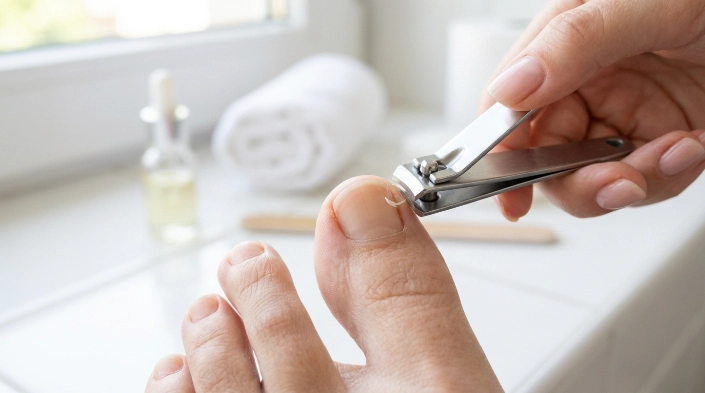
An ingrown toenail develops when the side or corner of the nail presses or grows into the surrounding skin. The big toe is affected most often, although any toenail can develop the problem.
Improper trimming is one common trigger. Cutting down the sides creates a short corner that may be hidden beneath the skin. As the nail grows forward again, that corner can push into the surrounding tissue.
The American Academy of Dermatology recommends cutting toenails straight across to reduce the chance of developing an ingrown nail. American Academy of Dermatology nail-trimming guidance
Shoes matter too. Even a correctly trimmed toenail may become irritated when narrow shoes repeatedly squeeze the toes together. Mayo Clinic lists improper trimming, overly short nails, and poorly fitting shoes among important factors associated with ingrown toenails. Mayo Clinic guidance on preventing ingrown toenails
The Best Shape for a Toenail That Tends to Become Ingrown
Think straight rather than rounded.
Your fingernails may look attractive with softly rounded corners, but toenails are different. When you repeatedly carve the sides into a curved shape, the skin beside the nail can move over the shortened corner.
As that corner grows back, it may press into the skin.
The goal is not to create an unnaturally sharp square. Instead:
- Keep the main cut straight across.
- Leave the side corners visible.
- Leave enough length that the nail is not cut into the sensitive nail bed.
- Smooth only genuinely rough or catching edges.
- Avoid filing deeply into the sidewalls.
The NHS similarly advises against cutting toenails too short or cutting down the edges. NHS ingrown toenail guidance
What Tools Should You Use?
You do not need a complicated pedicure kit. Good control, clean tools, and a gentle technique are more important than having lots of accessories.
| Tool | Best Use | Advantages | Main Caution |
|---|---|---|---|
| Toenail clippers | Normal toenails | Affordable and easy to control | Dull blades can crush or split the nail |
| Toenail nippers | Thick or hard nails | Stronger cutting action | Very sharp and easier to misuse |
| Fine nail file | Smoothing rough edges | Gives precise control | Do not file deeply into the corners |
| Glass nail file | Gentle edge finishing | Reusable and smooth | Costs more and can break if dropped |
| Emery board | Occasional smoothing | Inexpensive and easy to replace | Wears out quickly and is harder to disinfect thoroughly |
For most healthy adults with normal-thickness toenails, a sturdy pair of toenail clippers plus a gentle file is enough.
If the nails have become unusually thick, Mayo Clinic notes that nail nippers can make trimming easier. However, people with diabetes, poor circulation, or reduced sensation in their feet should speak with their healthcare team if they are unsure whether they can safely trim their nails themselves. Mayo Clinic guide to trimming thick toenails
What Type of Nail File Is Best?
For the final edge, choose a fine, controlled file rather than a very coarse abrasive.
A file is useful after clipping because small cuts can sometimes leave a pointed or jagged edge. The goal is to remove that roughness without changing the straight shape you created.
A glass file costs more upfront than a basic disposable emery board but is reusable when properly cleaned and handled. Emery boards are cheaper and convenient but eventually lose their grit and should be replaced.
If you regularly struggle with rough natural-nail edges, NailPrime’s general nail-file guidance can help you compare materials and grit levels before choosing a tool.
How to Trim a Toenail That Tends to Become Ingrown
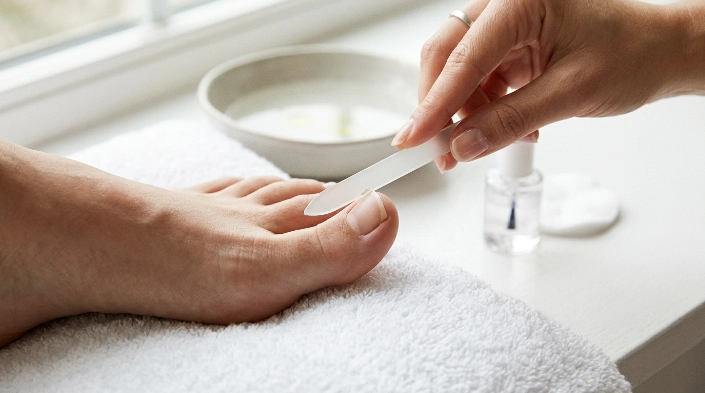
When the toe is healthy enough for routine home trimming, use this simple method.
1. Start With Clean Feet and Tools
Wash your feet and dry them thoroughly.
Use clean toenail clippers or nippers. Avoid sharing nail tools with other people because contaminated tools can potentially spread fungal or bacterial problems.
The American Academy of Dermatology also recommends regularly disinfecting nail-cutting tools and drying them completely before storage.
2. Make Sure You Can See What You Are Cutting
Use bright lighting and sit somewhere comfortable.
Trying to trim a toenail while twisting your foot awkwardly makes it easier to slip, cut the skin, or remove too much nail.
If you cannot comfortably reach or clearly see your toenails, professional foot care may be safer than struggling with sharp tools.
3. Cut Across the Nail in Small Sections
Begin on one side and work across the nail using small, controlled cuts.
Do not try to force a thick toenail through the clipper in one large snap. Small cuts give you more control and reduce the chance of splitting the nail.
Keep the overall edge straight across.
4. Do Not Dig Into the Corners
This is one of the most important steps.
When you see a corner that seems close to the skin, it can be tempting to cut deeper until the corner disappears. That may provide temporary relief, but it can leave a short or sharp nail edge buried beside the skin.
Instead, allow the corner to remain visible when possible.
Do not insert sharp scissors, clippers, or another tool beneath the nail fold to hunt for a hidden corner.
5. Leave a Sensible Amount of Length
Avoid cutting the toenail extremely short.
Mayo Clinic recommends maintaining a moderate nail length, roughly around the end of the toe rather than cutting far behind it. Cutting too short can allow shoe pressure to push surrounding tissue against the nail as it grows.
You should not feel as though you have shaved the nail down to the skin.
6. Gently File Rough Edges
After clipping, run your finger carefully over the free edge.
If you notice a rough spot, use a fine nail file to smooth it gently.
File the exposed cut edge, not the skin-covered side of the nail. You are trying to remove a snag, not sculpt the entire nail into a rounded shape.
The AAD recommends smoothing uneven or rough edges with a nail file or emery board after trimming.
7. Check Your Shoes
Your nail-care routine does not stop when trimming is finished.
Make sure your everyday shoes leave enough room for your toes. Shoes that squeeze the toe box can repeatedly push the skin and nail together.
If your big toenail becomes sore mainly after wearing a certain pair of shoes, the fit deserves attention as much as the nail shape.
Expert Tip: After trimming, look straight down at your toenail. If you can still see both corners and the nail has a mostly straight free edge, you are usually closer to the goal than if the corners disappear deeply into the skin.
Should You Soak Your Feet Before Trimming?
A short bath or shower can soften very hard toenails and make them easier to cut.
Mayo Clinic recommends softening thickened toenails in warm water for about 5–10 minutes before trimming, followed by thoroughly drying the feet.
However, softer does not mean you should cut farther down the sides.
If your nails are already easy to clip when dry, soaking is not essential for everyone. The important part is having enough control to make clean cuts without tearing or forcing the nail.
How Nail Files Help Without Increasing Ingrown-Nail Risk
Nail files are valuable when used for finishing, not aggressive reshaping.
After trimming, you may notice a tiny point where two clipper cuts meet. That point can catch on socks or irritate nearby skin.
A gentle file lets you remove the snag without cutting another large chunk from the nail.
Try to avoid:
- Filing repeatedly down the sidewall.
- Sawing hard against tender skin.
- Using very coarse files on thin natural toenails.
- Removing so much of the corner that the skin hides it.
- Sharing porous emery boards with other people.
If the corner itself is already embedded in swollen skin, filing aggressively underneath it is not a safe DIY solution.
What If the Toenail Is Already Starting to Grow In?
Trimming for prevention and treating an actively ingrown toenail are not quite the same thing.
If you have only mild irritation and no complicating health condition, conservative care may sometimes allow the nail to grow forward. The NHS advises keeping the foot clean and dry, wearing comfortable shoes, and avoiding further cutting or picking at the affected nail.
Do not respond to pain by repeatedly cutting deeper into the corner.
That can injure the skin and make it more difficult to tell whether the problem is improving.
If pain is becoming worse or the skin looks increasingly inflamed, switch from cosmetic nail care to medical evaluation.
Hygiene Matters More Than Most DIY Pedicures Suggest
Toenail trimming creates opportunities for tiny cuts, especially when the surrounding skin is irritated.
Before and after your pedicure:
- Wash your hands.
- Use clean tools.
- Avoid sharing files or clippers.
- Let reusable tools dry completely before storage.
- Replace damaged, rusty, cracked, or heavily worn tools.
- Keep the foot clean and dry.
- Avoid cutting living skin around the nail.
If you accidentally nick the skin, stop trimming that area rather than continuing to chase the nail corner.
Common Mistakes to Avoid
Cutting the Toenail Extremely Short
Shorter does not automatically mean healthier. Removing excessive length can increase pressure between the nail and surrounding skin as the nail grows.
Rounding the Corners Like a Fingernail
Deeply rounded sides are one of the biggest trimming mistakes for people prone to ingrown toenails.
Digging Down the Side of the Nail
Do not push clippers or scissors beneath the skin to remove a corner you cannot clearly see.
Repeatedly Trimming a Painful Corner
If you keep cutting the same painful side every few days, you may be treating the symptom while worsening the underlying problem.
Filing Too Aggressively
A file should smooth. It should not make the nail dramatically thinner or remove the protective side corner.
Using Dirty or Shared Tools
Good hygiene becomes particularly important once skin around a toenail is irritated or broken.
Ignoring Tight Shoes
Perfect trimming cannot completely protect a toenail that is squeezed for hours every day.
DIY Trimming vs. Professional Care
Routine maintenance is often reasonable at home when the toe looks healthy and you can comfortably see and reach it.
Professional care becomes more useful when the nail is very thick, unusually curved, difficult to reach, painful, or repeatedly ingrown.
A nail technician can help with ordinary cosmetic trimming and pedicure maintenance on healthy, intact skin, but an infection or a deeply ingrown nail is not simply a cosmetic problem.
A podiatrist, dermatologist, or other qualified healthcare professional can assess the nail and determine whether medical treatment is needed.
When to See a Nail Technician or Dermatologist
Consider a nail technician for ordinary grooming when the nail is healthy but difficult for you to shape neatly.
For a suspected medical problem, choose a dermatologist, podiatrist, or healthcare professional instead.
Seek medical advice if you notice:
- Increasing pain or tenderness.
- Significant redness or swelling.
- Warm skin around the nail.
- Pus or other drainage.
- Bleeding or broken skin that is not healing.
- Skin beginning to grow noticeably over the nail edge.
- Repeated ingrown nails despite careful trimming.
- A nail becoming unusually thick, distorted, or discolored.
The NHS identifies soreness, redness, swelling, and warmth around the nail as warning signs that can indicate an ingrown nail or infection.
If you have diabetes, poor circulation, significant nerve damage, or reduced sensation in your feet, do not treat a troublesome ingrown toenail like a routine DIY pedicure problem. These conditions can make foot injuries more serious and harder to notice or heal.
How to Reduce the Chance of Another Ingrown Toenail
Good trimming is important, but prevention works best when you also reduce pressure and irritation.
Try these habits:
- Trim toenails straight across.
- Leave a reasonable amount of length.
- Keep nail corners visible.
- File only rough exposed edges.
- Wear shoes with enough toe room.
- Keep feet clean and dry.
- Avoid picking at the nail sides.
- Replace dull or damaged nail tools.
- Pay attention to recurring tenderness before it becomes severe.
If your nail naturally grows with a strong curve, even excellent trimming may not completely prevent problems. Recurrent cases deserve professional assessment rather than endless home trimming.
FAQs
Should I cut an ingrown toenail myself?
If the nail merely tends to become ingrown and there is no pain, infection, or embedded edge, routine straight-across trimming may be appropriate. If the nail is already painful, swollen, draining, or buried in the skin, avoid digging into it and seek professional advice.
Should toenail corners be rounded?
Generally, no. Toenails prone to becoming ingrown should be kept mostly straight across, with the corners visible rather than deeply rounded.
How short should I cut my toenails?
Leave enough nail that you are not cutting down into the sensitive nail bed or removing the side corners. A moderate length near the end of the toe is preferable to an extremely short trim.
Can I use a nail file instead of clippers?
A nail file can gradually shorten and smooth a toenail, particularly when only a small amount of length needs removing. For significant length, clippers are usually faster. Whichever method you choose, preserve the straight shape and avoid digging into the sides.
Is a glass file good for toenails?
A glass file can work well for gently smoothing normal natural toenails. It offers good control and can be cleaned for reuse. Very thick toenails may require a stronger clipper or nipper before the edge is filed.
What should I do if the corner hurts after trimming?
Stop cutting deeper. Reduce shoe pressure and watch for redness, swelling, warmth, drainage, or worsening pain. If symptoms persist or increase, have the toe evaluated by a healthcare professional.
Why does the same toenail keep becoming ingrown?
Repeated corner rounding, cutting too short, tight shoes, nail shape, previous injury, and naturally curved or thick nails can all contribute. When careful trimming does not prevent recurrence, a podiatrist or dermatologist can assess whether a more lasting treatment is appropriate.
Conclusion
So, how should you trim a toenail that tends to become ingrown? Keep the technique simple: cut straight across, do not make the nail excessively short, leave the corners visible, and use a gentle nail file only to smooth rough exposed edges.
Clean tools and roomy shoes are just as important as the cut itself.
Most importantly, know when to stop DIY care. A painful, swollen, infected, deeply embedded, or repeatedly ingrown toenail deserves professional attention rather than another aggressive trim.
Use your next pedicure as prevention—not an attempt to dig out the nail. A careful routine today can make future toenail care much easier.

