
What Causes Brown Toenails? Common Reasons and When to Worry

Noticing that one of your toenails has turned brown can be unsettling, especially when you cannot remember doing anything that would have changed its color. Sometimes the explanation is simple, such as pressure from tight shoes, leftover nail polish staining, or a minor toe injury. In other cases, brown discoloration can point to nail fungus, a skin condition, or another issue that deserves attention.
So, what causes brown toenails? The answer depends on what the discoloration looks like, whether one or several nails are affected, how the nail feels, and whether the color is changing.
This guide explains the most common causes, warning signs to watch for, what you can safely do at home, and when it is better to have a dermatologist examine your nail.
Quick Answer
Brown toenails can be caused by fungal infections, bruising from trauma or tight shoes, nail polish staining, natural pigmentation, psoriasis, certain medications, or repeated friction. A new or changing brown or black stripe on one nail should be checked by a dermatologist because, although uncommon, melanoma can sometimes develop beneath a nail.
Why Can a Toenail Turn Brown?
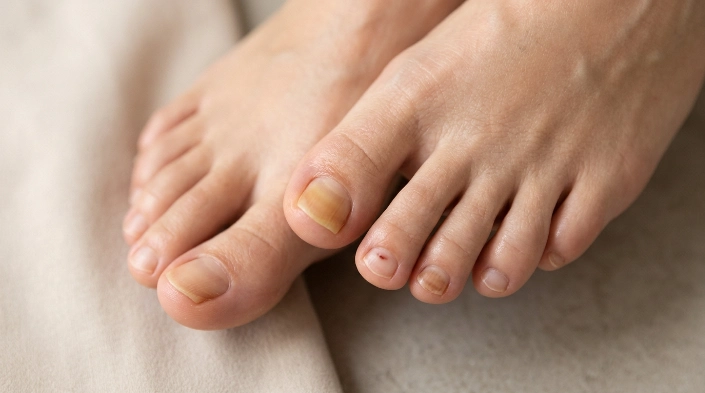
Your toenail may look like a simple hard plate, but several structures underneath it can affect its color.
The visible nail plate is made mostly of keratin. Beneath it is the nail bed, which contains living tissue and blood vessels. Pigment, blood, fungus, debris, or changes in the nail bed can all show through the relatively translucent nail plate.
That means two brown toenails can look similar while having completely different causes.
Before deciding what to do, look at:
- Whether one nail or several nails are affected
- Whether the color is light brown, yellow-brown, reddish-brown, or nearly black
- Whether the nail is thick, crumbly, painful, or lifting
- Whether you recently stubbed your toe or wore tight shoes
- Whether the discoloration appears to move toward the tip as the nail grows
- Whether there is a distinct vertical brown or black stripe
- Whether the skin around the nail is also changing
These clues are useful, but appearance alone cannot reliably diagnose every nail problem.
1. Toenail Fungus
A fungal nail infection, medically called onychomycosis, is one of the most common explanations for a discolored toenail.
According to the American Academy of Dermatology’s guide to nail fungus symptoms, fungal infections can make a nail turn yellow, white, brown, or another color. The affected nail may also become thicker, brittle, crumbly, misshapen, or partially separated from the nail bed.
Signs That Brown Discoloration May Be Fungal
Look for a combination of symptoms such as:
- Brown or yellow-brown discoloration
- Thickening of the nail
- Crumbling or rough edges
- Debris beneath the nail
- Nail lifting away from the nail bed
- More than one nail gradually becoming affected
- Athlete’s foot between the toes
- Mild discomfort when wearing shoes
Fungus often starts near the edge of the nail and gradually spreads.
Warm, damp environments make fungal growth easier. Sweaty shoes, communal showers, locker rooms, shared nail tools, and ongoing athlete’s foot can increase exposure.
Do not assume every brown nail is fungus. Nail injuries, psoriasis, and other conditions can look surprisingly similar.
A dermatologist can take a small nail sample when necessary to confirm whether fungus is actually present before recommending prescription treatment.
2. Bruising or Blood Under the Nail
Did you drop something on your toe, stub it against furniture, run a long distance, or spend the day wearing shoes that squeezed your toes?
Brown discoloration may simply be old blood trapped beneath the nail.
This is called a subungual hematoma. Fresh blood may appear red, purple, or black. As it ages, the area can become dark brown.
You do not always remember the injury. Repeated pressure from running shoes, hiking boots, high heels, or footwear with a small toe box can cause tiny injuries over time.
A Bruise Often Has a Helpful Clue
As the toenail grows, a bruise will normally move gradually toward the free edge of the nail.
Toenails grow slowly, so this process can take months.
The American Academy of Dermatology’s advice for injured nails recommends medical care for significant injuries, especially when a large amount of blood is beneath the nail, the nail becomes black or purple, or the injury is particularly painful.
Do not puncture or drill through your own toenail to release blood. Doing this at home can introduce bacteria and cause additional nail-bed damage.
3. Nail Polish or Product Staining
Sometimes the cause is purely cosmetic.
Dark red, brown, burgundy, black, or highly pigmented nail polish can temporarily stain the nail plate, especially when it is worn repeatedly without a protective base coat.
Self-tanner, henna, dyes, and certain chemicals may also discolor the nail surface.
Surface staining is more likely when:
- Several toenails are similarly discolored
- The change appeared after removing dark polish
- The nail remains smooth and normally shaped
- There is no pain, swelling, crumbling, or unusual thickness
Give the nail time to grow instead of aggressively buffing away the discoloration.
Over-buffing thins the nail plate and can make the toenail weaker, more sensitive, and easier to damage.
4. Repeated Friction and Pressure From Shoes
Your footwear can affect your toenails more than you might expect.
When your toes repeatedly hit the front of a shoe, the nail matrix and nail bed can experience low-level trauma. Over time, this may contribute to bruising, nail thickening, or increased pigment production.
Common triggers include:
- Shoes that are too short
- Narrow toe boxes
- High heels
- Long-distance running
- Hiking downhill
- Sports involving sudden stops
- Toe deformities that increase pressure
If the brown color appeared after changing footwear or increasing your activity level, pressure may be part of the explanation.
Choose shoes with enough room for your toes to move comfortably, and keep toenails trimmed without cutting them extremely short.
5. Natural Nail Pigmentation
Brown or black nail pigmentation is known as melanonychia.
It often appears as one or more vertical pigmented bands extending from the base toward the tip of a nail. Melanin—the pigment responsible for skin, hair, and eye color—is also responsible for this nail pigmentation.
Some people naturally develop pigmented nail bands, and they are particularly common in people with darker skin tones.
Pigmentation may also occur after repeated friction or inflammation.
The important point is that not every brown nail stripe is dangerous, but a new or changing stripe should not simply be assumed to be normal pigmentation.
6. Nail Psoriasis and Other Inflammatory Conditions
Psoriasis does not affect only the skin. It can also involve fingernails and toenails.
Nail psoriasis may cause:
- Yellow, red, or brown patches
- Small pits in the nail surface
- Thickening
- Crumbling
- Nail lifting
- Debris beneath the nail
This can sometimes resemble fungal nail disease.
A person can also have psoriasis and a fungal infection at the same time, which makes self-diagnosis even less reliable.
If you already have psoriasis—or have unexplained skin patches plus nail changes—mention this to your dermatologist.
7. Medications and Medical Conditions
Certain medications can change nail pigmentation.
For example, some chemotherapy medications, antimalarial drugs, and other prescription treatments have been associated with brown or black nail pigmentation. Medication-related changes may involve several nails rather than only one.
Do not stop a prescription medication because your nail color changed.
Instead, ask the healthcare professional who prescribed it whether nail pigmentation is a recognized effect.
Less commonly, nail color changes may occur alongside certain nutritional, hormonal, inflammatory, or systemic medical conditions. Nail color by itself is rarely enough to determine which condition is responsible.
8. A Brown or Black Nail Stripe That Needs Medical Attention
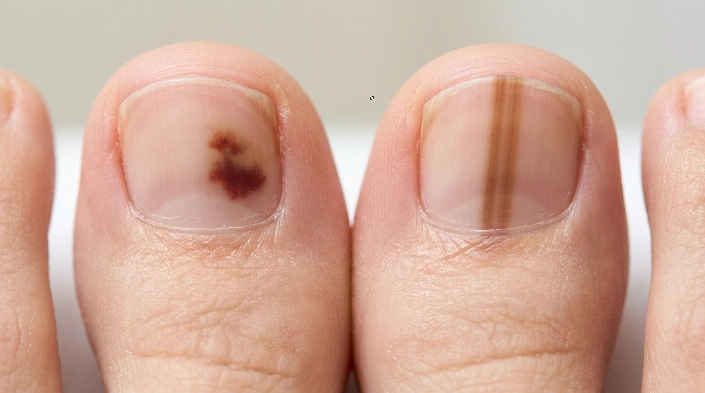
This is the possibility that is important not to overlook.
Melanoma is a type of skin cancer, and in uncommon cases it can develop under or around a fingernail or toenail.
The American Academy of Dermatology’s nail melanoma guidance recommends having new or changing dark nail bands evaluated.
Warning signs can include:
- A new brown or black vertical stripe
- A stripe that becomes wider or darker
- Irregular coloring within the stripe
- Pigment spreading onto the skin beside the nail
- Nail splitting or lifting without an obvious explanation
- A bump beneath the nail
- An unexplained change affecting one nail
- A dark area that does not appear to grow outward like a typical bruise
These signs do not automatically mean melanoma. Several harmless conditions can produce dark nail pigmentation.
However, this is one situation where trying to diagnose the nail from photos or covering the area with polish is not a good substitute for an examination.
Brown Toenail Causes at a Glance
| Possible Cause | What You May Notice | Typical Next Step |
|---|---|---|
| Nail fungus | Brown/yellow color, thickening, crumbling, debris | Dermatologist evaluation if persistent |
| Trauma or bruising | Brown, purple, or black patch after pressure/injury | Monitor mild injuries as they grow out |
| Polish staining | Smooth nail with superficial discoloration | Stop dark polish temporarily and observe |
| Shoe friction | Discoloration after running or tight footwear | Improve shoe fit and reduce pressure |
| Natural pigmentation | Stable brown vertical bands | Monitor established stable pigmentation |
| Nail psoriasis | Pitting, discoloration, lifting, thickening | Dermatologist evaluation |
| Medication effect | Multiple nails changing after treatment | Ask prescribing healthcare professional |
| Suspicious pigment change | New/widening irregular dark stripe | Dermatologist evaluation promptly |
How to Check a Brown Toenail at Home
You do not need specialized nail equipment to keep track of a discoloration.
Try this simple approach:
- Remove nail polish completely.
Make sure you are looking at the actual nail plate rather than leftover pigment. - Wash and dry the foot.
Dirt or product buildup can make color difficult to judge. - Look at the whole nail.
Check the color, thickness, surface, edges, and surrounding skin. - Compare it with your other toes.
Multiple similar nails can suggest a different pattern than one suddenly changing nail. - Think about recent pressure or injury.
Consider new shoes, running, hiking, sports, or accidentally hitting the toe. - Take a clear photograph.
Photograph the nail in similar lighting every few weeks so you can see whether the color is moving, widening, or changing. - Avoid aggressive DIY treatment while you are unsure of the cause.
Filing, scraping, bleaching, or covering the nail can make it harder to monitor.
According to the NHS guidance on nail problems, unexplained changes in nail color or shape are reasons to seek medical advice rather than simply ignoring the change.
Expert Tip: Take a dated photo of an unexplained brown toenail before applying polish. Toenails grow slowly, so side-by-side photos are often much more useful than trying to remember what the nail looked like a month ago.
Can You Treat a Brown Toenail at Home?
That depends entirely on the cause.
If It Looks Like Surface Staining
Pause dark polish for a while and allow the stained section to grow out.
Avoid harsh whitening chemicals and aggressive buffing.
If It Followed Minor Shoe Pressure
Switch to properly fitted shoes, keep the nail protected, and monitor whether the discoloration grows outward.
If You Suspect Fungus
Keep feet clean and dry, change socks regularly, avoid sharing nail tools, and wear footwear in communal wet areas.
However, a confirmed fungal infection may need medical treatment. Filing away the brown area does not necessarily eliminate fungus living deeper in the nail.
If There Is a Dark Stripe or No Clear Explanation
Skip cosmetic experimentation and arrange a professional evaluation.
The goal is not to panic—it is simply to avoid hiding a change that needs to be identified properly.
Nail Hygiene While You Monitor Discoloration
Good hygiene protects both the affected nail and your other toenails.
- Wash feet regularly and dry carefully between the toes.
- Change damp or sweaty socks promptly.
- Allow shoes to dry between wears.
- Trim toenails mostly straight across.
- Use clean, properly maintained nail clippers.
- Do not share files, clippers, or pedicure tools.
- Avoid cutting into the cuticle or surrounding skin.
- Wear sandals or protective footwear in communal showers.
- Do not aggressively dig underneath a discolored nail.
If you visit a salon, make sure reusable instruments are appropriately cleaned and disinfected between clients.
Common Mistakes to Avoid
Brown toenails are easy to over-treat because the discoloration is visible every time you look at your feet.
Avoid these common mistakes:
- Assuming every brown nail is fungus. Several conditions can mimic a fungal infection.
- Covering a changing dark stripe with polish for months. This makes changes harder to monitor.
- Using someone else’s prescription antifungal treatment. The discoloration may have another cause.
- Scraping deeply under the toenail. This can injure the nail bed and introduce infection.
- Over-buffing stained nails. Removing too much of the nail plate weakens it.
- Ignoring shoe pressure. Repeated trauma can keep damaging the same nail.
- Sharing pedicure tools. Contaminated tools can spread fungal infections.
- Expecting toenail discoloration to disappear immediately. A damaged nail must often grow out before its appearance returns to normal.
- Ignoring pain, swelling, drainage, or spreading redness. These symptoms deserve professional attention.
When to See a Nail Technician or Dermatologist
A nail technician can help with cosmetic nail care, proper trimming, polish application, and routine pedicure maintenance.
But a nail technician is not the right person to diagnose an unexplained brown toenail, fungal infection, melanoma, or another medical nail condition.
Consider seeing a dermatologist, podiatrist, or other appropriate healthcare professional when:
- The brown color appeared without an obvious reason
- A dark stripe is new or changing
- Pigment spreads onto nearby skin
- The nail becomes painful
- The toe is swollen, warm, or draining fluid
- The nail becomes thick, crumbly, or detached
- Several nails continue worsening
- You suspect fungus but treatment is not helping
- The discoloration does not move outward as expected after an injury
- You have diabetes, poor circulation, reduced sensation, or another condition that makes foot injuries more concerning
For cosmetic services, it is better to postpone polish or enhancements on a suspicious nail until a medical cause has been ruled out.
Medical evaluation can cost more than trying an inexpensive beauty product, but repeatedly purchasing treatments for the wrong condition can also become costly. When the diagnosis is uncertain, identifying the cause first is usually the smarter approach.
FAQs
Can toenail fungus make a nail brown?
Yes. Toenail fungus can cause yellow, white, brown, and other discoloration. A fungal nail may also become thick, brittle, crumbly, lifted, or misshapen.
Why is only my big toenail brown?
A single brown big toenail may result from pressure, an old bruise, fungus, pigmentation, or another nail condition. The big toe receives significant shoe pressure, but unexplained or changing pigmentation should still be evaluated.
Can tight shoes cause brown toenails?
Yes. Tight shoes can repeatedly press the toenail against the shoe, causing trauma and bleeding beneath the nail. Runners and hikers may experience this even without one obvious injury.
Will a brown toenail grow out?
A stain or bruise may gradually move toward the tip as the nail grows. Toenails grow slowly, so complete replacement can take many months. Fungus, psoriasis, or ongoing pigmentation may not simply disappear as the nail grows.
Is a brown line on a toenail always melanoma?
No. Brown nail lines can have many benign causes, including normal pigmentation, trauma, medications, and inflammation. However, a new, widening, irregular, or otherwise changing dark band should be examined by a dermatologist.
Should I put nail polish over a brown toenail?
If you already know the discoloration is harmless staining or an old injury, occasional polish may be reasonable. If the cause is unknown or the color is changing, leave the nail visible until it has been assessed so you can monitor it accurately.
Can a pedicure fix a brown toenail?
A pedicure can improve the cosmetic appearance of staining or rough nails, but it cannot diagnose or cure a medical cause such as fungus, psoriasis, or melanoma. Painful, inflamed, infected-looking, or unexplained nail changes should be medically evaluated first.
Conclusion
So, what causes brown toenails? Common explanations include nail fungus, bruising, tight footwear, polish staining, natural pigmentation, psoriasis, medication effects, and repeated friction.
The surrounding clues matter as much as the color itself. A smooth nail stained after dark polish is very different from a thick, crumbling nail or a new dark stripe that continues changing.
Start by removing polish, looking carefully at the nail, checking your footwear and recent activities, and taking a dated photo so you can track changes.
Most importantly, do not try to hide or self-treat an unexplained changing brown or black nail indefinitely. When you are unsure—especially with a new dark band, pain, nail lifting, swelling, or persistent discoloration—a dermatologist or other qualified healthcare professional can help determine the actual cause and the safest next step.

