
What Causes Repeated Ingrown Toenails?

You trim a sore toenail, it finally feels better, and then a few weeks or months later the same painful corner starts pressing into your skin again. If this keeps happening, it is reasonable to wonder: what causes repeated ingrown toenails?
Recurring ingrown toenails are usually not random. Nail-cutting habits, tight shoes, naturally curved nails, repeated toe pressure, injury, and certain nail problems can all encourage the edge of a toenail to grow into the surrounding skin. The big toe is affected most often.
The good news is that changing a few everyday habits may lower your risk of another episode. But when the same toenail repeatedly becomes painful, swollen, or infected, home nail care has limits.
This guide explains the common causes, how trimming and filing affect your toenails, what you can safely do at home, and when recurring symptoms deserve professional attention.
Quick Answer
What causes repeated ingrown toenails? Common causes include cutting toenails too short or rounding the corners, wearing tight shoes, repeated toe pressure or injury, naturally curved nails, and some nail infections or health conditions. Correct trimming, roomy footwear, good hygiene, and avoiding aggressive DIY digging can help reduce recurrence.
Why Does an Ingrown Toenail Keep Coming Back?
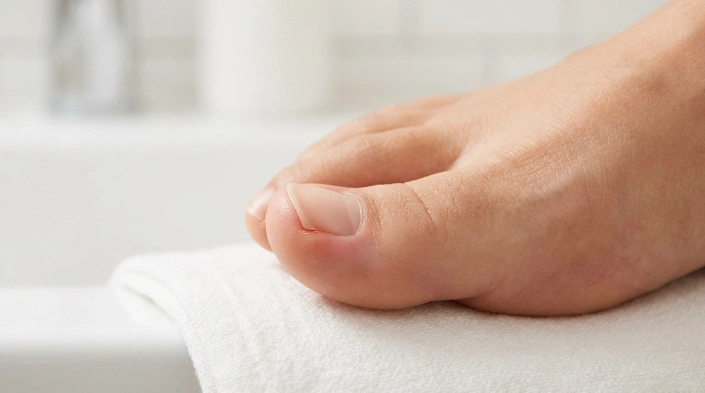
An ingrown toenail develops when the edge or corner of the nail presses or grows into the nearby skin instead of growing comfortably over it.
At first, you may notice tenderness when your shoe presses against the toe. The skin can then become red, swollen, and increasingly painful. Infection can develop in some cases. Mayo Clinic’s guide to ingrown toenail symptoms and causes
When the problem keeps returning, something is usually continuing to push the nail and skin together.
That may be the way you cut the nail. It may be pressure from footwear. It may also be the natural shape of the nail itself.
Understanding the trigger matters because simply cutting away the painful corner does not necessarily solve the reason it became ingrown.
1. Cutting Your Toenails Too Short
One of the most common mistakes is trimming toenails extremely short.
You may think cutting the nail close to the skin will make your pedicure last longer. Unfortunately, removing too much nail can make it easier for surrounding skin to press against the nail as it grows forward.
A safer goal is to leave the toenail at a moderate length rather than trimming it flush with the skin.
The American Academy of Dermatology recommends cutting toenails straight across to reduce the chance of developing an ingrown nail. AAD guidance on trimming nails safely
If getting an even cut is difficult, NailPrime’s guide to trimming your big toenail properly explains how to make several controlled cuts instead of trying to remove the entire edge at once.
2. Rounding or Digging Into the Corners
A rounded toenail may look neat after a pedicure, but deeply cutting the corners can cause problems.
As the nail grows, the shortened corner may press into the nail fold—the skin along the side of your nail.
A common cycle looks like this:
- A corner becomes uncomfortable.
- You cut deeper into the corner for relief.
- The soreness temporarily improves.
- The nail begins growing again.
- The new edge presses into the skin.
- You cut the corner even deeper.
Eventually, you may feel as though you constantly have to “dig out” the nail.
Do not keep cutting farther down the side of a painful toenail. Aggressive trimming can injure the skin and make the area harder to manage.
3. Tight Shoes and Toe Pressure
Even perfectly trimmed toenails can become irritated if they spend hours squeezed inside tight footwear.
Shoes with a narrow toe box push the toes together and increase pressure around the nail edges. High-impact activities may add even more pressure.
Mayo Clinic lists shoes that crowd the toenails as a common cause and risk factor for ingrown toenails.
Pay particular attention to:
- Pointed shoes
- Shoes that are too short
- Tight athletic shoes
- Stiff shoes that press directly against the big toe
- Socks that strongly compress the toes
Your shoes should give your toes enough space to sit naturally.
If your toenail only hurts after wearing one particular pair, footwear deserves serious consideration before you reach for your clippers again.
4. Naturally Curved Toenails
Some people simply have more curved toenails than others.
A strongly curved nail can place its edges closer to the surrounding skin, making irritation more likely even when your grooming routine is reasonable.
This does not mean you should try to aggressively flatten the nail with a coarse file.
A nail file is useful for smoothing a rough free edge. It cannot safely change the underlying growth pattern of a curved toenail.
When a naturally curved nail repeatedly becomes ingrown despite careful trimming and properly fitting shoes, a podiatrist or other qualified healthcare professional can assess whether treatment beyond routine nail care is appropriate.
5. Repeated Trauma or Injury
Think about what happens to your toes during an average week.
Running, hiking, soccer, dancing, long work shifts, and even repeatedly bumping the front of your shoes can place stress on your toenails.
A single major injury can change how a nail grows for a while. Repeated smaller injuries may also irritate the nail and surrounding tissue.
Mayo Clinic includes toenail injury among recognized causes of ingrown toenails.
If recurrence started after an injury, watch the new nail as it grows rather than repeatedly reshaping it to make it look normal.
Toenails grow slowly, so visible improvement can take time.
6. Thick, Damaged, or Difficult-to-Cut Nails
A thick toenail can make correct trimming harder.
Standard fingernail clippers may crush, split, or bend the nail instead of making a clean cut. You may then be tempted to cut at awkward angles or dig into the sides.
If thickness is your main challenge, NailPrime’s guide to caring for thick toenails safely at home covers conservative trimming and filing techniques.
Choose a tool that comfortably fits the nail. Our guide to toenail clippers for precise trimming can also help you understand the differences between wider jaws, stronger handles, and other features.
Never force a small clipper around a thick toenail.
If the nail has become unusually thick, crumbly, discolored, painful, or lifted, the problem may be more than a trimming issue.
7. Nail Infection or Other Nail Changes
Sometimes recurrence is connected to an underlying nail problem.
Mayo Clinic includes nail infections among possible causes of ingrown toenails.
Changes such as thickening or abnormal shape can make a nail more difficult to trim and may alter the way it presses against surrounding skin.
Watch for:
- Yellow, brown, or unusual discoloration
- Crumbling
- Increasing thickness
- Nail lifting
- Drainage
- Persistent odor
- Redness and warmth around the nail
Do not simply file these changes away.
NailPrime’s guide to toenail damage warning signs explains which changes should make you stop cosmetic DIY care and seek professional advice.
Which Factors Make Recurrence More Likely?
Several factors can overlap.
| Factor | How It Can Contribute | Safer Approach |
|---|---|---|
| Cutting too short | Leaves surrounding skin close to the growing edge | Keep a moderate nail length |
| Rounded corners | Encourages nail edges to press into side skin | Trim mostly straight across |
| Tight footwear | Compresses nail and surrounding tissue | Choose a roomy toe box |
| Curved nail shape | Naturally directs the edge toward the skin | Use conservative care; seek help if recurrent |
| Sports or repeated pressure | Causes ongoing nail trauma | Improve shoe fit and protect the toe |
| Thick nails | Makes controlled trimming difficult | Use an appropriate toenail tool |
| Infection or nail disease | May change thickness or nail shape | Seek diagnosis instead of filing aggressively |
You may have more than one cause at the same time.
For example, a naturally curved nail combined with tight running shoes and very short trimming may create a much bigger problem than any one factor alone.
How to Help Prevent Another Ingrown Toenail
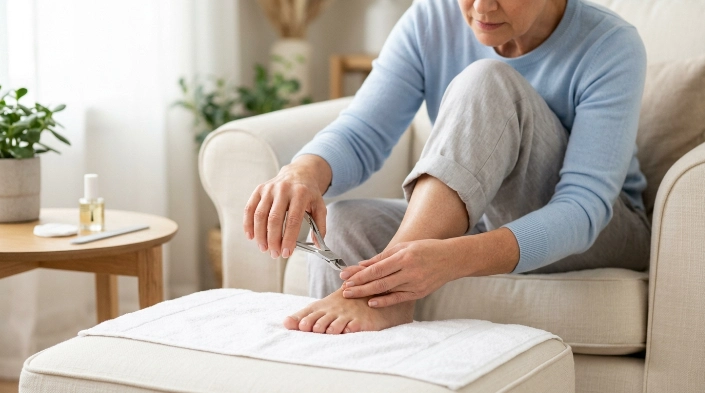
Prevention is usually about consistent habits rather than one special product.
1. Let the Nail Grow to a Comfortable Length
Avoid repeatedly cutting the nail down to the skin.
A little visible free edge can make it easier to maintain a straight shape.
2. Trim Mostly Straight Across
The NHS recommends cutting toenails straight across rather than cutting down the edges. NHS ingrown toenail guidance
Use small, controlled cuts if the nail is thick.
3. File Only Rough Edges
After clipping, a nail file can smooth a sharp or jagged spot.
Use light pressure.
You are trying to refine the edge—not carve deeply into the corner or thin the entire nail.
4. Keep Tools Clean
Dirty nail tools can introduce microorganisms into tiny cuts around the nail.
Clean reusable tools appropriately, dry them thoroughly, and avoid sharing personal nail-care tools.
The AAD advises cleaning nail clippers and other reusable trimming tools regularly.
5. Check Your Shoes
Stand up while trying on shoes and notice what happens around your toes.
Your big toe should not be jammed into the front or pressed firmly against the side.
6. Do Not Pick or Dig
Trying to “free” an ingrown corner using scissors, cuticle nippers, tweezers, or another sharp tool can injure the skin.
If you cannot reach the nail comfortably without cutting into sensitive tissue, stop.
What Can You Do When an Ingrown Toenail Is Already Sore?
For a mild ingrown toenail without serious warning signs, conservative home care may help.
The NHS suggests measures such as soaking the foot in warm salty water, keeping the foot dry afterward, wearing comfortable wide shoes or sandals, and avoiding cutting or picking at the affected nail while it grows out.
The important part is restraint.
Do not turn a mild problem into a deeper wound by cutting into swollen skin.
If symptoms are getting worse instead of better, continuing DIY treatment is not a good strategy.
Expert Tip: When the same corner keeps becoming ingrown, take a photo before trimming it. Compare the nail shape, length, footwear, and location of the soreness each time. Patterns often reveal whether over-trimming or repeated shoe pressure is contributing.
DIY Care vs. Salon or Medical Care
Routine nail maintenance and treatment of an actively inflamed ingrown toenail are not the same thing.
| Situation | DIY Nail Care | Nail Technician | Medical Professional |
|---|---|---|---|
| Healthy nail needs routine trimming | Usually reasonable | Appropriate | Usually unnecessary |
| Rough nail edge | Gentle filing may help | Appropriate | Usually unnecessary |
| Mild early tenderness | Conservative care may help | Avoid aggressive pedicure work | Consider if persistent |
| Repeated ingrown nail | Limited | May help with routine maintenance only | Recommended for evaluation |
| Pus or spreading redness | Not appropriate for cosmetic treatment | Avoid service | Seek medical care |
| Diabetes or poor circulation | DIY cutting may carry extra risk | Requires caution | Professional guidance is important |
Cost also matters.
Basic home care requires only simple tools, while salon pedicures involve recurring service costs. Medical treatment can cost more and depends heavily on location, insurance, and the procedure needed.
However, choosing the cheapest option is not always safest. A cosmetic service should not replace healthcare when infection, significant pain, or repeated injury is involved.
When to See a Nail Technician or Dermatologist
A licensed nail technician can help maintain healthy toenails, shape the free edge conservatively, and avoid common pedicure mistakes.
But a nail technician should not be expected to diagnose or medically treat an infected or repeatedly ingrown toenail.
Consider a dermatologist, podiatrist, or other healthcare professional if:
- The same toenail repeatedly becomes ingrown
- Pain is severe
- Swelling keeps increasing
- Pus or drainage appears
- Redness seems to be spreading
- The nail is severely curved or distorted
- Home care is not helping
- You are unsure whether infection is present
Mayo Clinic notes that healthcare professionals may use treatments such as lifting the nail edge, splinting, partial nail removal, or—in recurrent cases—removing part of the nail along with the underlying growth tissue. Mayo Clinic’s ingrown toenail treatment guidance
People with diabetes or conditions that reduce circulation to the feet should be especially cautious because foot wounds and infections can carry greater risk.
Common Mistakes to Avoid
Recurring ingrown toenails can make you impatient, but aggressive DIY fixes often create more irritation.
Avoid these common mistakes:
- Cutting the nail extremely short to prevent it touching the skin
- Rounding the corners deeply
- Digging under the nail with sharp tools
- Tearing off a painful nail corner
- Aggressively filing the side of the nail
- Continuing to wear shoes that squeeze the toe
- Sharing toenail clippers or files
- Covering an inflamed toe with polish and ignoring it
- Treating pus or spreading redness like a cosmetic problem
- Repeatedly cutting the same painful corner without addressing why it returns
The goal is not to remove as much nail as possible.
The goal is to help the nail grow forward without repeatedly injuring the skin beside it.
FAQs
Why do I keep getting an ingrown toenail on the same big toe?
The nail may naturally curve toward the skin, or repeated trimming habits and shoe pressure may be directing the same edge inward. If the same toe becomes ingrown again and again despite careful nail care, consider professional evaluation.
Can cutting toenails incorrectly cause recurring ingrown nails?
Yes. Cutting toenails too short or cutting deeply around the corners can increase the risk. A mostly straight-across shape is generally recommended for toenails.
Can a nail file prevent ingrown toenails?
A nail file can smooth a rough or sharp edge after trimming, but it cannot guarantee prevention. Do not aggressively file down the corners or sides of a painful nail.
Do tight shoes really cause ingrown toenails?
They can contribute. Shoes that crowd the toes increase pressure around the toenail and are recognized as a risk factor for ingrown nails.
Should I get a pedicure if my toenail is ingrown?
If the toe is painful, swollen, bleeding, draining, or potentially infected, postpone cosmetic nail work and seek appropriate professional advice. A routine pedicure should not be used to treat an active infection.
Why does my toenail grow back ingrown after I cut the corner out?
Cutting out the corner may temporarily reduce pressure without correcting the underlying nail shape, trimming pattern, or footwear pressure. The new edge can therefore grow toward the same irritated area again.
Can a doctor permanently stop one side of a toenail from becoming ingrown?
For repeatedly affected nails, a healthcare professional may recommend removing part of the nail and treating the underlying nail-growth tissue so that portion is less likely to grow back. The appropriate procedure depends on your individual nail and medical situation.
Conclusion
So, what causes repeated ingrown toenails?
For many people, recurrence comes from a combination of cutting toenails too short, rounding or digging into the corners, tight footwear, repeated toe pressure, naturally curved nails, or nail changes that make proper trimming difficult.
Start with the basics: keep your toenails at a comfortable length, trim mostly straight across, smooth only rough edges, keep your tools clean, and give your toes enough room inside your shoes.
Most importantly, know where DIY nail care ends.
If the same toenail repeatedly becomes painful, swollen, or infected, stop trying to solve the problem by cutting deeper. A dermatologist, podiatrist, or other qualified healthcare professional can identify why the nail keeps becoming ingrown and discuss treatment options that address the cause rather than only the painful corner.
Treat recurring pain as information—not just an inconvenience—and make your next step one that protects both the nail and the skin around it.

