
What Causes Yellow Toenails? Common Reasons and What to Do

You take off your polish or look down after a shower and notice something strange: one or more of your toenails look yellow.
It is easy to immediately assume you have toenail fungus, but yellow nails can happen for several reasons. Sometimes the cause is as simple as staining from dark nail polish. Other times, yellowing comes with thickening, crumbling, lifting, or pain and deserves more attention.
So, what causes yellow toenails? Fungal infections are one of the most common possibilities, but nail trauma, polish staining, psoriasis, and a few less-common health conditions can also change the color of a toenail.
This guide explains the most likely causes, what different symptoms can mean, how to care for your nails safely at home, and when it is smarter to see a dermatologist instead of trying another DIY fix.
Quick Answer
Yellow toenails can be caused by toenail fungus, nail polish staining, repeated shoe pressure or injury, psoriasis, and less commonly certain medical conditions. If the nail is also thick, crumbly, lifting, painful, or getting progressively worse, have it checked by a healthcare professional rather than assuming the discoloration is cosmetic.
What Causes Yellow Toenails?
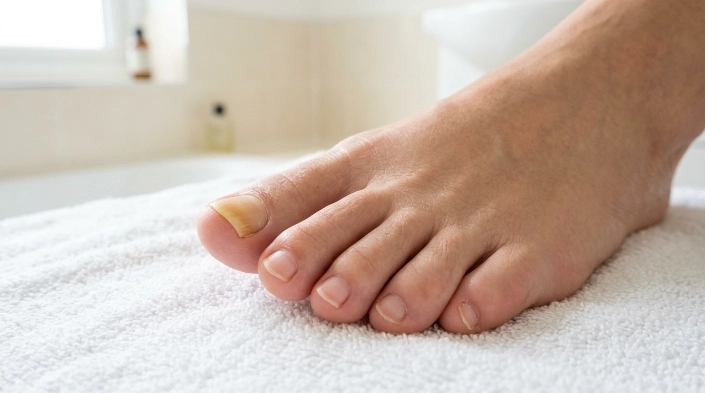
A healthy toenail is usually translucent enough that the pinkish nail bed underneath shows through. Yellowing happens when something changes the nail plate, the tissue underneath it, or the way the nail grows.
The most useful clue is not simply the color.
Look at what else is happening.
Ask yourself:
- Is the nail getting thicker?
- Is it brittle or crumbly?
- Is only the surface stained?
- Is the nail separating from the skin underneath?
- Are several toenails affected?
- Is there pain, redness, swelling, or an odor?
- Did the change begin after an injury or months of wearing polish?
These details help narrow down the possibilities.
1. Toenail Fungus
A fungal nail infection, medically called onychomycosis, is one of the most recognizable causes of yellow toenails.
According to the American Academy of Dermatology’s guide to nail fungus, an infected nail may become yellow, white, brown, thickened, brittle, misshapen, or partially separated from the nail bed.
Fungal infections often begin near the tip or side of a toenail rather than changing the whole nail overnight.
As the infection progresses, you might notice:
- Yellow or yellow-brown discoloration
- Thickening
- Brittle or crumbly edges
- Debris underneath the nail
- A distorted nail shape
- Lifting away from the nail bed
- An unpleasant odor in some cases
Fungus tends to like warm, damp environments. Sweaty footwear, athlete’s foot, communal showers, and repeated exposure to contaminated surfaces can increase the chance of developing an infection. Mayo Clinic also notes that previous athlete’s foot, minor nail injuries, diabetes, circulation problems, and weakened immunity can increase risk.
Yellow Does Not Automatically Mean Fungus
This distinction matters.
Several nail conditions can look similar to a fungal infection. The CDC recommends talking with a healthcare provider about testing before treating a suspected fungal nail infection because discoloration and shape changes have other possible causes.
That means repeatedly using antifungal products on an unexplained yellow toenail is not always the smartest first step.
2. Dark or Bright Nail Polish
Sometimes the explanation is much simpler: your polish stained the nail plate.
Deep reds, oranges, burgundy shades, and other highly pigmented polishes can leave a temporary yellow tint behind, especially when applied repeatedly without a protective base coat.
The American Academy of Dermatology’s manicure and pedicure safety advice specifically notes that bright red or orange polish can discolor nails and that the color should gradually return to normal over several weeks when the staining polish is not reapplied.
Polish staining is more likely when:
- The nail remains smooth and normally shaped.
- There is no unusual thickness.
- The nail is not crumbling.
- There is no redness or swelling.
- The discoloration appeared after removing dark polish.
Giving your toenails a polish break may make the cause much easier to identify.
Do not aggressively buff away yellow staining. Over-buffing can thin the nail plate and make your nails weaker.
3. Repeated Pressure or Nail Trauma
Toenails take more abuse than we sometimes realize.
Tight shoes, running, hiking, dancing, sports, or repeatedly bumping a toe can injure the nail. Even low-level pressure that happens again and again can change how a nail grows.
Trauma can cause discoloration, thickening, separation, ridges, or an irregular nail shape. Severe injuries may produce darker red, purple, or black discoloration from bleeding underneath the nail, while chronic damage can create more subtle changes.
Physical trauma is also a common cause of nail dystrophy, which simply means a change in the nail’s color, thickness, texture, or shape.
If one specific toenail keeps changing, examine your footwear.
Your toes should not constantly press into the front or top of your shoes.
4. Nail Psoriasis
Psoriasis does not affect only the skin.
It can also involve fingernails and toenails.
The American Academy of Dermatology lists white, yellow, or brown discoloration among the possible signs of nail psoriasis. Other symptoms can include tiny pits, crumbling, buildup beneath the nail, and separation of the nail from the underlying skin.
Nail psoriasis can sometimes resemble fungus.
That is another reason not to diagnose a yellow toenail by color alone.
If you already have psoriasis or notice nail pitting along with yellowing, mention it to your dermatologist.
5. Aging and Changes in Nail Growth
Toenails often grow more slowly and become thicker with age.
Slow-growing nails have more time to experience friction, minor trauma, dryness, and exposure to organisms that can affect their appearance.
Aging itself should not be used to explain every unexplained nail change, however.
If a toenail suddenly changes color or becomes significantly thicker, painful, crumbly, or detached, it is worth getting an assessment rather than assuming it is simply part of getting older.
6. Yellow Nail Syndrome
Despite its name, yellow nail syndrome is not simply another term for having yellow nails.
It is a rare condition.
People with yellow nail syndrome can develop yellow or yellow-green nails that grow slowly, become thick or curved, and sometimes separate from the nail bed. The condition can also occur alongside swelling of the legs or ankles and respiratory problems.
MedlinePlus describes yellow nail syndrome as involving yellow nails, slowed nail growth or nail separation, and associations with lymphedema and lung problems.
If all or many of your nails are changing and you also have unexplained swelling, chronic coughing, or breathing symptoms, that is very different from simple polish staining.
Talk with a healthcare professional.
Yellow Toenails: Quick Cause Comparison

| Possible Cause | What You May Notice | Best Next Step |
|---|---|---|
| Nail polish staining | Yellow surface but normal nail texture | Stop dark polish temporarily and monitor |
| Toenail fungus | Yellowing, thickening, crumbling or lifting | Consider medical evaluation and testing |
| Repeated trauma | One or several damaged or irregular nails | Check footwear and reduce repeated pressure |
| Nail psoriasis | Yellowing, pits, buildup, crumbling or separation | See a dermatologist |
| Yellow nail syndrome | Multiple yellow, thick, slow-growing nails plus other symptoms | Medical evaluation |
| Unclear cause | Persistent or worsening discoloration | Get a professional diagnosis |
How Can You Tell Whether a Yellow Toenail Might Be Fungus?
There is no home visual test that can diagnose every case correctly.
Fungus becomes more suspicious when the yellow color appears together with:
- Thickening
- Crumbling
- Brittle edges
- Nail lifting
- Debris underneath the nail
- Gradual worsening
- More than one affected nail
- Athlete’s foot
According to Mayo Clinic’s overview of nail fungus, fungal infections commonly cause discoloration, thickening, brittleness, distortion, and separation from the nail bed.
However, psoriasis and nail trauma can produce some of these same changes.
A dermatologist may examine the nail and, when necessary, collect nail clippings or material from underneath the nail for testing. That can help distinguish fungus from conditions that only look like fungus.
What to Do About Yellow Toenails at Home
Your safest approach depends on the likely cause.
1. Remove Nail Polish
If your toenails have been continuously painted, remove the polish and leave them bare temporarily.
Do not immediately cover unexplained discoloration with another opaque color.
Being able to see the nail makes it easier to notice whether the yellowing is growing out or getting worse.
2. Keep Your Feet Clean and Dry
Wash your feet regularly and dry carefully between the toes.
Change sweaty socks and allow damp footwear to dry thoroughly before wearing it again.
The CDC notes that keeping the feet and toes clean and dry and changing shoes and socks regularly can help prevent or control fungal problems such as athlete’s foot.
3. Trim Nails Carefully
Trim toenails without digging deeply into the corners.
If a nail has become extremely thick or painful, forcing regular clippers through it may cause splitting or injury.
That is a situation where professional help can be safer.
4. Be Careful With Nail Files
If you use a nail file on your toenails, avoid aggressive back-and-forth filing or thinning a suspicious nail until it becomes sore.
Do not share personal nail tools.
Nail fungus can spread through contaminated grooming tools and other shared items.
Disposable files used on a suspicious nail should not then be used on healthy nails.
For reusable tools, follow appropriate cleaning and disinfection practices.
5. Wear Shoes That Fit
Your toes need enough room to lie comfortably instead of repeatedly hitting the front of the shoe.
If the same toenail keeps looking damaged after exercise, your shoe size, toe-box shape, or activity may be contributing.
6. Avoid Picking Under the Nail
When material builds up underneath a yellow nail, you may be tempted to scrape it out.
Avoid digging underneath the nail with sharp manicure tools.
This can damage the skin, create an opening for infection, and potentially separate more of the nail from its bed.
Expert Tip
Expert Tip: Take a clear photo of the affected toenail every two to four weeks in similar lighting. Because toenails grow slowly, comparing photos can make it much easier to see whether discoloration is growing outward, spreading, or staying unchanged.
Can You Whiten Yellow Toenails?
If the yellow color is simply cosmetic staining, it generally makes more sense to allow the stained nail to grow out rather than trying aggressive whitening tricks.
Be cautious with internet remedies involving harsh chemicals, strong acids, or repeated abrasive buffing.
A toenail is not like a stained countertop.
Damaging the protective nail plate to make it look temporarily lighter can create a bigger problem than the original discoloration.
If the yellowing is caused by fungus, psoriasis, or another underlying condition, whitening the surface will not address the cause.
How Are Fungal Yellow Toenails Treated?
Treatment depends on whether fungus is actually present and how severe the infection is.
Options may include prescription topical or oral antifungal medicines. Nail fungus can be slow to improve because a healthier-looking nail has to gradually grow forward.
The NHS notes that some antifungal nail treatments may need to be used for six to twelve months and that visible improvement can take several months.
The American Academy of Dermatology also emphasizes that nails grow slowly, so discoloration can remain visible while healthier nail replaces the affected portion.
Do not assume an over-the-counter skin antifungal cream will automatically solve a nail infection. The nail plate creates a different treatment challenge from fungal infections on exposed skin.
Common Mistakes to Avoid
Yellow toenails often lead people into aggressive DIY treatment before they know the cause.
Avoid these common mistakes:
- Assuming every yellow toenail is fungus. Trauma, psoriasis, and polish staining can look similar.
- Covering the nail immediately with dark polish. This makes changes harder to monitor.
- Aggressively filing the nail thinner. Excessive filing can weaken or injure the nail.
- Sharing clippers, files, or other nail tools. Contaminated tools may spread fungal infections.
- Picking underneath a lifting nail. This can injure the exposed nail bed.
- Ignoring pain or swelling. These symptoms deserve more attention than simple cosmetic staining.
- Expecting a damaged toenail to look normal within days. Toenails grow slowly, so improvement usually takes time.
- Using multiple treatments at once. Irritation or additional damage can make it harder to understand what is actually happening.
When to See a Nail Technician or Dermatologist
A nail technician can help with routine grooming, polish, and cosmetic nail care, but unexplained yellowing combined with thickening, crumbling, pain, or nail separation should be treated as more than a beauty problem.
Consider seeing a dermatologist or another qualified healthcare professional when:
- The nail keeps becoming more yellow or thick.
- It is painful.
- The skin around the nail is red, warm, swollen, or draining.
- The nail is lifting significantly.
- Several nails are becoming abnormal.
- Home care has not improved the problem.
- You have psoriasis and develop new nail changes.
- You think you may have a fungal infection but are unsure.
- Yellow nails appear along with leg swelling or respiratory symptoms.
Mayo Clinic also advises getting medical care when suspected nail fungus occurs with diabetes, bleeding around the nail, swelling, pain, or difficulty walking.
People with diabetes, circulation problems, or weakened immune systems should be especially cautious about self-treating foot and toenail problems.
If you still want a pedicure while dealing with an unexplained nail change, consider having the medical issue evaluated first.
How to Help Prevent Future Yellow Toenails
You cannot prevent every nail condition, but simple habits can reduce avoidable problems.
Try to:
- Keep feet clean and dry.
- Change damp socks promptly.
- Rotate shoes so they can dry.
- Wear properly fitting footwear.
- Wear protective footwear in communal wet areas.
- Avoid sharing nail tools.
- Choose salons that follow good sanitation practices.
- Use a base coat under strongly pigmented polish.
- Give persistently discolored nails time without polish so you can monitor them.
- Treat athlete’s foot instead of ignoring it.
These habits protect more than appearance. They reduce repeated trauma and create a less favorable environment for fungal growth.
FAQs
Can yellow toenails be normal?
Temporary yellow staining after dark nail polish can be cosmetic. However, persistent yellowing or yellowing combined with thickening, crumbling, lifting, or pain should not automatically be considered normal.
Does a yellow toenail always mean fungus?
No. Fungus is one possibility, but nail polish staining, trauma, psoriasis, and other nail conditions can also cause yellow discoloration.
Can nail polish make toenails yellow?
Yes. Highly pigmented polish can stain the nail plate, especially when worn frequently without a base coat. The discoloration should gradually grow out if staining is the cause.
Should I file down a thick yellow toenail?
Light grooming may be reasonable, but avoid aggressively thinning a thick, damaged, painful, or suspicious nail. Excess filing can cause additional injury. If the nail is difficult to manage safely, seek professional advice.
How long does it take for a yellow toenail to become clear again?
It depends on the cause. Cosmetic staining has to grow out, while fungal or inflammatory nail problems can take many months to improve. Toenails grow much more slowly than fingernails.
Can toenail fungus go away by itself?
Nail fungus often persists and can spread rather than simply disappearing. If you suspect fungus, especially when the nail is thickening or worsening, getting an accurate diagnosis is more useful than relying on appearance alone.
When should I worry about yellow toenails?
Seek professional advice if yellowing is worsening, painful, associated with swelling or redness, affects several nails, causes major thickening or separation, or occurs alongside other unexplained symptoms.
Conclusion
So, what causes yellow toenails?
Fungus is a common possibility, but it is not the only answer. Dark nail polish, repeated pressure, nail injuries, psoriasis, and rare medical conditions can all change the color of a toenail.
The appearance of the nail gives you useful clues, but color alone cannot confirm the cause.
Start with gentle care: remove polish, keep your feet clean and dry, avoid sharing nail tools, wear properly fitting shoes, and watch for changes in thickness, texture, pain, or nail separation.
If the yellowing continues, spreads, or comes with other symptoms, skip aggressive DIY treatments and have the nail evaluated. Knowing why the toenail is yellow is the first step toward choosing a treatment that actually makes sense.
