
What Top Coat Does for Nails: A Beginner’s Guide to Better Manicures

If you’re new to nail polish, top coat can seem like an optional extra. In practice, it plays a simple but useful role in a manicure. A top coat is the final layer applied over color polish to help seal the manicure, change the finish, and improve how the nails look and wear.
Quick answer: Top coat is optional for a very casual, short-term manicure or a color test, but it is strongly recommended for most regular polish manicures and whenever you want better tip wear and fewer surface scratches.
Think of it as the finishing step that helps your polish look more polished. Depending on the formula, it can add shine, create a matte look, smooth the surface, and help protect the color from everyday wear.
Quick Answer: What Top Coat Does
A top coat is the clear layer that goes on after nail polish. Its job is to finish the manicure.

In plain terms, top coat can:
- seal the color layer
- add shine or a matte finish
- help reduce chips and scratches
- smooth the look of the polish
- make the manicure look more even and complete
If you want a simple routine, this is the step that helps a manicure look finished instead of just painted.
How long top coat takes to dry matters here, because a top coat can feel dry on the surface before it is fully set.
Why Top Coat Matters in a Manicure
Without a top coat, color polish is more exposed to water, friction, and daily wear. That means the tips of the nails may chip sooner, and the surface can lose its fresh look faster.
A top coat helps in a few practical ways:
It protects the color layer
Your polish color sits underneath the top coat, so the clear layer takes some of the wear first. That can help reduce tip wear and surface scratches.
It improves the finish
Even a careful polish job can show brush marks or tiny texture. A top coat can make the surface look smoother and more uniform.
It adds the look you want
Some people want shine. Others want a soft, flat finish. Top coat is what creates that final look.
It can help with everyday wear
Typing, washing hands, opening packages, and general daily movement all put stress on polish. A top coat gives the manicure a better chance of holding up to that routine.
If you wear regular polish often, this extra step is usually worth it. If you only paint your nails for a short event, you may still want it because it improves the final look right away.
For more on how polish layers behave as they dry, see how regular nail polish dries.
Top Coat vs Base Coat
Beginners often mix these up, but they do different jobs.
| Product | Where it goes | Main purpose |
|---|---|---|
| Base coat | Under color polish | Helps create a smoother surface for polish and protects the nail plate from direct color contact |
| Top coat | Over color polish | Seals the manicure, changes the finish, and helps the look last longer |
A simple way to remember it: base coat prepares the nail, and top coat finishes the manicure.
If you skip base coat, your polish may not apply as evenly. If you skip top coat, the manicure may look less finished and may wear down faster.
For a deeper look at the first step, read how base coat dries.
Types of Top Coat and When to Use Each One
Not all top coats do the same thing. The best choice depends on the finish you want and how much time you have.
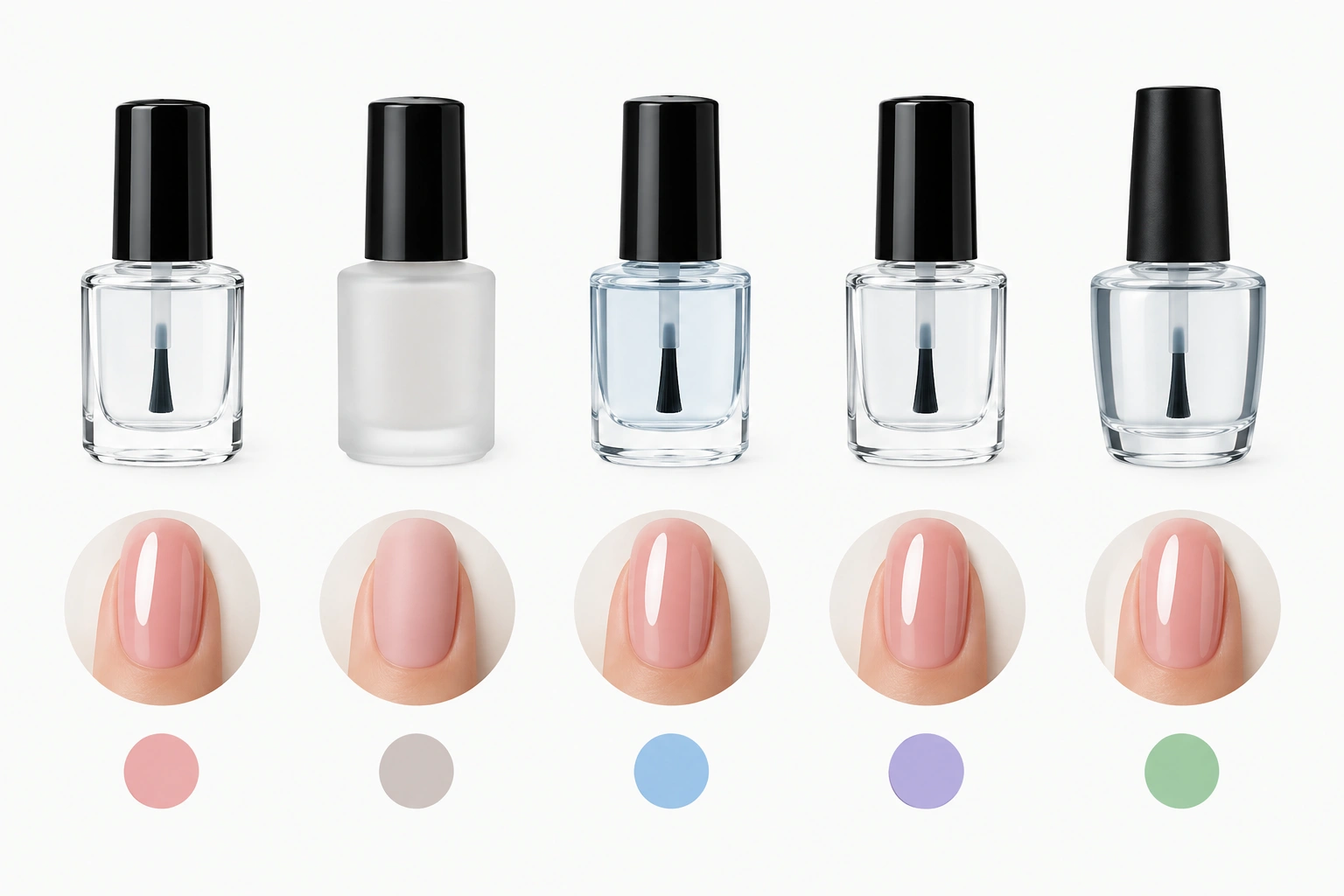
Glossy top coat
This is the classic option. It adds shine and makes color look fresh and bright.
Choose glossy if:
– you want a shiny finish
– you like a traditional manicure look
– you want the color to look a little more vivid
Matte top coat
A matte top coat removes shine and leaves a soft, flat finish.
Choose matte if:
– you want a modern, muted look
– you do not want gloss
– you want to change the look of a color you already own
Quick-dry top coat
This type is made for speed. It is designed to help the surface feel ready sooner than a standard top coat.
Choose quick-dry if:
– you are short on time
– you tend to smudge your nails after painting them
– you want a more convenient everyday routine
A quick-dry formula can be helpful, but it still needs careful application. It does not make a thick manicure instantly ready for heavy use.
Gel top coat
Gel top coat is used with gel polish systems and usually needs curing under a lamp according to product directions.
Choose gel top coat if:
– you are using gel polish
– you want a longer-wear manicure system
– you are comfortable with lamp curing and special removal
Gel top coat is not the same as regular top coat. It works as part of a different system and usually requires different removal steps.
Quick comparison table
| Type | Finish | Best for | Trade-off |
|---|---|---|---|
| Glossy | Shiny, bright | Everyday manicures | Not ideal if you want a flat finish |
| Matte | Soft, non-shiny | A muted look | Can show wear differently than glossy formulas |
| Quick-dry | Usually glossy or neutral | Fast routines | May not feel as flexible for some users |
| Regular top coat | Usually glossy | Simple beginner use | May take longer to feel fully set |
| Gel top coat | Glossy and durable-looking | Gel polish systems | Needs curing and special removal |
How to Apply Top Coat Correctly
Top coat works best when it is applied as the final layer in a thin, even coat.
Step 1: Let the color layer settle
Wait until your polish is no longer wet enough to drag. A practical rule is to apply top coat once the color polish is set enough that the brush does not pull or wrinkle it.
Step 2: Apply a thin coat
Use just enough product to cover the nail. Thick layers take longer to settle and can create bubbles or a lumpy surface.
Step 3: Seal the free edge
Brush a little top coat across the tip of the nail. This helps cover the edge where chips often start.
Step 4: Avoid overworking the brush
A few smooth strokes are better than repeated brushing. Too much back-and-forth can disturb the polish underneath.
Step 5: Let it settle fully
Even when the surface feels dry, the manicure may still be soft underneath. Be gentle with your nails for a while after applying top coat.
If you want a simple rule, one thin coat is usually enough for a beginner manicure. Adding more is not always better.
How Top Coat Affects Drying Time and Durability
Top coat can change how a manicure feels, but it does not magically make polish fully cured or instantly hard.
What it can do
A top coat can make the surface feel smoother and more finished. Depending on the formula, it may add only a little extra drying time, or not much that you notice at all. Quick-dry versions are designed to feel touch-ready sooner than standard formulas.
What it cannot do
It cannot fully compensate for a very thick polish application. If the color layer underneath is still soft, the manicure can still dent or smudge.
Surface-dry vs fully dry
This is one of the most useful beginner lessons. A manicure may feel dry to a light touch before it is ready for normal use. That is why people sometimes think polish is dry, then end up with dents from a pillow, a zipper, or a bag strap.
A top coat helps the manicure look complete, but patience still matters. For more on that timing, see how regular nail polish fully dries.
Common Top Coat Problems and How to Fix Them
Most top coat issues come from application, not the product itself.
Streaks
If the top coat looks streaky, the layer may be too thin or the brush may be dragging over polish that is not ready.
Fix: Use a smooth, even coat and fewer brush strokes.
Bubbles
Bubbles can happen if the bottle is shaken hard or the coat is applied too thickly.
Fix: Roll the bottle gently between your hands instead of shaking it, and apply thinner layers.
Smudging
Smudging usually means the color underneath was still too soft when the top coat went on, or the manicure was handled too soon after finishing.
Fix: Wait a little longer before top coating, then give the manicure more time before using your hands normally.
Thick or gummy look
A heavy top coat can make nails look bulky instead of glossy.
Fix: Wipe excess product off the brush before applying, and keep the layer thin.
Early chipping
If chips appear at the tips, the free edge may not be sealed well.
Fix: Brush top coat lightly across the tip of the nail when you finish.
How to Maintain a Regular Polish Manicure
If you are using regular polish, top coat is not just a one-time step. You can reapply a thin layer every few days if the finish starts to dull or the tips begin to wear.
A simple maintenance routine:
– clean the nail surface first
– apply one thin layer of top coat
– reseal the free edge if needed
– let it dry fully before using your hands normally
This can help refresh shine and reduce visible tip wear without repainting the whole manicure.
How to Remove Top Coat
Removal depends on the type of top coat you used.
Regular top coat
Regular glossy top coat usually comes off with standard nail polish remover. Acetone remover is often faster, while non-acetone remover may work more slowly. If the top coat is part of a regular polish manicure, the remover usually takes off the color and top coat together.
Matte or quick-dry formulas can vary a bit in how easily they remove, but they still usually come off with regular polish remover unless the product says otherwise.
Gel top coat
Gel top coat usually needs a different removal method, following the product instructions. That often means soaking or another gel-removal process rather than simple wipe-off remover.
Do not peel or scrape gel top coat off. That can rough up the nail surface and make the nails feel weak or uneven afterward.
If you are using polish often, it is also useful to know whether nail polish damages nails, especially when removal is rushed.
Can You Use Top Coat on Bare Nails?
Yes, you can use top coat on bare nails for a bit of shine or a cleaner look. It can also add a light protective layer over the nail surface, depending on the formula.
That said, top coat is mainly designed to finish a polish manicure, so it is usually more useful over color or as part of a clear manicure routine.
Do You Really Need Top Coat?
For most beginners, yes, top coat is worth using.
Use it if you want:
– a shinier or more finished look
– better everyday wear
– less risk of tip wear
– a smoother surface
– a matte finish instead of shine
You may skip it if:
– you are testing polish colors quickly
– you want a very casual, short-term manicure
– you are planning to change polish again soon
My practical rule is simple: if you spent time painting your nails and want them to look neat longer, use top coat. If your goal is only a temporary color test, it is less essential.
When to See a Nail Technician or Dermatologist
See a professional if your nails react badly to polish or removers, or if you are unsure which product system to use. A nail technician can help you choose the right top coat for regular or gel polish, and a dermatologist can help if you notice irritation, persistent redness, or other skin changes around the nails.
FAQ: Top Coat Basics for Beginners
Can I use top coat without nail polish?
Yes, you can. Some people use it on bare nails for a bit of shine or a cleaner look, but it is mainly designed to finish a polish manicure.
How many coats of top coat should I use?
For most beginners, one thin coat is enough. Extra layers can make the manicure feel heavy or take longer to settle.
Should I apply top coat right away?
Not usually. Wait until the color layer is mostly set so the brush does not drag the polish underneath.
Does top coat always have to be glossy?
No. Glossy is the classic choice, but matte top coat gives a flat, non-shiny finish.
Can I use a gel top coat over regular polish?
Usually not unless the product instructions specifically say it is compatible. Gel systems are meant to work together, and the curing step matters.
Why does my top coat bubble?
Bubbles often come from shaking the bottle, applying too much product, or brushing over polish that is still too wet.
How often should I reapply top coat?
If the tips start to look worn, a fresh thin layer can help refresh the manicure. Just make sure the surface is clean and dry first.
Why does my top coat look dull?
It may be old, applied too thickly, or covered by dust or residue. A fresh, thin coat usually performs better than a thick one.
Top coat is a small step, but it makes a noticeable difference in how your manicure looks and wears. Once you understand what it does, choosing the right one becomes much easier.

