
Why Are My Toenails Turning Black? Causes, Warning Signs, and What to Do

Noticing a toenail suddenly turn dark brown, purple, or black can be alarming—especially when you do not remember injuring your toe.
So, why are my toenails turning black? In many cases, the color comes from blood trapped under the nail after an injury or repeated pressure from shoes. But fungal infections can also darken a toenail, and a new or changing dark streak can occasionally signal a more serious problem that needs a dermatologist’s attention.
The important part is not to panic or immediately start filing, scraping, or covering the nail with polish. First, look at how the discoloration started, whether the nail hurts, and whether the dark area is moving as the nail grows.
This guide explains the common causes of black toenails, what you can safely do at home, which signs deserve professional attention, and when DIY nail care should stop.
Quick Answer
Toenails can turn black because of bruising under the nail, repeated pressure from tight shoes, fungal infection, or, more rarely, melanoma under the nail. A black nail that follows an obvious injury may grow out normally, but unexplained, changing, spreading, painful, or persistent discoloration should be checked by a healthcare professional.
What Does a Black Toenail Actually Mean?
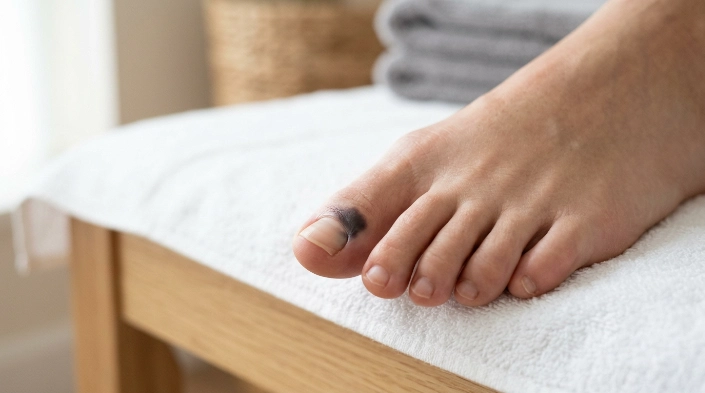
A black toenail is a symptom, not a diagnosis.
The nail plate—the hard part you trim and file—is partly transparent. That means changes underneath it can show through as brown, purple, dark red, or black.
Sometimes the discoloration is trapped blood. In other cases, the nail itself has changed because of an infection. Less commonly, dark pigment may develop from cells beneath or around the nail.
These causes can look surprisingly similar at first.
| Possible Cause | What It May Look Like | Other Clues | Best Next Step |
|---|---|---|---|
| Nail bruise or subungual hematoma | Dark red, purple, brown, or black patch | Recent impact, running, tight shoes, tenderness | Protect the toe and monitor growth |
| Repeated shoe pressure | Dark patch under one or more toenails | Running, hiking, long walking, cramped toe box | Improve shoe fit and reduce pressure |
| Fungal nail infection | Yellow, brown, greenish-black, or black discoloration | Thickening, crumbling, lifting, buildup | Medical evaluation may be needed |
| Nail melanoma | Brown or black streak/band or irregular pigment | New or changing line, spreading pigment, nail damage | See a dermatologist promptly |
The appearance alone is not always enough to tell the difference.
1. A Bruised Toenail From Injury
One of the most straightforward explanations is a bruise underneath the nail.
Doctors call this a subungual hematoma, which simply means blood has collected beneath the nail plate.
You might develop one after:
- Stubbing your toe
- Dropping something on your foot
- Kicking a hard object
- Playing sports
- Running downhill
- Wearing shoes that repeatedly press against the nail
The injured blood vessels underneath the nail can leak blood into the tiny space beneath the nail plate. The result may look dark red at first and later turn purple, brown, or almost black.
A newly bruised nail can also feel tender or throbbing.
The American Academy of Dermatology’s guidance for injured nails recommends medical attention when an injured nail is black or purple, the injury is particularly painful, or blood covers a large portion of the nail.
What Happens as a Bruised Toenail Grows?
If the discoloration truly comes from old blood, the dark area should gradually move toward the end of the toe as new nail grows from the base.
This is slow.
Toenails grow much more slowly than fingernails, so a damaged toenail may remain discolored for months. A completely lost toenail may take about a year to grow back.
Taking a clear photo every few weeks can make it easier to see whether the dark patch is actually moving.
2. Tight Shoes and Repetitive Pressure
You do not need one dramatic accident to develop a black toenail.
Repeated small impacts can create the same type of bleeding under the nail.
This commonly happens when the front of the toe repeatedly hits the inside of a shoe. Runners sometimes experience it, but you can also develop it after hiking, long walks, dancing, sports, or wearing shoes that are simply too short or narrow.
A clue is that the discoloration appeared after increased activity or after wearing a particular pair of shoes.
Check your footwear for:
- Toes touching the front of the shoe
- A narrow toe box
- Sliding forward inside the shoe
- Excessive pressure on the big or second toe
- Toenails that are long enough to hit the shoe
Keeping toenails neatly trimmed and choosing shoes with adequate toe room can help reduce repeated nail trauma.
Do not cut the nail extremely short to solve the problem. Over-trimming the corners can irritate the surrounding skin and may encourage an ingrown toenail.
3. Fungal Nail Infection
A fungal nail infection—also called onychomycosis—can also change a toenail’s color.
People often associate nail fungus with yellow nails, but fungal infections can produce brown, orange, greenish-black, or black discoloration as well. They may also cause thickening, brittleness, crumbling, lifting, or buildup underneath the nail.
The American Academy of Dermatology’s nail fungus symptom guide shows that fungal discoloration can vary considerably rather than always appearing yellow.
Fungus becomes more likely if the nail is:
- Getting thicker
- Crumbly around the edge
- Lifting from the nail bed
- Misshapen
- Developing debris underneath
- Changing color gradually rather than overnight
Several nails may eventually become involved.
Can You File Away a Dark Fungal Toenail?
No.
Filing can make an excessively thick nail easier to manage in some situations, but you cannot simply file away the underlying fungal infection. The AAD notes that scraping away material from a fungal nail does not eliminate the infection.
Aggressively thinning a dark or damaged nail can also make the nail tender and may injure the skin beneath it.
If fungal infection is suspected, a dermatologist or other healthcare professional may examine the nail and sometimes take a clipping or scraping to confirm the diagnosis. This is useful because injuries and other nail conditions can resemble fungus.
4. A Dark Streak That Needs Dermatologist Attention
Most black toenails are not melanoma.
However, melanoma can develop underneath or around a nail, so an unexplained dark streak should not automatically be treated as a bruise or fungus.
The American Academy of Dermatology’s nail melanoma guide recommends having a new dark band or other unusual nail change evaluated by a board-certified dermatologist.
Possible warning signs include:
- A new brown or black vertical band
- A band that becomes wider
- Irregular or uneven pigment
- Darkening of the skin beside the nail
- Nail splitting
- Nail lifting
- A bump beneath the nail
- Bleeding without an obvious injury
- Discoloration that does not grow outward with the nail
Nail melanoma is rare, but early evaluation matters. It can also occur in people of any skin color.
Never assume a persistent black streak is “just fungus” without having it examined when there is no clear explanation.
Bruise vs. Melanoma: What Should You Look For?
You cannot reliably diagnose melanoma at home, but there are patterns worth noticing.
A bruise generally follows an injury or repeated pressure. The dark area may appear relatively quickly and should gradually move toward the free edge as the toenail grows.
Nail melanoma may appear as a brown or black vertical line and can gradually widen or become irregular. Pigment may also involve the skin surrounding the nail.
If you are unsure which pattern you have, do not wait for certainty before asking a dermatologist.
That is especially important if the discoloration appeared without an obvious injury.
Expert Tip: Take a well-lit photo of the affected toenail today and another from the same angle every two to four weeks. Photos can help you notice whether a bruise is growing outward with the nail or whether the pigment itself appears to be changing.
What Should I Do if My Toenail Is Turning Black?
Your next step depends heavily on whether there was an injury.
If You Recently Injured the Toe
For a mild injury:
- Stop the activity that is putting pressure on the toe.
- Keep the area clean.
- Protect the nail from further bumps.
- Wear roomy shoes.
- Watch for increasing redness, swelling, drainage, or pain.
- Monitor whether the discoloration grows outward with the nail.
Do not rip off a loose nail.
If a portion is completely detached and catching on things, careful trimming may help, but avoid cutting into attached or tender tissue.
If You Do Not Remember an Injury
Take unexplained discoloration more seriously.
Check:
- Is it one nail or several?
- Is there a vertical dark streak?
- Is the streak widening?
- Is the surrounding skin changing color?
- Is the nail thick, brittle, or crumbly?
- Is the nail separating from the nail bed?
- Has the dark area changed during the last few weeks?
A dermatologist can distinguish between many nail conditions more reliably than appearance alone.
If You Think It Is Fungus
Keep the foot clean and dry and avoid sharing nail clippers, files, towels, or footwear.
The NHS notes that fungal nail infections commonly cause thickened, discolored, brittle nails and may take a long time to treat.
The NHS fungal nail infection guide can help you understand the typical appearance, but a very dark or unusual nail still deserves individualized evaluation when the diagnosis is uncertain.
Should You Use a Nail File on a Black Toenail?
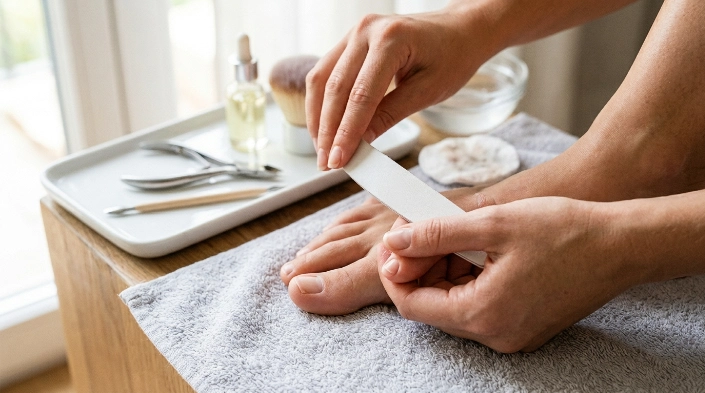
This is where gentle nail care matters.
If the nail is intact, comfortable, and simply has a rough free edge, you can usually lightly smooth only the edge with a clean nail file.
Do not:
- File deeply into the nail plate
- Try to remove the black color
- Scrape underneath the nail
- File an actively painful injury
- File through areas that are lifting
- Use a shared or dirty nail file
- Cover a suspicious change immediately after filing
The discoloration is often under the nail, so removing layers from the surface will not fix the cause.
If the nail is thick because of suspected fungus, professional advice is useful before aggressively reducing it.
Nail File Hygiene
If you file a questionable or possibly infected toenail, hygiene becomes especially important.
Use a washable or disposable file when practical. Do not use the same file on healthy fingernails immediately afterward.
Clean reusable tools according to their manufacturer’s instructions and avoid sharing personal nail tools with other people.
Can I Cover a Black Toenail With Nail Polish?
Cosmetically, polish can hide discoloration—but hiding the nail can also make changes harder to monitor.
If you are watching a bruise grow out, leaving the nail visible makes it easier to track.
If the discoloration is new, unexplained, spreading, or suspicious, consider having it evaluated before covering it with an opaque polish, gel, press-on, or enhancement.
A cosmetic fix should never delay medical evaluation.
Common Mistakes to Avoid
When a toenail turns black, avoid these common DIY mistakes:
- Assuming every dark nail is fungus. Bruises and other nail conditions can look similar.
- Aggressively filing the discoloration. A color change underneath the nail cannot simply be buffed away.
- Drilling or burning a hole in the nail yourself. Painful pressure after an injury may require medical treatment rather than a DIY procedure.
- Picking at a lifting nail. Pulling it can injure the nail bed.
- Continuing to wear painful shoes. Repeated trauma can keep damaging the nail.
- Sharing nail tools. Fungal infections can spread through contaminated items.
- Covering a suspicious streak for months. Monitor unexplained pigment instead of continually hiding it.
- Waiting indefinitely for an unexplained dark band to disappear. New or changing nail pigment deserves professional evaluation.
When to See a Nail Technician or Dermatologist
A nail technician can help with cosmetic grooming, shaping, polish, and routine maintenance of otherwise healthy nails.
A nail technician cannot diagnose the cause of a black toenail and should not be expected to determine whether you have a fungal infection, internal injury, or melanoma.
See a dermatologist or other appropriate healthcare professional if:
- The nail turns black without an obvious cause
- You develop a new dark vertical streak
- The streak gets wider or more irregular
- Pigment spreads onto the surrounding skin
- The nail splits or lifts unexpectedly
- You see a bump beneath the nail
- The toe becomes increasingly painful
- You notice redness, warmth, swelling, pus, or other signs of infection
- A recent injury caused severe throbbing
- A large amount of blood appears trapped underneath the nail
- The nail change is not improving or growing outward
- You simply cannot tell whether it is a bruise, fungus, or something else
The AAD specifically recommends dermatologist evaluation for new or changing dark nail streaks because some can represent melanoma.
If you have diabetes, poor circulation, reduced sensation in your feet, or another condition that makes foot wounds more complicated, seek individualized medical guidance rather than treating a damaged toenail aggressively at home.
DIY Care vs. Professional Evaluation
For a minor nail bruise with a clear cause and improving symptoms, home protection may be all you need.
Costs are usually minimal—mainly clean nail-care supplies and better-fitting footwear.
A salon visit may improve the appearance of a healthy nail, but it does not replace diagnosis.
Medical evaluation costs vary widely depending on location, insurance coverage, testing, and whether you see primary care, urgent care, a podiatrist, or a dermatologist.
When a black toenail is unexplained or has warning signs, choosing medical evaluation based on safety—not cosmetic cost—is the smarter approach.
How to Help Prevent Black Toenails
Not every cause is preventable, but you can reduce everyday nail trauma.
Wear Shoes With Enough Toe Room
Your toes should not repeatedly strike the front of your shoes.
This is particularly important for:
- Running
- Hiking
- Tennis
- Fitness classes
- Long walking days
- Work that keeps you on your feet
Keep Toenails Neatly Trimmed
Trim nails regularly so they do not hit the inside of your shoes.
Aim for a neat, straight-across shape rather than digging deeply into the corners.
Keep Nail Tools Clean
Do not casually share clippers, files, or other pedicure tools.
Keep Feet Dry
Change out of damp socks and allow shoes to dry between wears. Warm, moist environments can support fungal growth.
Check Your Toenails Regularly
Removing polish occasionally gives you a chance to inspect the nail plate, surrounding skin, and nail growth.
Small changes are easier to notice when you know what your nails normally look like.
FAQs
Why did my toenail turn black without hurting?
A black toenail does not always hurt. Old blood from mild repetitive trauma may cause little discomfort, and fungal nail changes may initially be painless. Nail melanoma can also occur without pain. Unexplained black discoloration should therefore be judged by the whole pattern—not pain alone.
Can tight shoes turn toenails black?
Yes. Repeated pressure from tight or poorly fitting footwear can injure tiny blood vessels beneath the nail and cause a dark bruise. This can happen during running, hiking, sports, or long periods of walking.
Will a black toenail fall off?
Sometimes. A significantly injured nail can loosen or separate from the nail bed and eventually shed. Minor bruises may simply grow outward while the nail stays attached. Avoid pulling off a loose nail yourself if part of it is still attached.
How long does a black toenail take to grow out?
Toenails grow slowly, so visible discoloration can remain for many months. If an entire toenail is lost, replacement may take roughly a year.
Can toenail fungus look black?
Yes. Nail fungus can sometimes create dark brown, greenish-black, or black discoloration, although yellow, white, and brown changes are also common. Thickening, crumbling, lifting, and debris beneath the nail make fungus more suspicious.
How can I tell a bruised toenail from melanoma?
A bruise often appears after injury or repeated pressure and gradually grows outward with the nail. Nail melanoma may form a vertical brown or black band that changes, widens, or affects nearby skin. These patterns can overlap, so a dermatologist should evaluate unexplained or changing pigment.
Should I go to a nail salon for a black toenail?
A salon can provide cosmetic nail care, but it cannot diagnose a black toenail. If the color is unexplained, painful, infected-looking, persistent, or changing, get medical evaluation first. Once a health concern has been ruled out, you can decide whether cosmetic pedicure care makes sense.
Conclusion
If you have been wondering, “Why are my toenails turning black?”, start by thinking about recent injuries, shoe pressure, sports, running, or other repeated trauma. Blood underneath the nail is a common explanation, and fungal infection is another possibility.
But do not automatically assume every black nail is a harmless bruise.
A new or changing dark streak, pigment without a clear injury, discoloration spreading toward surrounding skin, unexpected nail splitting, or a change that does not grow outward deserves professional attention.
For everyday nail care, keep the toe protected, wear properly fitting shoes, keep your tools clean, and avoid aggressive filing or scraping.
Most importantly, treat a black toenail as something to observe—not something to hide immediately. If the cause is unclear or the appearance worries you, a dermatologist can help determine what is actually happening and what, if anything, needs treatment.

