
Why Are My Toenails White? Common Causes and What to Do

Looking down and noticing that one or more toenails have turned white can be confusing. Maybe you see tiny white spots, a chalky patch, a pale section near the tip, or an entire toenail that suddenly looks much lighter than normal.
So, why are my toenails white?
There is no single answer. White toenails can develop after everyday pressure from tight shoes, minor nail injuries, aggressive pedicures, nail-product irritation, fungal infections, or nail separation. Less commonly, widespread white nail changes can be connected with psoriasis or certain medical conditions.
The pattern matters. A small white spot that slowly moves toward the tip as your nail grows is very different from a thick, crumbly white toenail or several nails that suddenly become pale.
This guide explains the most common causes, what you can safely do at home, when a nail file may help, and when it is smarter to have the nail examined professionally.
Quick Answer
White toenails are commonly caused by minor trauma, tight footwear, nail-product damage, fungal infection, or separation of the nail from the nail bed. Small painless spots often grow out on their own. However, thickening, crumbling, pain, swelling, nail lifting, or whitening across several nails deserves closer attention.
What Does a White Toenail Actually Mean?
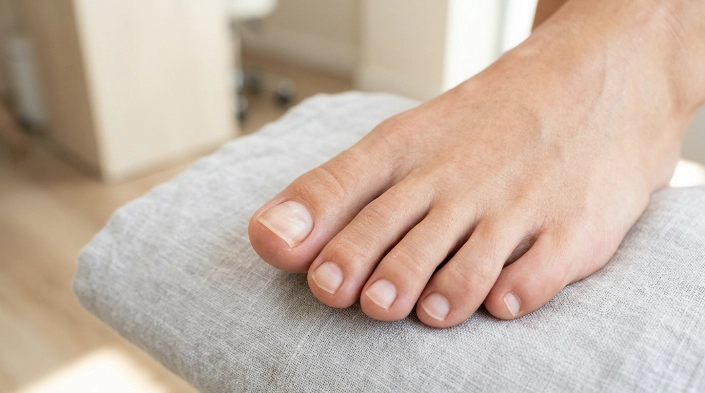
The medical term often used for white discoloration of a nail is leukonychia.
Your nail plate—the hard part you trim—is normally translucent. Its pink appearance partly comes from the tissue and blood supply underneath it. When the nail plate, nail bed, or attachment between them changes, part of the nail can appear white.
DermNet explains that leukonychia may involve part or all of a fingernail or toenail and can result from several different processes. Minor trauma is one common cause, especially from manicuring, knocks, pressure, or tight footwear. DermNet’s overview of white nails and leukonychia
The appearance gives useful clues, but color alone cannot reliably diagnose the cause.
| What you notice | Possible explanation | Best next step |
|---|---|---|
| One or two small white spots | Minor trauma or pressure | Watch as the nail grows |
| White marks after pedicures | Nail-surface or matrix trauma | Reduce aggressive filing/buffing |
| Chalky white surface | Surface damage or possible fungus | Keep dry and monitor closely |
| White/yellow nail plus thickening | Possible fungal infection | Ask a pharmacist or healthcare professional |
| White area beginning where nail lifts | Onycholysis/nail separation | Avoid picking and investigate the cause |
| Pits, lifting, crumbling and discoloration | Possible nail psoriasis | Dermatology evaluation may help |
| Most of several nails becoming pale/white | Less common systemic or nail-bed change | Discuss with a healthcare professional |
1. Minor Trauma Is a Very Common Cause
If you have only a few small white marks, minor trauma is often a reasonable explanation.
The injury does not need to be dramatic. Toenails experience repeated pressure every day from walking, running, exercise, shoes, pedicures, and accidentally bumping your toes.
Common examples include:
- Shoes that press tightly against your toes
- Running or long-distance walking
- Dropping something lightweight on a toe
- Picking beneath the nail
- Aggressive pedicure work
- Heavy buffing or filing
- Cutting or pushing around the nail too forcefully
You may not remember the injury because the white mark can become noticeable later as the nail grows.
DermNet specifically notes that punctate leukonychia—small white spots—can follow manicuring, bumps, and tight footwear.
What should you do?
If the nail is otherwise smooth, comfortable, attached, and normal in thickness, give it time.
Toenails grow slowly, so a mark can remain visible for months before reaching the edge where you can trim it away.
Avoid digging into the white area or filing deeply in an attempt to remove it. If the whiteness formed inside the nail plate, aggressive filing will not fix the cause and may simply make the nail thinner.
2. Tight Shoes Can Make Toenails Look White
Your favorite pointed flats, snug sneakers, or too-small workout shoes can repeatedly press the toenail against the front or top of the shoe.
That pressure may injure the nail plate or the area where the nail forms.
If the same toe repeatedly develops white marks, consider whether your footwear is part of the problem.
Look for shoes with:
- Enough room to wiggle your toes
- A wider toe box
- Space between the longest toe and the shoe
- No pressure on the top of the nail
- Secure heel fit so your foot does not slide forward
This is especially worth checking if your white toenails appear after running, hiking, travel, or switching shoes.
3. A Fungal Nail Infection Can Look White
Not every white toenail is fungus, but fungal infection is an important possibility—especially when the nail is changing in more than color.
Nail fungus, or onychomycosis, can begin as a white or yellow-brown area and later cause thickening, brittleness, crumbling, distortion, or separation from the nail bed.
According to Mayo Clinic’s nail fungus guidance, fungal nail infections can cause discoloration, thickened nails, ragged or crumbly edges, abnormal shape, odor, and separation of the nail from the nail bed.
Fungus becomes more suspicious when:
- The white area keeps expanding
- The nail becomes thicker
- The edge becomes crumbly
- Several toenails become affected
- You also have athlete’s foot
- The nail becomes yellow-white rather than simply having one clean white spot
- Debris develops beneath the nail
Do not assume every white mark is fungus
Starting antifungal products for a simple trauma spot may waste months of treatment.
If the cause is unclear, a dermatologist, podiatrist, or other healthcare professional may examine the nail and sometimes test nail material before recommending treatment.
4. The Toenail May Be Separating From the Nail Bed
A lifted toenail can look surprisingly white.
This happens because the nail is no longer sitting directly against the pink nail bed underneath it. Air beneath the detached section changes how the nail looks.
This type of separation is called onycholysis.
Cleveland Clinic notes that onycholysis can create an abnormal border between the normal pink area and a white portion of the nail. Trauma is one possible cause, but fungal infection and other conditions can also contribute. Cleveland Clinic’s guide to onycholysis
Do not try to glue a lifted natural toenail back down.
Also avoid digging underneath it with metal tools or a nail file. Doing so can increase trauma and create more space where moisture and microorganisms can collect.
Keep the nail reasonably short and dry while you figure out why it is lifting.
5. Pedicures, Polish, and Nail Products May Contribute
Sometimes the timing offers the biggest clue.
If you notice white toenails shortly after removing polish, gel, artificial nail products, or completing an aggressive pedicure, the nail surface may simply have been stressed.
Repeated buffing and filing can remove too much of the nail plate. Picking off polish or gel can take surface layers with it.
Nail products may also irritate some people. Cleveland Clinic notes that products such as polish, hardeners, removers, and artificial nails can sometimes be associated with white nail spots through allergic reactions.
Give damaged toenails a break from cosmetic treatments.
Keep them clean and dry, use gentle footwear, and allow normal growth before applying another intensive pedicure system.
6. Nail Psoriasis Can Cause White or Pale Changes
Psoriasis does not affect only skin.
It can also involve the nails and cause:
- Small pits
- White, yellow, or brown discoloration
- Nail lifting
- Crumbling
- Material building underneath the nail
The American Academy of Dermatology explains that nail psoriasis can occur with psoriasis elsewhere on the body, although nail changes can sometimes appear without obvious skin psoriasis. American Academy of Dermatology guidance on nail psoriasis
If your white toenail also has repeated pitting, crumbling, lifting, or abnormal thickness, do not automatically treat it as fungus. The conditions can look similar and require different management.
7. Completely White Nails Can Occasionally Have a Medical Cause
Most isolated white toenail spots are not signs of a serious internal illness.
Still, there are exceptions.
A pattern called Terry’s nails causes most of the nail to appear white or washed out with a narrow darker or pink area near the tip. This pattern can sometimes appear with aging, but it has also been associated with certain health conditions.
That does not mean white toenails automatically indicate liver, kidney, heart, or nutritional problems.
Those associations become more relevant when multiple nails change in a similar way, especially when the change is new or accompanied by other symptoms.
If several nails suddenly become mostly white without an obvious nail-related cause, bring it up with your healthcare provider rather than attempting to diagnose yourself from photos online.
How to Tell Minor Nail Trauma From Possible Fungus
There is overlap, but these clues can help you decide what deserves further attention.
Minor trauma is more likely when:
- There are only one or two small spots
- The nail is not thick
- There is no crumbling
- The skin is comfortable
- The mark gradually travels outward as the toenail grows
- You recently wore tight shoes or had a pedicure
Fungus becomes more likely when:
- Discoloration spreads
- The nail becomes thick or misshapen
- The edges crumble
- Material accumulates underneath
- More nails gradually become affected
- You have athlete’s foot at the same time
A visual check can point you in the right direction, but it cannot provide a definite diagnosis.
Should You File a White Toenail?
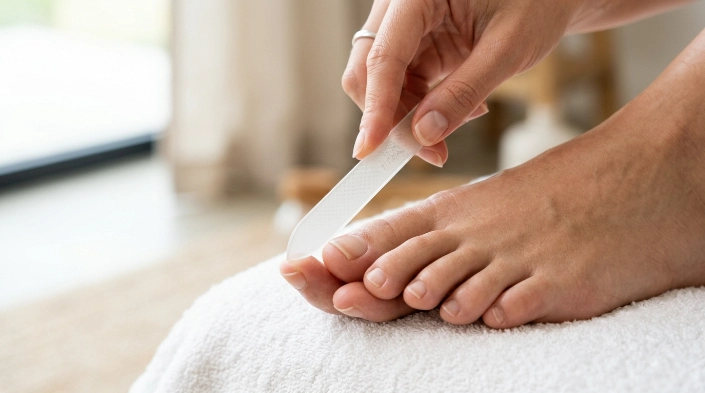
Usually, you should not aggressively file a toenail simply because it looks white.
The correct approach depends on why it is white.
For a small trauma-related spot inside the nail plate, filing the surface accomplishes little. You are better off waiting for it to grow out.
A healthcare professional may recommend thinning an unusually thick fungal nail in some situations, but that is different from sanding healthy nail tissue until the discoloration disappears.
Choosing a nail file
For routine toenail shaping:
- A standard disposable emery board is inexpensive and easy to replace.
- A washable glass file can work well for normal nail edges.
- Very coarse files should be used cautiously.
- Never share a personal nail file with another person.
A basic home nail file normally costs only a few dollars, while reusable glass files generally cost more. Professional foot or nail care costs vary considerably depending on location and whether medical treatment is required.
How to file safely
- Wash your hands and feet.
- Dry the toes thoroughly.
- Use your own clean file.
- Smooth only rough or sharp edges.
- Use light pressure.
- Stop if the nail becomes sore, warm, or sensitive.
- Clean or dispose of the file appropriately afterward.
Do not file deeply beneath a lifted nail.
And if you suspect fungus, avoid using the same uncleaned tool on healthy nails because contaminated tools may contribute to spreading infection.
Expert Tip: Take a clear photo of the toenail today and another every four weeks. A trauma-related white spot should gradually move toward the tip as the nail grows. A patch that spreads, thickens, or remains fixed deserves a closer look.
What You Can Safely Do at Home
For a painless white toenail without concerning changes, gentle care is usually the safest approach.
1. Keep the nail clean and dry
Dry carefully between your toes after bathing.
Moist, warm footwear environments can encourage fungal growth.
2. Trim straight across
Avoid cutting deeply into the corners because that may increase irritation or contribute to ingrown toenails.
3. Reduce pressure
Choose better-fitting shoes and avoid repeated impact against the end of the toe box.
4. Pause aggressive pedicures
Give the nail time to recover if whitening appeared after buffing, polish removal, gel removal, or artificial products.
5. Do not pick beneath the nail
Trying to “clean out” a white area can worsen separation.
6. Keep nail tools personal
Do not share clippers, files, or pedicure tools.
Clean reusable tools after use and allow them to dry completely.
Common Mistakes to Avoid
- Assuming every white toenail is fungus. Trauma and nail separation are also common possibilities.
- Filing until the white area disappears. You may thin and weaken the healthy nail plate.
- Picking underneath a lifted nail. This can increase trauma and separation.
- Using the same dirty file on every toenail. Keep tools clean and avoid spreading possible infection.
- Covering worsening discoloration with polish for months. Cosmetic coverage can make changes harder to monitor.
- Ignoring pain or swelling. These symptoms deserve more attention than a simple cosmetic spot.
- Treating a medical-looking nail change only at a salon. Nail technicians can provide cosmetic nail care, but they do not replace medical diagnosis.
When to See a Nail Technician or Dermatologist
A nail technician can be helpful when the problem appears purely cosmetic—for example, shaping an otherwise healthy toenail or helping you avoid unnecessary damage during a pedicure.
Choose a salon that follows strong hygiene practices and cleans or disinfects reusable equipment appropriately between clients.
However, a dermatologist, podiatrist, or other healthcare professional is the better choice when you notice:
- Increasing discoloration
- Significant nail thickening
- Crumbling
- Nail separation
- Bleeding
- Redness or swelling
- Drainage
- Bad odor
- Persistent pain
- Difficulty walking
- Changes affecting several nails
- No improvement despite appropriate care
Mayo Clinic specifically recommends medical advice when suspected nail fungus is associated with increasing discoloration or thickening, bleeding, swelling, pain, or walking difficulty. People with diabetes should also take possible foot infections more seriously.
If you have diabetes, poor circulation, reduced sensation in your feet, or a weakened immune system, avoid aggressive DIY cutting and filing of abnormal toenails without professional advice.
FAQs
Why are my toenails white but not thick?
A flat white spot on a normal-thickness nail may be caused by minor trauma, footwear pressure, or previous pedicure damage. Watch whether the spot moves toward the tip as your nail grows.
Does a white toenail always mean fungus?
No. Fungal infection is only one possible cause. Trauma, nail separation, product irritation, psoriasis, and other nail changes can also create white discoloration.
Why is my big toenail turning white?
The big toe experiences substantial shoe pressure and repeated impact, making trauma and nail separation possible. Fungus also commonly affects toenails. Thickening, crumbling, spreading discoloration, or lifting makes professional evaluation more useful.
Can nail polish cause white toenails?
Repeated polish use, aggressive removal, buffing, or reactions to nail products may contribute to surface damage or white spots. Give the toenail a break if whitening appears after cosmetic treatments.
Can I buff white spots off my toenails?
Avoid aggressive buffing. If the white area is within the nail plate rather than sitting on its surface, buffing will not solve the underlying cause and may weaken the toenail.
How long does a white spot on a toenail take to disappear?
Toenails grow slowly. A trauma-related spot may remain visible for many months while it gradually moves toward the free edge. The important clue is that it should move outward with normal nail growth rather than continuously spreading.
When should I worry about white toenails?
Seek professional advice when whitening affects several nails, rapidly spreads, or comes with thickening, crumbling, separation, pain, redness, swelling, bleeding, drainage, or other unexplained health symptoms.
Conclusion
If you have been asking, “Why are my toenails white?”, start by looking at the entire pattern rather than the color alone.
A few painless white spots are often connected with minor nail trauma, footwear pressure, or pedicure damage and may simply grow out. White discoloration accompanied by thickening, crumbling, nail lifting, pain, or changes across several toenails deserves more attention because fungus, psoriasis, or another nail condition may be involved.
Keep the nail clean, dry, gently trimmed, and protected from unnecessary pressure. Avoid aggressive filing or picking.
Most importantly, do not try to diagnose every white toenail from appearance alone. Monitor simple changes, but get professional help when the nail is worsening, uncomfortable, or clearly abnormal. A cautious approach protects both the appearance of your pedicure and the long-term health of your nails.
