
Why Nail Polish Dries Slowly: A Beginner’s Guide to Faster, Smoother Manicures

If your manicure still feels soft long after you painted it, you are not doing anything “wrong” by default. Nail polish dries as the liquid parts evaporate, and that process can slow down for a few simple reasons: the coat is too thick, the layers are stacked too quickly, the bottle is old, or the room is working against you.
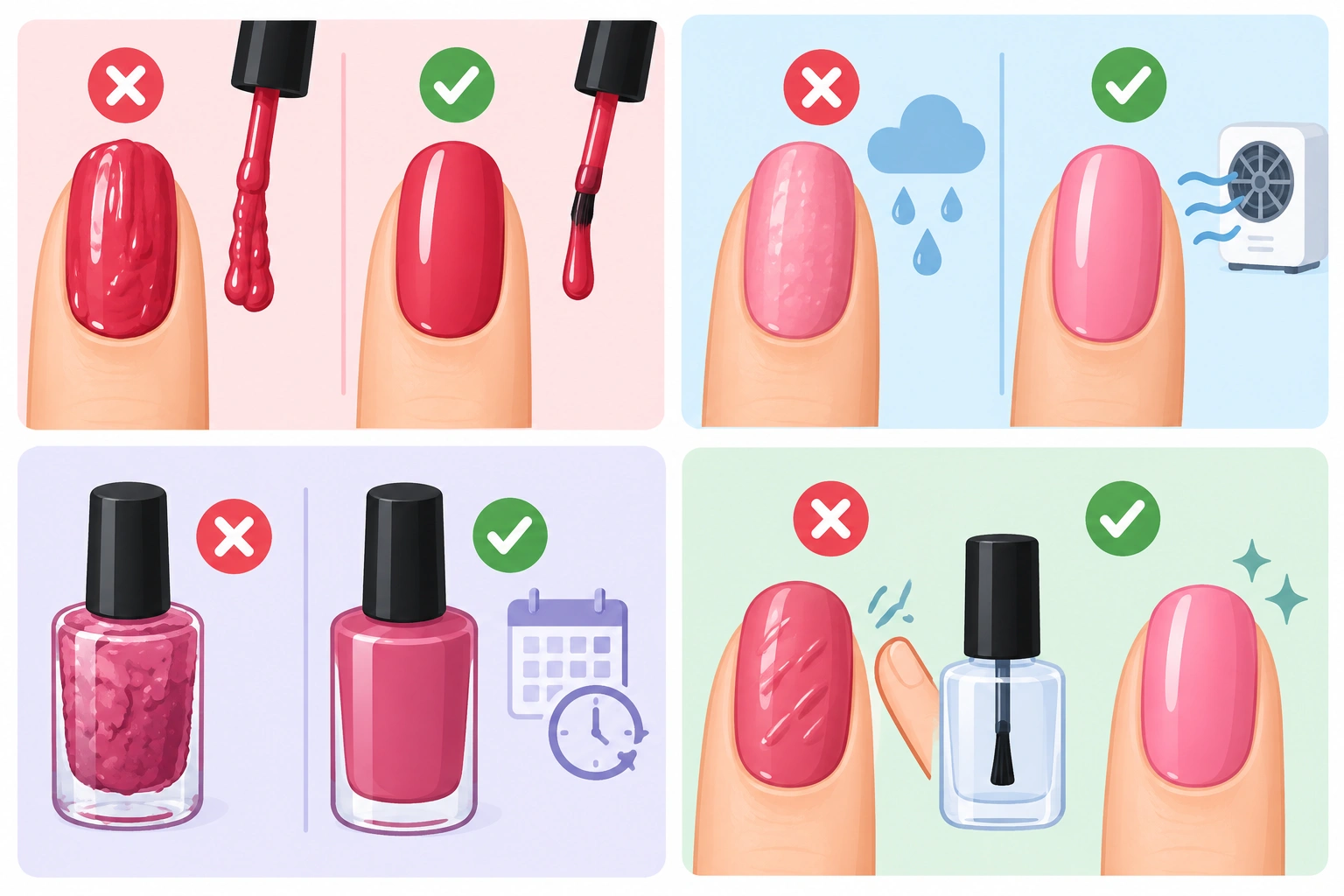
Quick troubleshooting at a glance: if the polish seems thick in the bottle or goes on streaky, the issue is probably the formula. If it looks smooth but stays soft, the application may be the problem. If everything seems fine but drying is still slow, look at the environment.
The good news is that most slow-drying problems are fixable at home. Once you know what is causing the delay, you can adjust your application and get a cleaner result with less smudging.
Why nail polish can dry slowly
Regular nail polish does not dry like water. It dries as solvents leave the polish film and the color layer sets on the nail. If the solvent has a harder time escaping, the polish stays soft longer.
That is why a manicure can look dry on the surface but still dent when you press it, put on shoes, or reach into a bag. The top can seem ready before the layers underneath have fully set.
A helpful way to think about it: the polish needs space and time to release its liquid components. Anything that traps those layers or slows evaporation can stretch out drying time.
If you want a broader overview of drying timelines, you may also find how regular nail polish dries useful.
The most common reasons polish stays wet
Thick coats
Thick coats are one of the biggest reasons polish dries slowly. A heavy layer holds more liquid, so the outside may seem ready before the center has set.
This is where beginners often get frustrated. A thick coat can look more opaque right away, but it usually costs you more time later. Thin coats may feel slower at first because you need more than one, but they dry more evenly and are less likely to wrinkle.
A simple rule: if the brush leaves a visibly heavy, streaky, or pooled layer, the coat is probably too thick.
Too many layers too close together
Even when each coat is thin, stacking them too quickly can trap wet polish underneath. The next layer seals in the one below before it has had enough time to release solvents.
This is especially common with darker shades and opaque colors, since people often add extra coats to hide streaks. The fix is not to pile on more polish. Instead, let each layer set a little longer before adding the next one.
Old or thickened polish
Polish that has thickened in the bottle tends to go on heavier and less smoothly. That alone can make each coat slower to dry.
If the polish feels stringy, gloopy, or hard to spread, the formula may be part of the problem. In that case, replacing the bottle is often better than trying to force it to work. A polish thinner may help in some cases, but if the product is badly aged, it may still apply poorly.
Poor drying conditions
The room matters more than many beginners expect. Humid air can slow evaporation, and very warm or still air is not especially helpful either. A cool room with gentle airflow usually works better than heat.
If you are painting your nails in a steamy bathroom or right after a shower, slow drying is more likely. Moist air and leftover warmth can make polish feel tacky longer.
For a related topic, see whether UV light helps regular nail polish, because regular polish and gel behave very differently.
Why it can feel dry on top but still be soft underneath
This is one of the most confusing parts for beginners. The top layer can set first, which makes the nail seem ready. But the polish below may still be soft and easy to dent.
That is why a manicure can survive a light touch and still smudge later when you put on socks, handle keys, or rest your nails on a surface. If the lower layers have not set, pressure can shift the polish even when the top feels fine.
A practical test: if the nail loses its shine but still dents with the lightest pressure, it is not ready for normal use yet.
How application choices change drying time
Thin coats dry more predictably
Thin coats are the easiest way to improve drying time without buying anything new. They spread more evenly and let solvents escape faster.
To keep coats thin, wipe excess polish from one side of the brush before you apply it. Aim for smooth coverage rather than full opacity in one pass. Most beginners use too much polish on the brush, then try to fix the result with fewer coats. That usually backfires.
Let each coat settle before the next one
A little patience between coats helps more than adding a fan after the manicure is already overloaded. Each layer needs a chance to firm up before the next one goes on.
You do not need to wait forever, but the polish should stop looking wet and mobile before you add the next layer. If the brush drags the coat underneath, the timing was too short.
Avoid overworking the brush
Going back and forth over the same area can make the layer thicker and less even. It also creates ridges that take longer to set.
One or two smooth strokes are usually better than repeated touch-ups. If coverage looks uneven, it is often safer to let that coat dry and fix the color with the next one.
How the environment affects drying
Humidity
Humidity slows evaporation because the air already holds more moisture. That does not mean polish will never dry in a humid room, but it may take longer and feel tackier for a while.
If possible, move to a drier room or use gentle airflow. Even a small improvement in the environment can make the manicure more manageable.
Temperature
Very warm air is not a reliable shortcut. Heat can soften polish and make it more likely to wrinkle or stay uneven. Cooler air is usually the safer choice.
If you are tempted to use a hair dryer on hot, skip it. Heat often creates more problems than it solves.
Airflow
Gentle airflow can help solvents evaporate, which is why a fan or cool setting may be useful. The key word is gentle. Strong air can disturb a fresh layer if the polish is still very wet.
A small fan placed at a distance is usually better than blasting nails directly with warm air.
Do base coats, top coats, and quick-dry products help?
Base coat
A base coat can help polish apply more evenly, which can indirectly improve drying because the color coat goes on smoother. It is not usually the main drying tool, though.
If your color is dragging or streaking, a base coat may help the final result look cleaner. It is more about control and adhesion than speed.
Regular top coat
A regular top coat adds shine and protection, but it can also add another layer that needs to settle. Some top coats feel heavier than others, so they may slow the finish a bit if applied too thickly.
That does not mean you should skip top coat. It just means a thick, glossy layer is not the fastest option.
Quick-dry top coat
A quick-dry top coat is worth buying if you often smudge your nails, need a faster finish, or want a simple way to make normal polish more forgiving at home. It is most useful when your manicure is already applied well and just needs help setting sooner.
If your polish is very thick, rushed, or uneven, a quick-dry top coat will not fully rescue it. In that case, better technique matters more than a special product.
For more on that comparison, you can read whether quick-dry polish really dries faster.
Drying drops
Drying drops can help the surface set, especially for beginners who want a simple step at the end. They are not magic, though. They will not fully rescue a manicure that was applied too thickly.
Think of them as a finishing aid, not a fix for overloaded layers.
A simple way to match the cause with the fix
| Likely cause | What you may notice | Best first fix |
|---|---|---|
| Thick coats | Polish looks glossy but dents easily | Switch to thinner layers |
| Too many layers | Color feels sealed in but still soft | Wait longer between coats |
| Old, thickened polish | Stringy, streaky, hard to spread | Replace the bottle or use a suitable thinner |
| Humid room | Everything feels tacky longer | Move to cooler, drier air |
| Heavy top coat | Shine looks good but drying feels slow | Use a lighter top coat or quick-dry top coat |
This table is not about perfection. It is a fast way to narrow down what is actually slowing your manicure.
What to do right now to speed up drying safely
If your nails are already painted, the safest move is to stop adding product and reduce the chance of smudging.
- Put your hands in a cool room with gentle airflow for a few minutes.
- Use a small fan at a distance if you have one, rather than direct warm air.
- Avoid heat, hot water, or rubbing your nails together.
- Keep your fingers relaxed and separate so the polish is not pressed against anything.
- If the surface is still very soft, give it more time before putting on socks, gloves, or tight clothing.
- Next time, use thinner coats and a quick-dry top coat if you want a faster finish.
If you need a simple rule: when in doubt, wait longer rather than trying to “fix” a tacky manicure with more polish or more heat.
Signs your polish is old, thickened, or expired
Old polish does not always look obviously bad, but it often behaves badly.
Watch for these signs:
– The polish is stringy when you lift the brush.
– It spreads in streaks instead of smoothing out.
– The formula feels heavy or gummy in the bottle.
– The color applies unevenly even when your technique is careful.
– Drying seems unusually slow compared with similar polishes.
When you see several of these at once, the polish itself may be the problem. At that point, replacing it is usually more practical than trying to save it.
Common mistakes that make polish dry even slower
Shaking the bottle hard
Shaking can create bubbles, and bubbles make the finish less smooth. A less even surface can also make the manicure seem less dry than it really is.
Rolling the bottle gently between your hands is usually a better habit.
Using a thick “one-coat” approach
One heavy coat feels efficient, but it often causes more smudging and longer wait times. Two or three thin coats usually give a better result.
Touching the nail too soon
A nail can look dry long before it is ready for real life. If you press it, the polish may still shift.
Using hot air
Heat can soften the layer you just painted. That is why a hair dryer on a warm setting is a poor shortcut.
Trying to fix tackiness with more product
Adding another coat because the nail feels sticky only traps more wet polish. If the manicure is already soft, more polish usually makes it worse.
Regular polish vs. gel polish drying
Regular nail polish dries by air exposure and solvent evaporation. Gel polish is different: it needs a UV or LED lamp and a different product system.
That means a lamp will not solve slow-drying regular polish. If you are using standard nail polish, focus on coat thickness, drying conditions, and the product itself.
If you want to understand the difference better, see how long regular nail polish usually takes to dry and how long it takes to dry completely.
When to see a nail technician or dermatologist
If your polish is consistently slow to dry even after you switch to thin coats, better airflow, and a fresher bottle, a nail technician can help you troubleshoot the application side.
See a dermatologist if you also notice nail changes that are not about polish, such as persistent pain, major color changes, or nail damage that keeps returning. That is separate from normal polish drying and deserves a different kind of attention.
Final takeaways for beginners
Slow-drying polish usually comes down to one of four things: the coat is too thick, too many layers are trapping each other, the polish is old or thickened, or the room is slowing evaporation.
The easiest fix is also the most reliable one: use thinner coats, wait a little longer between layers, and keep the manicure in cool, gentle airflow. If you want extra help, a quick-dry top coat is worth it when you want a faster finish and tend to smudge polished nails.

