
How Long Do Salon Nails Last? A Practical Guide to Gel, Acrylic, Dip, and Polish

If you’re booking a manicure or pedicure, the real question is usually not just “Will it look good?” but “How long will it stay looking good?” The answer changes a lot by service type, how well the nails were prepped, and what your daily routine does to them.
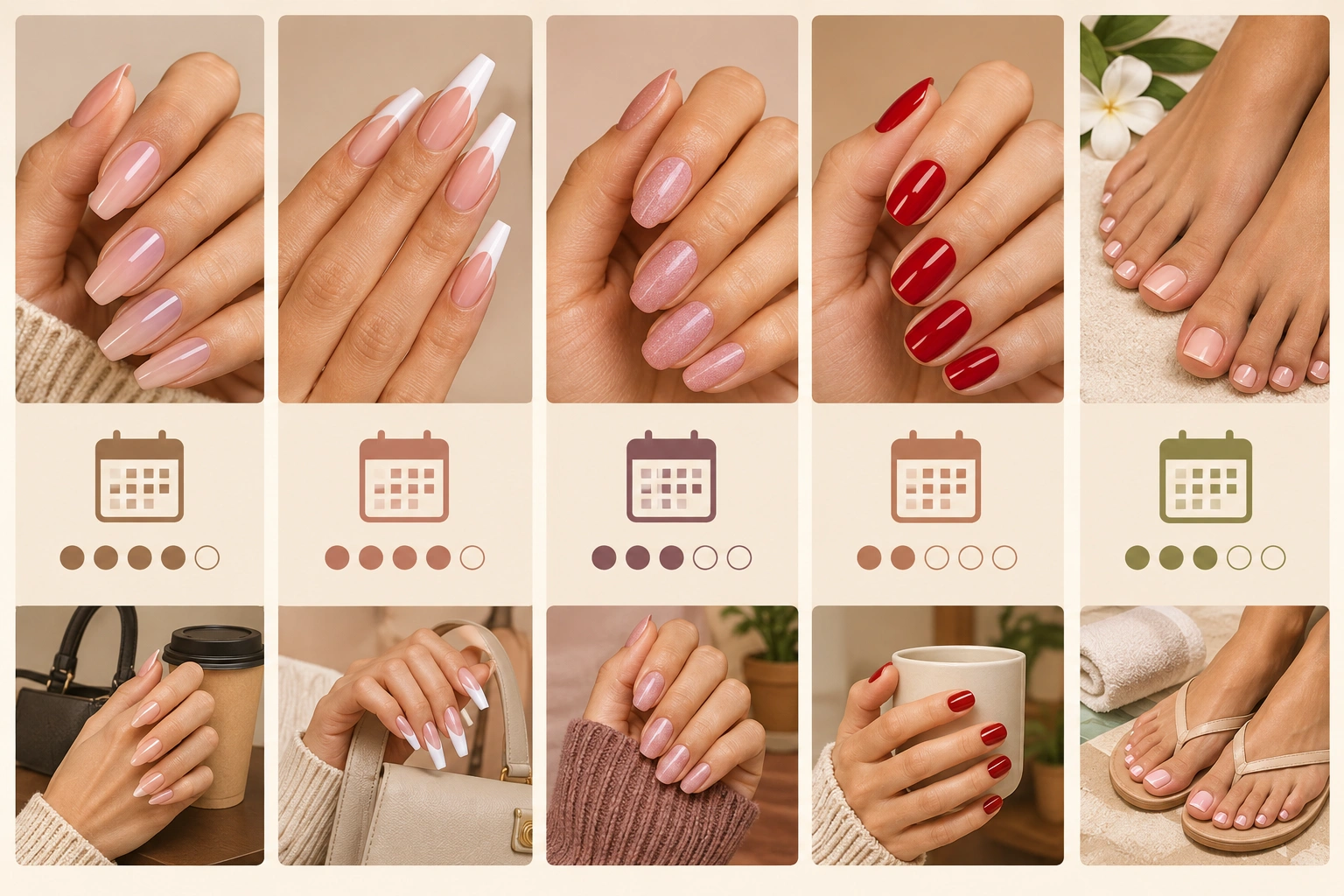
Here’s the short version: regular polish is the shortest-wearing option, gel usually lasts longer, dip powder often holds up well, and acrylic can last the longest when it’s applied and maintained properly.
How Long Salon Nails Usually Last
A salon manicure rarely lasts forever, and that’s normal. Natural nail growth, friction, water exposure, and the product itself all affect how long the set stays neat.
For most people, the useful way to think about salon nails is in wear windows:
- Regular polish: often about 5 to 14 days
- Gel polish: often about 2 to 3 weeks
- Dip powder: often about 3 to 4 weeks
- Acrylic nails: often about 4 to 6 weeks with proper application and care
- Pedicures: often last longer than manicures, sometimes several weeks more before they look tired
Those are realistic ranges, not guarantees. A person with frequent handwashing, cleaning, or a lot of daily contact with water and tools will usually see more wear than someone with a lighter routine. On the other hand, careful prep and good aftercare can stretch a set noticeably.
If you want a deeper breakdown of polish wear in general, this guide on how long regular nail polish lasts is a useful companion read.
Average Lifespan by Nail Service
The table below gives a practical comparison of the main salon options, including how long they usually last and what kind of maintenance they tend to need.
| Service | Typical wear time | Maintenance pattern | Main trade-off |
|---|---|---|---|
| Regular polish manicure | 5–14 days | Repaint when chips or tip wear show | Easiest removal, shortest wear |
| Gel manicure | 2–3 weeks | Usually redo or remove after visible growth or dulling | Strong chip resistance, needs proper soak-off |
| Dip powder | 3–4 weeks | Often maintained at the next appointment with a new application or fill-style service depending on salon method | Good durability, removal takes more care |
| Acrylic nails | 4–6 weeks or longer with proper care | Fills commonly needed as the natural nail grows out | Very durable, but more upkeep |
| Pedicure with polish | Often several weeks, sometimes longer than a manicure | Refresh when the polish dulls or the nail grows out | Less daily wear than hands |
Regular polish: the shortest-lasting salon option
Regular polish is still a solid choice if you want something simple, changeable, and easy to remove. The downside is wear. It tends to show tip wear, small chips, and surface dullness sooner than enhanced services. In many cases, a regular manicure is best when you want a fresh look for an event, not a long wear cycle.
Gel: a strong balance of durability and appearance
Gel polish is popular because it cures under a UV or LED lamp and resists chips better than air-dried polish. In practice, many gel manicures stay neat for about two weeks and often up to around three weeks with good care. Around the two-week mark, growth at the base often becomes visible enough that the manicure looks less fresh even if the polish itself is still intact.
If you want to understand the curing side of the service, see how long to sit under a nail dryer at a salon.
Dip powder: longer wear with a sturdy feel
Dip powder often lasts about 3 to 4 weeks when it’s applied cleanly and protected from rough wear. It can be a strong pick if you want something that resists chips well and holds color nicely. The trade-off is that removal and maintenance need to be handled properly, so it’s not the best match for someone who wants the easiest possible changeover.
Acrylic: the longest-lasting option for many clients
Acrylic nails can last four to six weeks, and sometimes longer, when the set is applied well and cared for. In many salons, the real maintenance milestone is the fill, not the full removal. As the natural nail grows, the space at the base becomes more visible and the balance of the nail changes. Even if the tips still look fine, the set may be due for a fill because of growth.
Acrylic is often the best fit if durability matters more than a lighter feel. If you’re weighing cost against wear time, this guide to how much acrylic nails cost at a nail salon can help with the value side of the decision.
Pedicures: often the longest-looking service
Pedicures usually outlast manicures because toenails don’t face the same constant friction, hand washing, keyboard use, and tool contact. You may still see growth, dullness, or edge wear, but the service often looks fresh for longer than a manicure with the same polish.
Manicure vs. Pedicure: Which Lasts Longer?
If you’re trying to maximize wear time, pedicures usually win.
Hands are busy all day. They hit water, soap, door handles, bags, dishes, keyboards, and cleaning products. Even if you never “use your nails as tools,” your hands still take far more contact than your feet do. That’s why a manicure can look worn out while a pedicure with the same polish still looks tidy.
A simple rule of thumb:
- Choose a manicure when you want visible, everyday polish and are okay with more maintenance.
- Choose a pedicure when you want a longer-lasting polished look with less day-to-day wear.
For vacation, a pedicure often gives better value because it survives the trip better than a fresh manicure that gets constant use.
What Makes Salon Nails Last Shorter or Longer
Two people can get the same service and have very different results. Usually, the difference comes down to four things.
1. Nail prep quality
Good prep matters more than most people realize. If the nail plate isn’t properly cleaned, lightly refined, and balanced before product goes on, the service is more likely to lift or chip early. Even the best polish or enhancement struggles to stay put on a poorly prepared nail.
2. Daily habits
Frequent handwashing, cleaning, dish duty, workouts with gripping, and repetitive tapping all shorten wear time. Not because you’re “doing it wrong,” but because salon nails are still living on hands that move, bend, and absorb moisture.
If your days include a lot of water exposure, expect the lower end of the wear range.
3. Product type and structure
Regular polish sits on top of the nail and shows wear sooner. Gel is more chip-resistant because it’s cured. Acrylic and dip are thicker, sturdier systems that can handle more stress. That doesn’t make them invincible, but it does change how they fail: regular polish chips, while enhancements are more likely to lift, grow out, or break if stressed.
4. Natural nail growth
Your nails keep growing underneath salon product. That growth is why a set can still be “intact” but no longer look fresh. Once the gap at the base becomes obvious, the manicure may be due for maintenance even if the color is still in place.
How to Make Salon Nails Last Longer
The most important longevity habits happen right after the salon visit.
Protect the first 24 to 48 hours
If possible, avoid prolonged water exposure right after your appointment. Long showers, soaking dishes, swimming, and repeated hand washing can all work against the finish, especially on regular polish and freshly serviced enhancements. Even when the product is cured, giving the set a little time to settle before heavy water or cleaning helps it stay cleaner and neater.
Keep cuticle oil in your routine
Cuticle oil helps keep the skin and surrounding nail area from drying out. Dryness can make the manicure look older faster and may contribute to more brittle-feeling edges. A small amount once or twice a day is usually more useful than occasional heavy application.
Wear gloves for cleaning
This is one of the easiest ways to extend wear. Harsh cleaners and repeated soaking can wear down shine and edge seal faster. Gloves are especially helpful for dishes, bathroom cleaning, and anything involving long water exposure.
Treat the tips gently
The front edge of the nail is often the first place to chip. Avoid using nails to pry, scrape, or peel. If you need to open packaging, use the side of a tool or your finger pad instead of the nail tip.
Keep appointments realistic
If you wait too long between maintenance visits, growth and stress build up. A manicure may still be wearable, but the set can start to look unbalanced or snag-prone. Booking within the service’s normal wear window usually gives the best result.
For readers who like to compare product behavior over time, this guide on how long opened nail polish lasts is also helpful.
When You Need a Fill, Repair, or Full Redo
Not every worn nail needs the same fix. The right choice depends on what you’re seeing.
Gel: fill, repair, or full removal
- Gel polish manicure: usually needs a full removal and new application rather than a fill. If the polish is still smooth but the base growth is obvious, it’s usually time to redo the set.
- Soft gel extensions or structured gel: may be able to get a fill if the product is still secure and the salon offers that service.
- Repair is appropriate for a single chip, crack, or corner break if the rest of the set is still sound.
- Full removal is safer when there is lifting, multiple damaged nails, or the product is no longer sitting cleanly on the nail.
Acrylic: fill, repair, or full removal
- Fill: usually the right choice when the acrylic is still firmly attached and the main issue is outgrowth.
- Repair: works for one broken corner, crack, or isolated lift if the rest of the set is stable.
- Full removal: makes more sense when several nails are lifting, the structure is uneven, or the acrylic has grown out so far that a fill would leave the set too bulky or unbalanced.
Dip powder: fill, repair, or full removal
- Fill-style maintenance: may be possible in some salons if the product is still secure and the service method supports it.
- Repair: can work for a single damaged nail if the rest of the set is intact.
- Full removal: is usually the better option when the dip is lifting, breaking down at the edges, or showing enough wear that patching no longer looks clean.
Quick decision guide
- If only one nail is damaged: repair it.
- If the product is secure but grown out: get a fill if the service supports it.
- If there is lifting, multiple cracks, or widespread wear: remove and redo.
- If the set is still wearable but looks unbalanced: a fill is usually the most cost-effective fix.
- If the set is separating from the nail: choose removal rather than trying to keep patching it.
How to Choose the Best Nail Service for Your Needs
Use your maintenance tolerance, not just your favorite finish, to guide the choice.
Choose regular polish if you want easy changeability
Pick this if you like switching colors often or want the simplest removal. It’s the least durable, but it’s also the least committed option.
Choose gel if you want a balanced everyday manicure
Gel is a strong middle ground: better wear than regular polish, less bulk than acrylic, and a polished look that usually holds up well for two to three weeks.
Choose dip powder if chip resistance matters most
Dip can be a good fit if you want a sturdier manicure and don’t mind a more involved maintenance/removal process.
Choose acrylic if you want the longest-lasting structure
Acrylic is the better pick when durability and fill-based upkeep matter more than a softer feel. It’s especially useful if your nails break easily and you want more structure.
Choose a pedicure when you want longevity with less daily stress
If you’re deciding between a manicure and pedicure for an upcoming trip or event, the pedicure usually gives more wear for the effort.
When Salon Nails Are Overdue or No Longer Safe to Keep On
A set is overdue when it’s no longer just “grown out” but starting to become stressed.
Watch for these signs:
- lifting at the base or sidewalls
- cracks that keep widening
- a nail that feels loose or catches on fabric
- significant growth that changes the shape of the enhancement
- dull, worn product that no longer looks sealed
- pain, pressure, or a sore spot under the nail
A small amount of growth is normal. Lifting and structural damage are different. Once product separates from the natural nail, moisture and debris can collect underneath, and the set can become harder to maintain cleanly. That’s the point where prompt service is better than waiting.
For any set that looks suspiciously lifted or damaged, especially if you’re unsure whether it should be removed, it’s wise to check with a qualified nail professional. If the concern involves a nail problem rather than just wear, a dermatologist is the safer route.
What to Expect Over Time
The natural nail underneath keeps growing no matter which salon service you choose. That means every manicure or enhancement has a built-in expiration date based on appearance and upkeep, not just on whether the color still looks good.
A fresh set is about more than polish. It’s also about balance, attachment, and how much stress the nail has taken since the appointment. When you understand that, it becomes much easier to decide whether to fill, repair, or remove.
When to See a Nail Technician or Dermatologist
See a nail technician soon if the issue is cosmetic wear, growth, a small chip, or a single nail repair.
See a dermatologist if you notice persistent pain, inflammation, or a nail change that seems unrelated to normal salon wear. That keeps the decision in the right hands and helps you avoid treating a nail-health issue like a routine maintenance problem.
Final Takeaway
If you want the shortest answer to how long salon nails last: regular polish often lasts up to two weeks, gel around two to three weeks, dip powder around three to four weeks, and acrylic often four to six weeks or longer with proper care.
The best service is the one that matches your routine. If your hands are busy and you want durability, gel, dip, or acrylic makes more sense than regular polish. If you want the longest visible wear with the least fuss, a pedicure usually gives the best return.

