
How Long to Let Toes Dry at a Nail Salon: A Practical Pedicure Guide

Fresh pedicures look simple from the chair, but the drying window is where many good services get ruined. The safest general answer is: wait at least a short salon buffer before leaving, then give regular polish the longest cushion, quick-dry polish a bit less, gel the least, and dip powder somewhere in between. If you need a practical rule for shoes, open-toe footwear is best right away; closed-toe shoes are safest only after a conservative drying window, especially for regular polish.
If you need a fast rule for leaving the salon, use this:
- Regular polish: plan for at least 20 minutes in the salon, and treat closed-toe shoes as a conservative 12-hour wait if you can.
- Quick-dry regular polish: often wearable sooner, but still give it time before socks or shoe pressure.
- Gel polish: cured under a UV/LED lamp, so it is usually ready to wear much sooner.
- Dip powder: often more wear-ready than regular polish, but it is still smart to avoid pressure and friction right after the service.
That advice is intentionally conservative. A pedicure can feel dry on top long before it is truly hard underneath.
What Actually Needs Time to Dry on Toes
Toenail polish goes through a few stages, and those stages are not the same thing.
Dry to the touch
This means the top surface no longer feels wet. That is useful, but it does not mean the polish is safe for socks, sneakers, or a brisk walk to the car. A polish surface can feel dry while the layers underneath are still soft enough to dent.
Fully dry or fully hardened
This is the stage you want before closed-toe shoes, hot showers, or anything that presses on the toes. In practice, regular polish may feel dry fairly quickly but still need much longer to harden fully. That is why a polish can look fine at the salon and still smudge later if it gets squeezed.
Cured
Gel polish is different. It does not just air-dry; it cures under a lamp. That is why gel is usually the better pick when you need your toes ready for real-world wear sooner.
What this means when you leave the salon: if you are heading straight into open-toe sandals, you have more flexibility. If you need socks, sneakers, or any snug footwear, assume the polish is more vulnerable than it looks and plan accordingly.
If you want a deeper look at why some polishes stay soft longer than others, see why nail polish takes so long to dry and how long nail polish should dry between coats.
Drying Time by Pedicure Type
Here’s the comparison most readers actually need.
| Pedicure type | What “dry” means | Practical wait before shoes | Main trade-off |
|---|---|---|---|
| Regular polish | Air-dries, then hardens slowly | At least 20 minutes in salon; closed-toe shoes are safest after about 12 hours | Easy color changes, but highest smudge risk |
| Quick-dry regular polish | Surface sets faster | Often wearable sooner, but still give it real time before pressure | Better for busy days, but not magic |
| Gel polish | Cured under UV/LED lamp | Usually wearable much sooner after curing | Faster for leaving, but needs lamp service |
| Dip powder | Sets differently than lacquer | Often more wear-ready than regular polish, but still protect toes from pressure | Durable, but not the same as “instantly safe” |
Regular polish on toes
Regular lacquer is the most common source of smudges after a pedicure because it dries from the outside in. That means the top may look fine while the lower layers are still shifting. The more coats you have, the longer that takes.
If your salon offers a fan, cool air can help. A fan can be useful for regular polish because it helps the surface set more evenly, but it is not a guarantee that the polish is fully hardened. Hot air is not a good substitute.
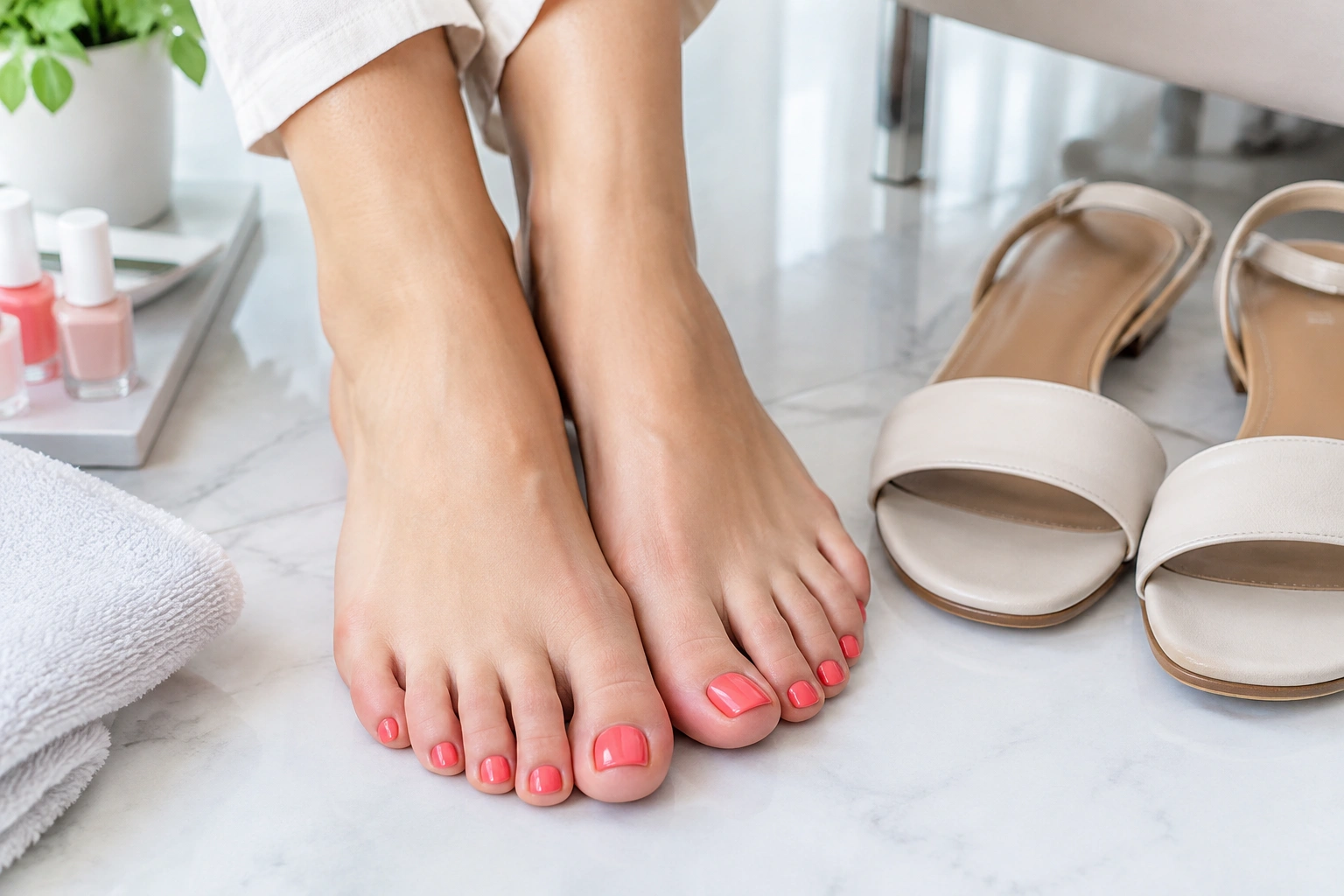
A practical example: if you booked a standard pedicure on a lunch break and need to go back to work in sneakers, regular polish is the riskiest choice unless you can stay longer and keep your footwear loose.
Quick-dry polish
Quick-dry formulas and top coats can shorten the waiting period, but they do not eliminate it. They help the surface set faster, which is useful if you need to leave the salon soon. They are less useful if your shoes squeeze the toes or if you plan to walk a lot right away.
This is the trade-off: quicker wearability versus less flexibility if the polish is still soft underneath. If you know you’ll be in closed shoes soon, ask for the quickest setup your salon offers and still give yourself extra time before pressure.
Gel polish on toes
Gel is the most convenient option when you want a pedicure that can handle leaving the salon sooner. Once cured under the UV/LED lamp, it is ready far faster than regular polish.
That said, cured does not mean indestructible. If the toes rub against a tight shoe or sock immediately after the appointment, you can still get pressure marks or edge wear. Gel solves the drying problem better than lacquer, but footwear still matters.
If you want a more detailed breakdown, how long gel nail polish takes to dry covers the curing side in more depth.
Dip powder
Dip powder is often treated like a faster-wear option because it sets into a harder finish than regular polish. It is also a real pedicure service on toes, though it is less common than regular polish or gel in many salons. Even so, the safest approach is still to avoid toe pressure right away. Harder does not equal invincible, especially if you’re putting on tight shoes or socks.
What Salon Drying Tools Help Most
Not every drying tool does the same job.
Cool air fans
Fans can help move air across the polish and may speed surface drying for regular polish. They are helpful, but they do not make polish instantly shoe-ready.
UV/LED lamps
These are for gel. They cure the product rather than simply drying the top layer. If you’re getting gel on toes, the lamp is the tool that matters most.
Quick-dry top coats
These can be a smart add-on for regular polish, especially if you know your appointment will be rushed. They help the surface set faster, but they are not a guarantee that the polish is fully hardened.
Hot air dryers
Skip them if you can. Heat can soften polish before it dries and may actually make the finish more vulnerable.
Cold water rinse
This is not a standard recommendation for every salon or every polish type, so it is best treated cautiously. If a salon suggests any water-based step, ask exactly what product it is meant for and whether it applies only to traditional lacquer. In general, it is safer to rely on air, cool fans, and time rather than a niche technique.
What Shoes to Wear After a Pedicure
The safest footwear after a pedicure is simple: open-toe sandals or slides with plenty of room around the toes. The goal is to avoid pressure, friction, and accidental contact.
Best choice: open-toe shoes
These give your polish the best chance to stay smooth. They are especially helpful if:
- you got regular polish
- you need to leave soon after the service
- your toenails are painted with multiple coats
- your toes tend to rub against shoes easily
Riskier choice: closed-toe shoes
Closed-toe shoes are the main reason fresh pedicures get dented. Even if the polish seems dry, the front of a sneaker or boot can press directly on the big toe and second toe. That pressure can leave marks that don’t show until later.
A conservative rule is to avoid close-toe shoes for about 12 hours after a regular polish pedicure. That is a cautious estimate, not a universal guarantee, but it is the safer call if you want to reduce smudging.
If you must wear socks or closed-toe shoes soon
If the weather or your schedule forces the issue, choose the loosest pair you own and minimize toe pressure. Bring sandals to the appointment, then change shoes only when you truly have to. If you must put on socks, choose the loosest pair available, avoid tight seams over the toes, and slide them on gently rather than pulling hard across the nail surface. If possible, ask the salon for extra drying help before you go.
How to Tell If Toenail Polish Is Really Dry
Use these checks before you put your shoes on:
- Look at the shine. A wet-looking ridge or uneven gloss can mean the polish is still soft.
- Hover, don’t press. Lightly bring a finger near the nail without touching it. If you feel tempted to test it with a thumb press, wait longer.
- Check the edges. The free edge and sidewalls often stay soft longer than the center.
- Move carefully. If your toes stick together or feel tacky, the polish is not ready for closed shoes.
- Ask your technician. Salon staff can tell you whether your specific formula needs more time.
A useful rule: if you are still wondering whether it’s dry, treat it as not dry enough for shoes.
Common Mistakes That Ruin Fresh Pedicures
Most pedicure damage happens because people assume the surface is ready too soon.
Rushing out in tight shoes
This is the fastest way to create dents. Even a short walk can press the polish before it hardens.
Putting on socks too early
Socks can leave fabric marks, especially on regular polish. If you need socks, keep them loose and wait as long as possible.
Walking with toes rubbing together
If the big toe brushes the second toe, the polish can transfer or smear at the edges. Slow, careful steps matter more than people think.
Taking a hot shower too soon
Hot water can soften fresh polish and affect the finish. Waiting longer is safer than assuming the surface is ready because it looks dry.
Assuming a fan means “done”
A fan helps, but it does not guarantee the polish has fully hardened. Surface dry and wear-ready are different milestones.
What to Do If You Smudge a Toenail
If the smudge is fresh, act fast and keep it simple.
If the polish is still soft
Go back to the salon if you can. A technician can often smooth a small dent, reapply a bit of polish, or add a top coat if the damage is minor and still fresh.
If the smear is minor
Do not keep touching it. Further rubbing usually makes the spot larger. If the salon gave you a top coat or touch-up option, ask whether they can seal it.
If the damage is obvious
It may be better to have the nail redone than to try to patch it at home. A visible ridge, deep dent, or lifted section usually will not disappear on its own.
When to See a Nail Technician or Dermatologist
See a nail technician if the polish keeps wrinkling, lifting, or denting in the same spot after every pedicure. That can point to a service issue, product mismatch, or footwear problem.
See a dermatologist if you notice nail changes that are not just cosmetic polish issues, such as persistent discoloration, pain, or nail separation. For general nail product safety guidance, the American Academy of Dermatology and FDA cosmetics information are good starting points.
Frequently Asked Questions About Pedicure Drying Time
Can I leave the salon right after a pedicure?
Yes, but only if you’re realistic about the polish type and your shoes. Gel is the easiest for quick departure. Regular polish is the one most likely to smudge if you leave immediately.
How long should I wait before wearing sneakers after a pedicure?
For regular polish, longer is better. A conservative guide is around 12 hours before closed-toe shoes. If you must wear sneakers sooner, keep them loose and expect some risk.
Is 20 minutes enough for toes to dry?
It’s enough for a minimum salon wait, not a guarantee of full hardness. That’s why the safest advice is to combine salon time with careful footwear afterward.
Can I shower after a pedicure?
It is safer to wait than to assume a fresh polish is ready for hot water. Regular polish may still be vulnerable even when it seems set, so a steamy shower too soon can still cause problems.
Do gel toes need drying time?
They need curing time, not air-drying time. Once the lamp has done its job, gel is usually ready much sooner than regular polish.
What’s the best shoe choice if I have to leave quickly?
Open-toe sandals or slides with no toe pressure. If you only have closed-toe shoes, ask the salon for extra drying help and delay putting them on as long as possible.
What if the salon says my polish is dry?
Trust the technician, but still think about your shoes and your schedule. “Dry enough to leave” is not always the same as “hard enough for sneakers.”
Fresh pedicures last longer when you give them just a little more time than feels necessary. That small buffer is usually what keeps a neat finish from turning into a smudged one.

