
What Should a Normal Toenail Look Like? Healthy Color, Shape, and Warning Signs

It is easy to notice your toenails only when something looks different. Maybe one nail seems more yellow than usual, a ridge suddenly catches the light, or your big toenail looks thicker than the others. Then comes the obvious question: what should a normal toenail look like?
A healthy toenail does not have to look perfectly smooth or identical to every other nail. Normal toenails can vary slightly in color, thickness, shape, and surface texture from person to person. What matters most is whether the nail looks stable for you and is free from unexplained pain, swelling, lifting, major discoloration, or sudden changes.
This guide explains the normal color, texture, thickness, shape, and growth of toenails, plus the warning signs that deserve closer attention.
Quick Answer
A normal toenail is usually smooth or lightly ridged, firmly attached, comfortable, and fairly even in color and thickness. The nail plate is partly translucent, so the nail bed underneath may give it a pinkish or natural skin-toned appearance. Healthy toenails should not normally be painful, swollen, crumbling, dramatically discolored, or suddenly lifting.
What Does a Healthy Toenail Actually Look Like?
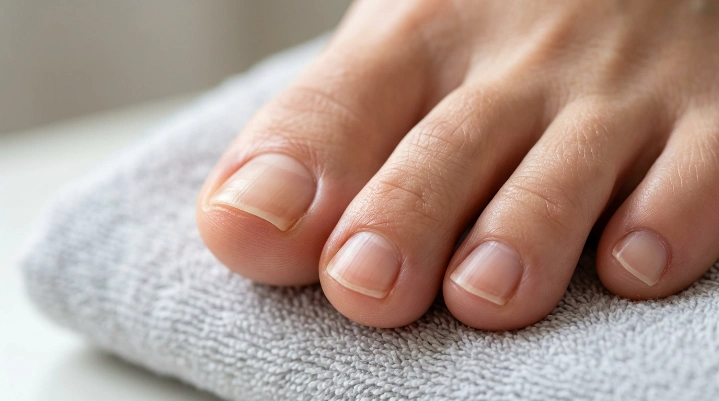
There is no single “perfect” toenail.
Your toenails are made of hardened keratin, the same general type of protein found in your fingernails. The visible hard portion is called the nail plate, while the tissue underneath is the nail bed.
Because the nail plate is somewhat translucent, the color you see is influenced by the tissue beneath it. That means healthy nails may look slightly different depending on your natural skin tone, nail thickness, lighting, and whether you recently removed polish.
The American Academy of Dermatology’s healthy-nail guidance recommends paying attention not only to appearance but also to changes, swelling, and pain.
In general, a normal toenail should have these features:
- Fairly consistent color
- Smooth or mildly ridged surface
- Firm attachment to the nail bed
- Moderate, fairly even thickness
- A gentle natural curve
- No unexplained pain or tenderness
- No redness, warmth, or swelling around the nail
- No crumbling or major splitting
Your big toenails may naturally be thicker and broader than your smaller toenails. One toe can also have a slightly different curve than another without anything being wrong.
Normal Toenail Color
Healthy toenails are not always literally “pink.”
The nail plate itself is relatively translucent. What you see through it depends partly on the nail bed underneath. Depending on your natural coloring, a healthy nail may appear pinkish, beige, pale, light brown, or similar to the surrounding skin tone.
The free edge—the part extending beyond the skin—often looks whiter because there is no nail bed directly underneath it.
Slight Color Differences Can Be Normal
Small variations between individual toenails are common.
A nail may also temporarily look different after:
- Wearing dark nail polish
- Minor pressure from shoes
- Bumping or stubbing a toe
- Keeping polish on for long periods
- Growing out a previous injury
The important question is whether the change makes sense and gradually grows out.
The NHS notes that nail color and appearance can temporarily change after an injury, and an injured toenail may eventually loosen or fall off before growing back.
Colors That Deserve More Attention
A dramatic or unexplained color change should not automatically be blamed on polish.
Pay closer attention to:
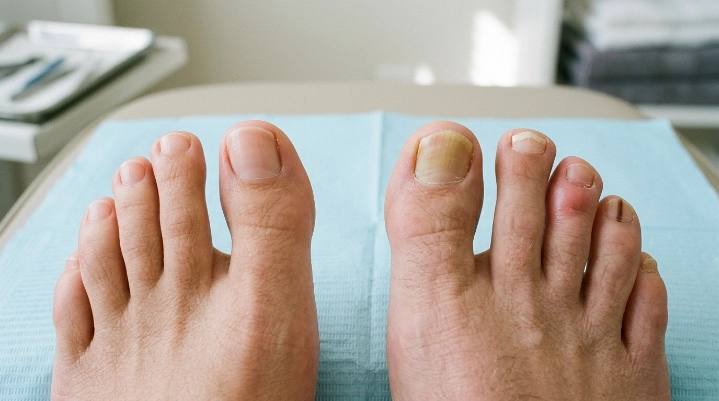
- Persistent yellowing
- Green or green-black discoloration
- A new dark brown or black streak
- A dark area that is changing rather than growing out
- Unusual whitening involving much of the nail
- Color change combined with thickening, crumbling, pain, or lifting
The American Academy of Dermatology’s guide to nail changes specifically advises having new or changing dark streaks evaluated because, while many nail changes are harmless, some require medical assessment.
What Should Normal Toenail Texture Feel Like?
A healthy toenail usually feels firm and relatively smooth.
That does not mean it must look polished or glass-like. Fine lengthwise ridges may be visible, particularly as you get older.
Mayo Clinic notes that vertical nail ridges can be a normal age-related change, while more significant changes in color, shape, thickness, or attachment deserve attention.
Usually Reassuring
These can often fall within normal variation:
- Very fine vertical lines
- A slightly uneven surface
- Tiny white marks following minor trauma
- Small differences between individual nails
- Mild age-related thickening
Less Typical
Watch for:
- Deep horizontal grooves
- Numerous small pits or dents
- A rough, chalky surface
- Flaking or crumbling
- Significant peeling
- Sudden major texture changes
One small imperfection is usually more reassuring than a nail that continues changing over several weeks or months.
How Thick Should a Normal Toenail Be?
Toenails are naturally thicker than fingernails, especially the big toenail.
There is no useful home measurement that tells everyone whether a nail is “too thick.” Instead, compare it with your other toenails and with how that same nail normally looks.
Normal toenails should generally be:
- Strong enough to protect the toe
- Flexible enough to trim safely
- Fairly even in thickness from one side to the other
- Free from thick layers of crumbly material
Toenails may gradually become thicker with age. Mayo Clinic also notes that aging is one cause of thickened toenails, although injury, tight footwear, psoriasis, and fungal infection can also cause thickening.
A suddenly thickening nail is different from a nail that has slowly become somewhat thicker over many years.
If a toenail is so thick that you cannot safely cut it, do not force household scissors or aggressive files through it.
Normal Toenail Shape and Attachment
A normal toenail typically follows the general shape of the toe and has a gentle curve.
The nail should remain attached to the nail bed underneath rather than lifting away from it.
Normal variation includes:
- Wide or narrow nail plates
- Slight natural curves
- Flatter nails on some toes
- More curved big toenails
- Minor differences between your left and right feet
What matters is whether the shape has changed.
A nail that suddenly becomes highly curved, begins lifting, or develops a dramatically different shape may need professional evaluation.
According to the AAD, nail lifting can occur with causes such as injury, fungal infection, psoriasis, or aggressive nail care.
What Should the Skin Around a Healthy Toenail Look Like?
Do not judge nail health by the nail plate alone.
The skin around a normal toenail should usually be comfortable and relatively calm.
You should not routinely see:
- Significant swelling
- Spreading redness
- Pus or drainage
- Bleeding
- Strong throbbing pain
- Persistent warmth
- A badly damaged skin barrier
The cuticle area helps protect the space where the nail grows. Aggressively cutting or digging into it can create tiny injuries.
That is why gentle pedicure technique matters even when your goal is purely cosmetic.
Normal Toenail vs. Possible Warning Sign
| Feature | Usually Healthy-Looking | Worth Checking |
|---|---|---|
| Color | Fairly consistent natural tone | New dark streak, green-black area, persistent major yellowing |
| Surface | Smooth or lightly ridged | Deep grooves, widespread pitting, crumbling |
| Thickness | Fairly even and manageable | Rapid thickening or extremely thick nail |
| Attachment | Firmly attached | Nail noticeably lifting |
| Shape | Stable natural curve | Sudden major shape change |
| Surrounding skin | Comfortable and calm | Red, hot, swollen, bleeding, or draining |
| Sensation | No persistent pain | Throbbing, increasing tenderness, burning |
| Growth | Slow but continuing | Major unexplained change or failure to grow normally |
This table is a screening guide, not a diagnosis. Several nail problems can look similar at home.
What Normal Toenail Growth Looks Like
Toenails grow slowly, which can make changes frustrating to monitor.
If you injure a nail today, the damaged area may remain visible for months as it slowly moves toward the tip.
The AAD notes that toenails can take roughly 12 to 18 months to grow out completely, so improvement after an injury or other temporary problem is rarely immediate.
This slow growth is one reason it helps to pay attention to movement.
For example, a small discolored spot caused by an old injury should generally move toward the free edge as the nail grows. A mark that remains fixed, grows wider, or changes in an unusual way deserves more attention.
Expert Tip: Take a clear photo of a questionable toenail without polish and in similar lighting once every few weeks. Comparing photos can make it much easier to tell whether a mark is growing out or actually changing.
How to Keep Normal Toenails Healthy
Healthy-looking toenails usually need surprisingly simple care.
1. Trim Toenails Straight Across
Avoid digging deeply into the corners to create a very rounded shape.
The AAD’s nail-trimming instructions recommend cutting toenails straight across to help reduce the risk of ingrown toenails.
Leave enough nail that you are not cutting into sensitive skin.
2. Smooth Sharp Edges With a Nail File
After trimming, use a clean, gentle nail file to smooth rough edges.
You usually do not need aggressive filing on a healthy natural toenail. Over-filing can thin the nail or irritate nearby skin.
A fine, controlled file is often more useful than a very coarse abrasive surface for everyday maintenance.
3. Keep Feet Clean and Dry
Feet spend hours inside shoes, where moisture can collect.
Dry your feet carefully after bathing, particularly around the toes. Change damp socks and let shoes dry between wears when possible.
The AAD recommends keeping nails clean and dry because moist environments can encourage bacteria and fungi.
4. Wear Shoes That Give Your Toes Enough Room
Repeated pressure can change how a toenail looks.
Shoes that squeeze the front of your foot may repeatedly push the nail against the shoe, contributing to soreness or trauma.
Your toes should have room to move without constantly striking the inside of the shoe.
5. Keep Nail Tools Clean
Clippers, files, and pedicure tools contact the nail and surrounding skin directly.
Clean reusable tools according to their material and allow them to dry fully before storage. Avoid casually sharing personal nail tools between people.
If you go to a salon, choose a clean, properly licensed establishment and pay attention to how tools and foot-care equipment are maintained.
6. Avoid Aggressive DIY “Fixes”
Do not try to file away every yellow, thick, painful, or lifted area.
Those changes can have several causes. Hiding the problem under polish or repeatedly thinning the nail can delay appropriate evaluation.
Nail Files, Clippers, and Home-Care Costs
You do not need an expensive pedicure kit to maintain normal toenails.
For basic home care, the most useful tools are usually:
- A sturdy toenail clipper
- A gentle nail file
- A clean towel
- Soap and water
- Moisturizer for surrounding dry skin
A reusable glass or washable file may cost more initially than a disposable emery board but can last longer when cared for properly. Disposable files can be convenient when hygiene is the main concern.
Salon pedicure prices vary considerably depending on location, services, and polish type. A salon can be helpful for cosmetic grooming, but a pedicure should not be used as a substitute for medical evaluation of a suspicious nail change.
Common Mistakes to Avoid
Even healthy toenails can become irritated when everyday grooming gets too aggressive.
Avoid these common mistakes:
- Cutting toenails extremely short. This can make the surrounding skin easier to irritate.
- Rounding deeply into both corners. This may encourage ingrown toenails.
- Digging under the nail with sharp tools. You can injure the skin or separate the nail.
- Filing aggressively to remove thickness. Thickening can have causes that need evaluation.
- Picking at lifted sections. Pulling can detach more healthy nail.
- Cutting irritated skin or cuticles. Broken skin creates an easier entry point for germs.
- Sharing unclean pedicure tools.
- Assuming every yellow nail is fungus. Polish staining, injury, and other conditions can look similar.
- Covering a changing dark spot with polish for months.
- Ignoring persistent pain, redness, swelling, or drainage.
When to See a Nail Technician or Dermatologist
A licensed nail technician can help with routine grooming when your toenails and surrounding skin are healthy.
A nail technician may be appropriate for:
- Basic trimming and shaping
- Cosmetic polish application
- Smoothing uncomplicated rough edges
- Routine pedicure maintenance
However, nail technicians are not there to diagnose medical conditions.
Consider seeing a dermatologist or other healthcare professional if you notice:
- A new or changing dark streak
- Persistent yellow, green, brown, or black discoloration without a clear cause
- A nail lifting away from the nail bed
- Significant thickening or crumbling
- Deep grooves or extensive pitting
- Bleeding without an obvious minor injury
- Persistent pain
- Redness, swelling, warmth, or drainage
- A nail change that continues worsening
The NHS also recommends medical evaluation when a nail changes shape or color without an obvious explanation or when surrounding skin becomes sore, red, swollen, and warm.
If a toenail has become too thick or difficult for you to trim safely, a podiatrist may also be a good option.
Do not rely on a salon to treat suspected infection, unexplained pigmentation, or a painful nail condition.
FAQs
Are healthy toenails supposed to be completely clear?
Not necessarily. The hard nail plate is somewhat translucent, so the nail bed underneath influences its visible color. Healthy nails may appear pinkish, pale, beige, or similar to your natural skin tone.
Are ridges on toenails normal?
Fine lengthwise ridges can be normal, particularly as you age. Deep horizontal grooves, widespread pitting, or a sudden major texture change deserve more attention.
Is a slightly yellow toenail normal?
Temporary staining from polish or minor trauma can affect nail color. However, persistent yellowing—especially with thickening, crumbling, lifting, or spreading changes—should be evaluated rather than automatically assumed to be harmless.
Should toenails be thick or thin?
Toenails are naturally thicker than fingernails, and big toenails are often the thickest. The concern is usually a significant change from your normal thickness or a nail that becomes excessively thick, painful, or difficult to cut.
Should the white part of a toenail be visible?
A small white free edge is normal when the nail extends beyond the nail bed. Its length depends on how recently you trimmed your toenails.
Why does one toenail look different from the others?
Minor natural differences are common. Previous injuries, shoe pressure, nail growth patterns, and individual anatomy can make one nail look different. A sudden or progressive change deserves closer attention.
How do I know whether my toenail change is fungus?
You usually cannot diagnose nail fungus reliably from appearance alone because injury, psoriasis, staining, and other nail conditions can resemble it. If the nail is persistently yellow, thick, crumbly, distorted, or lifting, professional evaluation can help determine the cause.
Final Thoughts
So, what should a normal toenail look like? Think stable rather than perfect.
A healthy toenail is generally comfortable, firmly attached, fairly even in thickness and color, and smooth or only mildly ridged. Small natural differences between toes are common, and minor changes from an old injury can take months to grow out.
The changes that matter most are new, unexplained, or worsening ones—especially pain, swelling, lifting, crumbling, major thickening, unusual discoloration, or a changing dark streak.
Keep your routine simple: trim straight across, smooth sharp edges gently, keep tools clean, wear comfortable shoes, and avoid aggressive DIY treatment.
If something looks different and does not improve or grow out as expected, remove the polish, take a closer look, and get professional advice rather than covering it up.

