What Does a Healthy Toenail Look Like? Signs of Normal, Healthy Toenails

Have you ever removed your nail polish, looked closely at your toes, and wondered, “What does a healthy toenail look like?” Maybe one nail seems slightly thicker, another has a faint ridge, or the color is not exactly what you expected.
Toenails can tell you useful things about their condition, but they do not all look identical. Age, past injuries, footwear, natural pigmentation, polish use, and everyday habits can all affect their appearance.
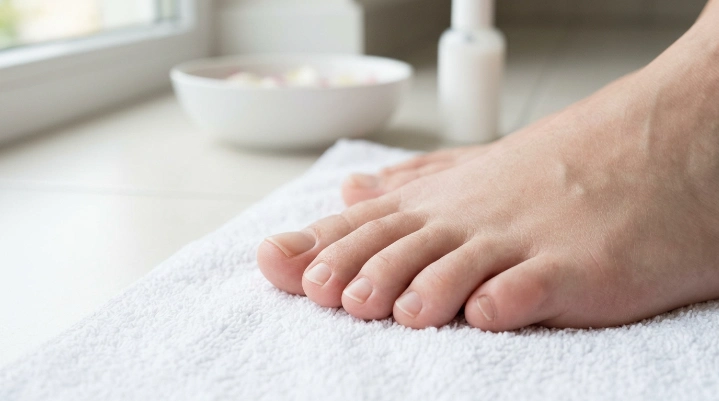
In general, healthy toenails are comfortably attached to the nail bed, reasonably smooth, consistent in thickness, and free from unexplained major color or shape changes. This guide explains what is usually normal, which changes deserve attention, how to care for your toenails safely, and when DIY nail care is no longer the best option.
Quick Answer
What does a healthy toenail look like? A healthy toenail is generally smooth, firm but not excessively thick, securely attached to the nail bed, and consistent in color. The surrounding skin should not be swollen, painful, or draining. Small ridges or minor differences can be normal, but sudden or persistent changes deserve attention.
What Healthy Toenails Usually Look Like
There is no single “perfect” toenail. Your toenails may not look exactly like someone else’s, and even your own ten nails can vary slightly.
Still, there are several useful signs you can check.
| Feature | Usually Healthy | Worth Watching |
|---|---|---|
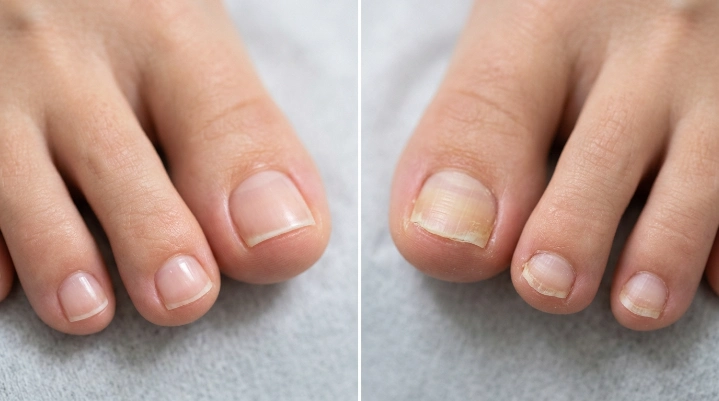
| Color | Fairly even and consistent for you | New yellow, green, brown, black, or unusual white areas |
| Surface | Smooth or mildly ridged | Deep grooves, pitting, crumbling, or rough patches |
| Thickness | Firm and manageable to trim | Increasingly thick, hard, or distorted |
| Attachment | Nail sits firmly on the nail bed | Lifting or separating from the skin beneath |
| Shape | Relatively flat or gently curved | Sudden curling, distortion, or major shape change |
| Surrounding skin | Comfortable and normal-looking | Redness, warmth, swelling, drainage, or pain |
According to Mayo Clinic’s general guidance on healthy nails, healthy nails are typically smooth and fairly uniform in color and consistency. Some harmless variations can still occur, so the most important thing is often noticing a change from what is normal for you.
What Color Should a Healthy Toenail Be?
Healthy toenail color varies naturally between people.
The nail plate itself is partly translucent, so some of the color you see comes from the skin and tissue underneath it. Depending on your skin tone, your toenails might appear pinkish, peach-toned, light beige, pale brown, or another natural shade.
Uniformity matters more than matching a specific color chart.
For example, a toenail that has always looked slightly darker than another may not automatically signal a problem. A new patch of discoloration that continues to grow or spread deserves more attention.
Is a White Tip Normal?
Yes. The part of the nail that extends beyond the skin is called the free edge, and it often looks whitish because it is no longer directly attached to the nail bed.
A little white at the end is normal.
What is different is when large areas of the attached nail become unexpectedly white, chalky, powdery, or crumbly.
Are Small White Spots Dangerous?
Not necessarily.
Small white spots can sometimes appear after minor trauma, such as bumping a toe or putting repeated pressure on the nail. Because toenails grow slowly, you may notice a spot long after the original event.
However, widespread, persistent, or worsening discoloration should not automatically be blamed on a simple injury.
The MedlinePlus guide to nail abnormalities notes that infections and other conditions can affect nail color, texture, and shape.
What Should a Healthy Toenail Feel Like?
A healthy toenail should feel firm enough to protect the end of your toe but not so thick or hard that normal trimming becomes extremely difficult.
It should not:
- Crumble when lightly filed
- Split repeatedly without an obvious reason
- Feel unusually soft or powdery
- Become progressively thicker
- Hurt when you gently press on it
- Lift away from the skin underneath
Toenails naturally tend to feel harder than fingernails, and they grow more slowly. That alone is not a problem.
A gradual change is what matters. If a nail that used to be easy to trim becomes very thick, distorted, brittle, or painful, it deserves closer attention.
Are Ridges on Toenails Normal?
Some mild ridging can be normal, especially as you get older.
Toenails are not manufactured like perfectly polished pieces of plastic. A faint line or slightly uneven surface does not automatically mean something is wrong.
Age-related nail changes can include slower growth, brittleness, thickening, and longitudinal ridges.
Deep grooves, significant pitting, sudden widespread ridging, or changes involving several nails may have different causes.
If a texture change appears suddenly or keeps getting worse, do not try to “buff it away” until you know what is happening.
How Thick Should a Healthy Toenail Be?
There is no practical at-home measurement that every healthy toenail must meet.
Instead, ask whether the thickness seems normal for you and manageable with ordinary nail clippers and gentle filing.
A healthy toenail should generally not require aggressive grinding just to keep it under control.
Thickening can occur from repeated pressure or trauma, age-related changes, fungal infection, and other nail conditions. Nail fungus, for example, can cause thickening along with discoloration, brittleness, crumbling, lifting, or changes in shape.
Do not assume every thick yellow toenail is fungus. Several nail conditions and repeated mechanical injuries can look similar. A dermatologist, podiatrist, or other qualified clinician can determine whether testing is needed.
Signs Your Toenail May Not Be Healthy
A single unusual feature does not automatically tell you what is wrong. Still, certain changes should make you pay closer attention.
Watch for:
- Increasing yellow, brown, green, black, or white discoloration
- Thickening that continues to progress
- Crumbling or splitting
- Nail lifting away from the nail bed
- A suddenly distorted shape
- Pain beneath or around the nail
- Swelling or warmth around the nail
- Drainage or pus
- Recurrent bleeding
- A new unexplained dark streak or band
- Changes spreading from one toenail to others
The American Academy of Dermatology’s guide to nail changes a dermatologist should examine explains that changes in nail color, texture, or shape can sometimes be signs of disease rather than simple cosmetic issues.
What Does Toenail Fungus Look Like?
Fungal nail infections commonly affect toenails.
Possible signs include:
- Yellow, white, or brown discoloration
- Thickening
- Brittle or crumbly edges
- Debris under the nail
- Nail lifting
- Distortion of the nail’s shape
These features can overlap with other problems, which is why appearance alone cannot confirm fungus.
Avoid repeatedly filing a suspicious nail and then using the same unclean tool on healthy nails. Fungi can spread through contaminated nail-care items.
What About a Dark Line in a Toenail?
Sometimes a dark mark results from trauma. For example, tight shoes, running, or hitting your toe can cause bleeding beneath a nail.
However, an unexplained new brown or black band should not simply be covered with polish and forgotten.
The American Academy of Dermatology recommends having suspicious nail changes evaluated, particularly a new dark streak or darkening of the surrounding skin, because melanoma can occasionally develop around or beneath a nail. Their guidance on checking nails for melanoma explains the changes dermatologists recommend watching for.
How to Keep Healthy Toenails Looking Their Best
Healthy toenail care does not require an elaborate pedicure routine.
Simple habits usually matter more.
1. Trim Toenails Straight Across
Use a clean, sharp toenail clipper.
Trim across the nail instead of deeply rounding the corners. Cutting far down into the sides can increase your risk of an ingrown toenail.
The American Academy of Dermatology recommends cutting toenails straight across.
Do not cut them painfully short. Leave enough nail to protect the end of the toe.
2. Smooth Sharp Edges With a Nail File
After clipping, gently smooth any rough or snagging edges.
For routine at-home care, common choices include:
| Nail File Type | Best Use | Main Consideration |
|---|---|---|
| Emery board | Basic shaping and smoothing | Usually inexpensive but may wear out quickly |
| Glass file | Gentle finishing and reusable care | Costs more initially but can last longer |
| Metal file | Stronger filing | Can feel aggressive on thin or damaged nails |
| Electric file | Specialized shaping or reduction | Easy to over-file without proper technique |
For a normal healthy toenail, you rarely need aggressive filing.
Use light pressure and stop if the nail becomes uncomfortable or starts thinning excessively.
3. Keep Feet and Nails Clean and Dry
Warm, damp environments make it easier for fungi to thrive.
Dry your feet well after bathing, especially around the toes. Change sweaty socks and give damp footwear time to dry.
AAD’s healthy nail-care tips emphasize keeping nails clean and dry and using appropriate trimming and filing habits.
4. Do Not Cut or Dig Aggressively Around the Cuticle
The cuticle forms part of the protective seal around the nail.
Aggressively cutting, scraping, or pushing into the surrounding skin can create small injuries and increase infection risk.
For an at-home pedicure, gentle grooming is safer than trying to remove every visible piece of skin around the nail.
5. Wear Shoes That Give Your Toes Space
Shoes that repeatedly press your toes together can create nail trauma.
Over time, that pressure may contribute to soreness, thickening, bruising, or nail shape changes.
Your toes should have enough room to move without constantly hitting the front or sides of the shoe.
6. Give Yourself a Clear-Nail Check
Polish can temporarily hide changes in color or surface texture.
You do not necessarily need to give up toenail polish, but occasionally looking at your natural nails makes it easier to notice changes.
Check:
- Color
- Thickness
- Attachment
- Shape
- Skin around the nails
This simple habit gives you a better idea of what is normal for your toenails.
Expert Tip: Take a quick photo of your bare toenails every few months in similar lighting. If you later notice a strange color, ridge, thickening, or shape change, comparing photos can help you tell whether it is genuinely new or simply something you had never noticed before.
Nail Files, Hygiene, and Healthy Toenails
Because this is easy to overlook, treat nail files as personal grooming tools.
Do not casually share files, clippers, or other tools between people.
If you suspect one toenail has a fungal infection, avoid filing that nail and immediately using the same contaminated tool on healthy nails.
Disposable emery boards should be replaced when worn or contaminated. Reusable files should be cleaned according to the manufacturer’s instructions.
Never aggressively file away discoloration simply to improve appearance. Filing cannot diagnose the cause, and excessive filing may leave the nail thinner and more vulnerable to trauma.
If the nail is severely thickened, painful, unusually shaped, or difficult to reach safely, professional foot care may be the better choice.
DIY Toenail Care vs. Professional Care
Most normal grooming can be done safely at home.
The right choice depends on what you are actually dealing with.
| Situation | DIY Care | Professional Care |
|---|---|---|
| Normal trimming | Usually appropriate | Optional |
| Minor rough edge | Gentle filing is usually fine | Usually unnecessary |
| Cosmetic polish change | Usually appropriate | Salon optional |
| Very thick nail | Avoid aggressive DIY thinning | Podiatrist or qualified professional may help |
| Painful ingrown nail | Avoid digging into it | Professional assessment recommended |
| Suspected fungus | Home hygiene is useful, but diagnosis may be needed | Dermatologist or other clinician |
| New unexplained dark streak | Do not treat cosmetically | Dermatologist evaluation |
| Swelling, warmth, drainage | Not a routine pedicure issue | Medical assessment |
Basic clippers and emery boards are among the lower-cost nail-care options. Reusable glass files generally cost more upfront, while salon pedicures and medical foot care involve higher costs that vary by provider, location, and insurance coverage.
The least expensive choice is not always the safest choice. If you cannot comfortably reach your toes, have very thick nails, or risk cutting the skin while trimming, paying for appropriate professional care may prevent a bigger problem.
When to See a Nail Technician or Dermatologist
A nail technician can help with cosmetic grooming of healthy nails, such as shaping, polish application, or routine pedicure care.
A dermatologist or other qualified medical professional is more appropriate when the problem may involve disease, infection, or unexplained structural changes.
Consider medical evaluation if:
- A nail changes color or shape without a clear reason
- Thickening continues to worsen
- The nail becomes painful
- The surrounding skin becomes swollen, warm, or very tender
- You notice pus or drainage
- A nail begins separating significantly from the nail bed
- A dark streak appears without a known injury
- Multiple nails develop similar unexplained changes
- A suspected fungal problem is not improving
- You have a condition that makes foot wounds or infections especially risky
The NHS recommends medical advice for unexplained nail color or shape changes and for sore, swollen, warm skin around a nail.
A salon should not be used as a substitute for medical diagnosis. A nail technician may notice that something looks unusual, but suspected infections, melanoma, and other medical nail conditions should be assessed by an appropriate healthcare professional.
Common Mistakes to Avoid
Even simple toenail care can cause trouble when you become too aggressive.
Avoid these common mistakes:
- Cutting deeply into nail corners. This can contribute to ingrown toenails.
- Filing until the nail becomes very thin. More filing is not automatically healthier.
- Sharing nail tools. Contaminated grooming tools can spread infections.
- Ignoring persistent discoloration. Polish should not become a way to hide an unexplained change.
- Picking underneath a lifted nail. This may increase irritation or injury.
- Cutting painful skin around the nail yourself. Swelling or drainage may require professional care.
- Assuming every yellow nail is fungus. Several conditions can change nail appearance.
- Using an electric nail file aggressively at home. High-speed tools can remove more nail than intended.
- Waiting months on a worsening dark streak. Unexplained pigmentation deserves medical attention.
FAQs
What color is a normal healthy toenail?
There is no single healthy color for everyone. A normal toenail is usually relatively even in color and consistent with your natural skin and nail-bed appearance. What matters most is whether you develop a new, unexplained, persistent color change.
Are healthy toenails supposed to be completely smooth?
Not necessarily. Mild ridges and small surface differences can occur normally, particularly with aging. Deep grooves, major pitting, crumbling, or a sudden texture change are more important reasons to investigate further.
Is it normal for big toenails to be thicker?
Big toenails often feel more substantial than smaller toenails. However, significant or increasing thickening—especially with yellowing, crumbling, lifting, pain, or distortion—can be associated with infection, repeated trauma, or another nail condition.
Can nail polish make a healthy toenail look yellow?
Polish can sometimes contribute to temporary staining, particularly darker or strongly pigmented colors. If discoloration persists as the nail grows, becomes thicker, crumbles, or is accompanied by other changes, do not assume polish is the only cause.
Should I file thick toenails thinner?
A small amount of gentle smoothing may be reasonable for an otherwise normal nail, but do not aggressively thin a severely thickened or unexplained abnormal nail. Thickening may have several causes. If cutting or filing becomes difficult, seek professional advice.
How often should I check my toenails?
You do not need a complicated schedule. Simply look at your bare toenails regularly—such as when trimming them or between polish changes. Knowing their usual color, thickness, and shape makes new changes easier to recognize.
Can a nail salon tell whether I have toenail fungus?
A nail technician may recognize that a nail appears abnormal, but a salon cannot reliably diagnose the medical cause. Several nail conditions can resemble fungus. If you suspect an infection, a dermatologist, podiatrist, or other qualified healthcare professional can assess the nail and determine whether testing or treatment is appropriate.
Conclusion
So, what does a healthy toenail look like? Usually, it is firmly attached, reasonably smooth, consistent in thickness and color, comfortable, and surrounded by healthy-looking skin.
Healthy toenails do not have to be visually perfect. Mild ridges, slight differences between nails, and gradual age-related changes can happen.
Your best strategy is to learn what is normal for your feet. Trim toenails straight across, file rough edges gently, keep your tools clean, avoid aggressive DIY procedures, and occasionally inspect your nails without polish.
Most importantly, do not ignore a persistent or unexplained change. Pain, swelling, drainage, significant thickening, lifting, crumbling, or a new dark band deserves more than a cosmetic cover-up.
Care for healthy nails at home—but when something no longer looks or feels normal, choose professional advice over guesswork.