
Why Nail Polish Gets Thick, and How to Fix It Without Ruining the Formula

If your polish has turned gloopy, stringy, or hard to spread, the short answer is usually this: the solvents in the bottle have slowly evaporated. That leaves more pigment and film-formers behind, so the polish feels thicker and behaves badly on the nail.

Air exposure is the most common reason, but it is not the only one. Age, heat, sunlight, and a bottle that does not seal well can all push polish in the same direction. Sometimes the polish is only thickened and can be rescued. Other times it has gone too far.
Here’s the useful part: thick polish is not automatically dead. The trick is figuring out whether you’re dealing with normal thickening, a formula that needs thinning, or a bottle that should be replaced.
How to Tell Whether Your Polish Is Just Thick or Actually Ruined
A polish that is merely thick usually still looks smooth in the bottle after you roll it gently between your hands and let it settle for a moment. It may apply slowly, leave brush marks, or feel a little sticky, but it still spreads into a coat. Pigment settling can make polish look uneven, but that is not the same as true spoilage.
A polish that is moving toward “ruined” often gives you more than thickness. Watch for these signs:
- Stringy texture: the polish pulls into threads when you lift the brush
- Gummy feel: it drags instead of flowing
- Clumps or lumps: bits that do not dissolve back in
- Separation that won’t remix: pigment and liquid stay divided after gentle rolling
- A crust around the neck or cap: a sign the seal has been weak for a while
The practical difference matters. Thick polish can often be fixed with a proper thinner. Clumpy, hardened, or badly separated polish may still look like polish, but it may no longer apply evenly enough to be worth saving.
If you want a quick rule: if the bottle is thick but still smooth, try rescuing it. If it is thick plus lumpy, stringy, or gritty, be more cautious.
The Most Likely Reasons Nail Polish Thickens
1. Solvent evaporation
This is the main culprit. Nail polish is a mix of solvents, pigments, and resins. When the bottle is opened, even briefly, some solvent escapes. Over time, that changes the viscosity and the polish gets denser.
This is why a bottle can seem fine for months and then suddenly turn annoying: the change is gradual until it crosses a point where the brush no longer lays down a clean coat.
2. A weak cap seal
If the cap does not close tightly, the bottle loses solvent faster. A crusty neck, dried threads around the bottle opening, or a cap that always feels slightly loose can all speed up thickening.
3. Repeated opening during use
A manicure session involves a lot of open-close cycles. Each one gives the polish a little more air exposure. That does not mean you should panic after one use, but it does explain why frequently used shades often thicken before the ones you rarely touch.
4. Heat, sunlight, and temperature swings
Polish is sensitive to storage conditions. Leaving bottles in a hot bathroom, a sunny windowsill, or a car can make the formula age faster or change consistency sooner. Even fluctuating temperatures can be rough on the bottle over time.
5. Age and formula breakdown
Older polish is more likely to become difficult to restore. The bottle may still be liquid, but the formula can drift from its original balance. That is why two bottles stored the same way can age differently: one may stay usable for years, while another turns stubborn much sooner.
6. Contamination from use
Brushes, bottle necks, and caps can pick up dried polish if they are not kept clean. That dried residue can fall back into the bottle or keep the cap from sealing well. It is a small problem that adds up.
For a broader look at how polish composition changes over time, the FDA’s cosmetics overview is a useful general reference on product handling and safety: FDA cosmetics information.
Can Thick Nail Polish Still Be Used?
Yes, sometimes. The decision is less about “thick or not” and more about whether the polish still behaves like polish.
Use this simple decision framework:
Try to rescue it if:
- It is thick but still smooth
- It stirs or rolls back into a uniform texture
- It has no hard chunks
- It does not smell sharply off
- It has not fully separated into layers that refuse to blend
Replace it if:
- It has hard bits that do not dissolve
- It stays stringy after thinning
- It keeps separating again right away
- The brush drags in clumps even after careful mixing
- The bottle has clearly dried out around the neck and cap
A bottle can be old and still usable. But once the texture becomes unstable, the manicure usually pays the price: streaks, patchiness, and a finish that never quite levels out.
That matters because thick polish tends to apply unevenly and can dry more slowly, which increases the chance of smudging and chipping. NSI Australia notes that thickened polish can lead to patchy coats and a clumpy finish: thickened polish problems.
How to Thin Thick Nail Polish Safely
The safest fix is a real nail polish thinner, used in small amounts.
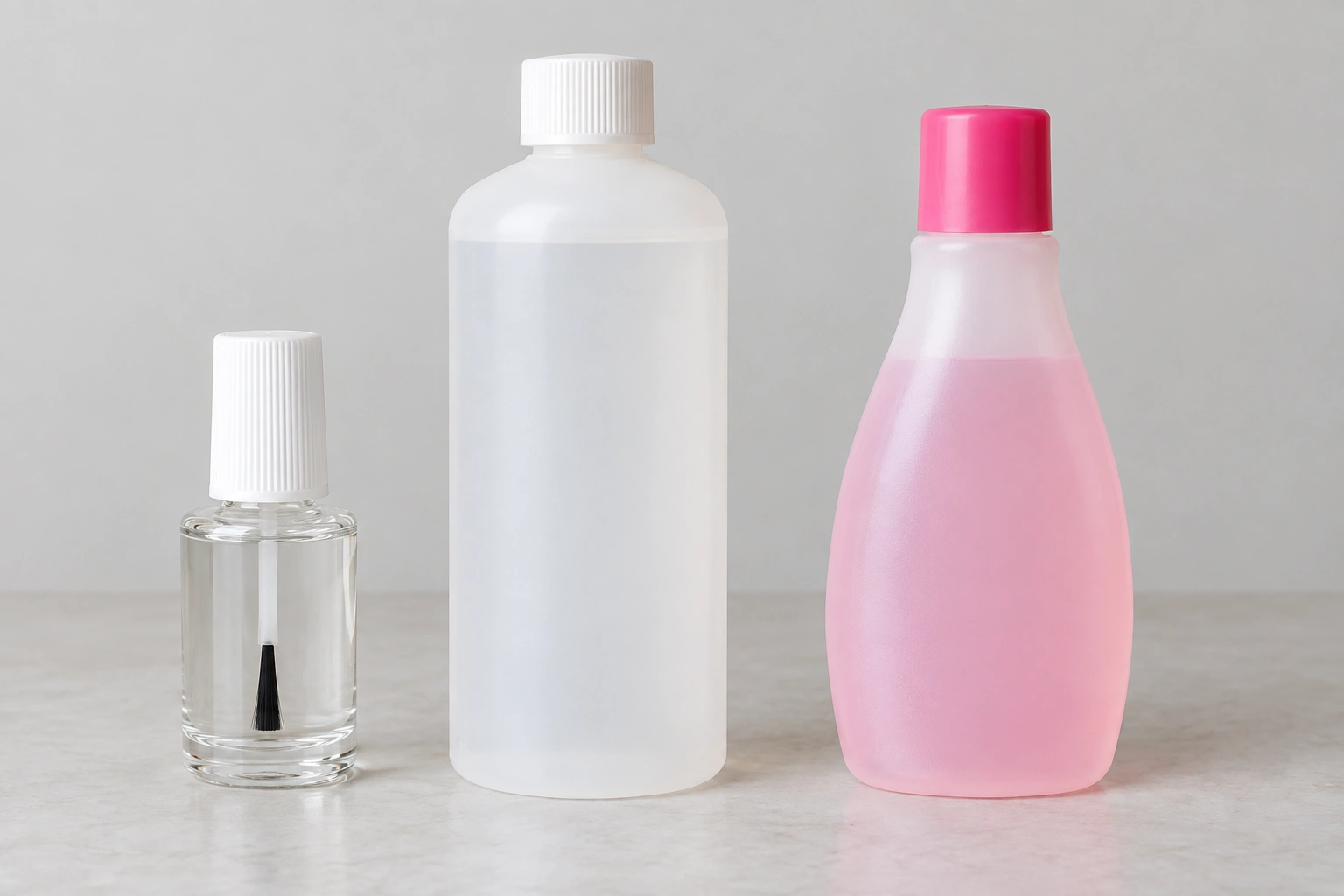
Step-by-step rescue method
-
Roll the bottle between your palms
Do not shake hard. Shaking traps bubbles, and bubbles can make the polish look worse on the nail. -
Open the bottle and check the texture
If it is just thick, you are probably dealing with solvent loss. If it is lumpy or gummy, proceed carefully. -
Add nail polish thinner in a measured starting amount
For a small bottle, start with 1–2 drops. For a standard bottle, start with a few drops, not a big pour. -
Close the bottle and roll again
Give the thinner time to distribute through the bottle. The goal is a smooth, even flow, not a watery formula. -
Test the polish before adding more
Swatch it on a nail wheel, swatch stick, or one nail. If it still drags or applies unevenly, add 1–2 more drops, roll again, and retest. If it starts looking sheer, weak, or streaky, you may have gone too far.
How much thinner to add
There is no universal number because bottle sizes and formulas vary. The safest rule is incremental adjustment: start small, mix, test, then repeat only if needed. That approach protects you from over-thinning, which can leave polish too runny and reduce coverage.
What too much thinner looks like
If you over-thin the polish, it may look watery, go on sheer, or fail to build opacity in normal coats. If that happens, stop adding thinner and use the bottle as-is only if it still performs acceptably.
For drying and application behavior, this also links to application thickness. If you want to understand how coat thickness affects dry time, see why thin coats matter for drying and whether cold air helps polish set.
Nail Polish Thinner vs Acetone vs Nail Polish Remover
This is where a lot of people accidentally ruin a bottle.
Nail polish thinner
This is the right product for the job. It is made to restore flow without completely changing the formula. It is the safest choice when your goal is to keep the polish usable.
Acetone
Acetone is strong and fast, but that does not make it a good substitute. It can alter the formula and may change how the polish applies. If your goal is to rescue a bottle, acetone is the risky option.
Nail polish remover
Remover is also not the same as thinner. It often contains acetone or other ingredients formulated to remove polish from the nail, not restore the bottle’s original solvent balance. That can leave you with a formula that behaves unpredictably.
The practical takeaway is simple: if you care about preserving the bottle, use thinner. If you use acetone or remover, you may weaken the polish or make the texture inconsistent.
What to Do if the Polish Is Stringy, Gummy, or Clumpy
These are not all the same problem, even though they can look similar.
Stringy polish
Usually means the formula has thickened enough that it no longer breaks cleanly from the brush. Try a small amount of thinner first. If it still stretches into threads after mixing, the bottle may be too far gone.
Gummy polish
This often feels sticky and resistant rather than fluid. It may need thinner, but it can also be a sign that the formula has aged badly. If it does not smooth out after careful thinning, stop there.
Clumpy polish
Clumps are more serious than simple thickening. If the clumps do not dissolve with rolling and a little thinner, the polish may be breaking down. That is usually the point where replacement makes more sense than rescue.
A useful comparison: thick but smooth is often salvageable; thick plus clumpy is much less promising.
When to Stop Trying and Replace the Bottle
Replace the polish if one or more of these are true:
- The texture stays lumpy after thinning
- The formula separates again almost immediately
- The brush pulls up chunks
- The polish dries unevenly even after rescue attempts
- The bottle has hardened around the neck or cap enough to affect the seal
- The polish simply no longer levels into a clean coat
There is no prize for forcing a bad bottle to work. If the texture keeps fighting you, the manicure usually costs more time than a replacement would.
How to Prevent Nail Polish from Thickening Again
A few small habits make a real difference.
Keep the cap clean and tight
Wipe the neck of the bottle before closing it. Dried polish on the threads can weaken the seal and make the cap harder to close properly.
Store polish in a cool, stable place
A drawer or cabinet is better than a hot bathroom or sunny shelf. The goal is consistency, not just “not too hot.”
Avoid leaving bottles open during a manicure
Open the bottle only when you need it, and close it as soon as you can.
Roll, don’t whip
If the polish needs mixing, roll the bottle gently. Hard shaking can introduce bubbles and make application messier.
Check old bottles before you rely on them
A bottle that sat untouched for a long time may need a quick inspection before your manicure starts. Catching thickening early is easier than rescuing a half-dried formula later.
For more on product handling and how different polish types behave, you may also find regular polish drying behavior helpful if you are comparing formulas.
Common Mistakes That Make Nail Polish Thicker
A few habits cause more trouble than people expect:
- Leaving the bottle uncapped during the whole manicure
- Storing polish in heat or direct sun
- Using remover or acetone as a shortcut
- Shaking aggressively instead of mixing gently
- Letting dried polish build up around the bottle neck
- Assuming every thick bottle is too old to save
The biggest mistake is usually the easiest one to fix: a poor seal. If the cap does not close cleanly, the bottle will keep losing solvent no matter how carefully you use it.
When to See a Nail Technician or Dermatologist
A nail technician can help if you are unsure whether a bottle is worth saving, especially if you want to rescue a favorite shade without over-thinning it.
A dermatologist is not needed for a thick polish bottle itself, but if you notice nail changes after repeated product use, irritation, or persistent nail problems, it is better to ask a medical professional than guess.
FAQ: Thick Nail Polish Troubleshooting
Is thick nail polish expired?
Not always. Some polish is simply solvent-heavy and has thickened from storage or repeated opening. If it is still smooth and can be thinned back to a usable texture, it may not be expired in the practical sense.
Can I use nail polish remover to thin polish?
It is not the best choice. Remover is made to take polish off, not restore it in the bottle. A proper nail polish thinner is the safer option.
How much thinner should I add?
Use a few drops at a time, then mix and test. Small increments are the safest way to avoid over-thinning.
Why is my polish thick and stringy?
That usually means the solvent balance has shifted enough that the polish no longer flows cleanly. It may still be rescueable, but stringiness is a warning sign to proceed carefully.
Can I fix clumpy polish?
Sometimes, but only if the clumps are minor and the polish still mixes back into a smooth texture. If the clumps persist after thinning, it is usually time to replace the bottle.
Why does my polish keep thickening after I fix it?
The bottle may not be sealing well, or the polish may be stored in a place that is too warm or unstable. A weak cap seal is one of the most common reasons thickening keeps coming back.
Is it okay to keep using old thick polish?
Only if it still applies smoothly after thinning and does not show signs of hardening, persistent clumps, or repeated separation. If it keeps misbehaving, the bottle is costing you more than it is worth.
What’s the fastest way to prevent thick polish?
Close the cap tightly, wipe the neck clean, and keep the bottle in a cool, dark place. Those three habits do most of the work.

