
Glossy nail polish is the finish that gives nails a smooth, reflective, “wet-look” shine. If you hold your hand under light and the color looks bright, polished, and a little mirror-like, that is the glossy effect most beginners are aiming for.

As a nail technician, I like to describe glossy polish as the classic manicure finish. It looks clean, fresh, and evenly coated. It can be subtle on some shades and very dramatic on darker colors, but the goal is the same: a surface that reflects light instead of absorbing it.
Glossy polish is not a special category of color so much as a finish. You can have glossy red, glossy nude, glossy black, or glossy pink. The polish color changes, but the shine is what makes it look glossy.
For a quick overview of polish types, it also helps to compare glossy polish with other common finishes. If you want a broader beginner-friendly explanation of polish types, see the difference between nail polish and nail lacquer.
What Glossy Nail Polish Means
When people ask, “What is glossy nail polish?” they usually mean polish that dries with a shiny, reflective surface. The finish is designed to look smooth and light-catching rather than flat or powdery.
That shine can come from the polish formula itself, but it often comes from the way the polish is applied and sealed. A base coat can help create a smoother starting point, and a top coat usually boosts the final shine.
Think of glossy polish like a freshly cleaned window. If the surface underneath is smooth, the light bounces more evenly. If the surface is rough, streaky, or bumpy, the shine looks weaker.
What a Glossy Finish Looks Like on the Nail
A glossy manicure usually has three visual traits:
- Reflection: you can see light bouncing off the nail
- Smoothness: the color looks even, not chalky or textured
- Depth: the shade often looks richer because of the shine
Gloss can look slightly different depending on the polish color and lighting. Under bright daylight, it may look very reflective. In softer indoor light, it may look more like a gentle sheen.
A glossy finish is often easiest to spot on darker shades, because the reflection stands out more clearly. On pale or sheer colors, the shine may look softer but still visible.
Glossy vs. Matte, Satin, Cream, and Shimmer Finishes
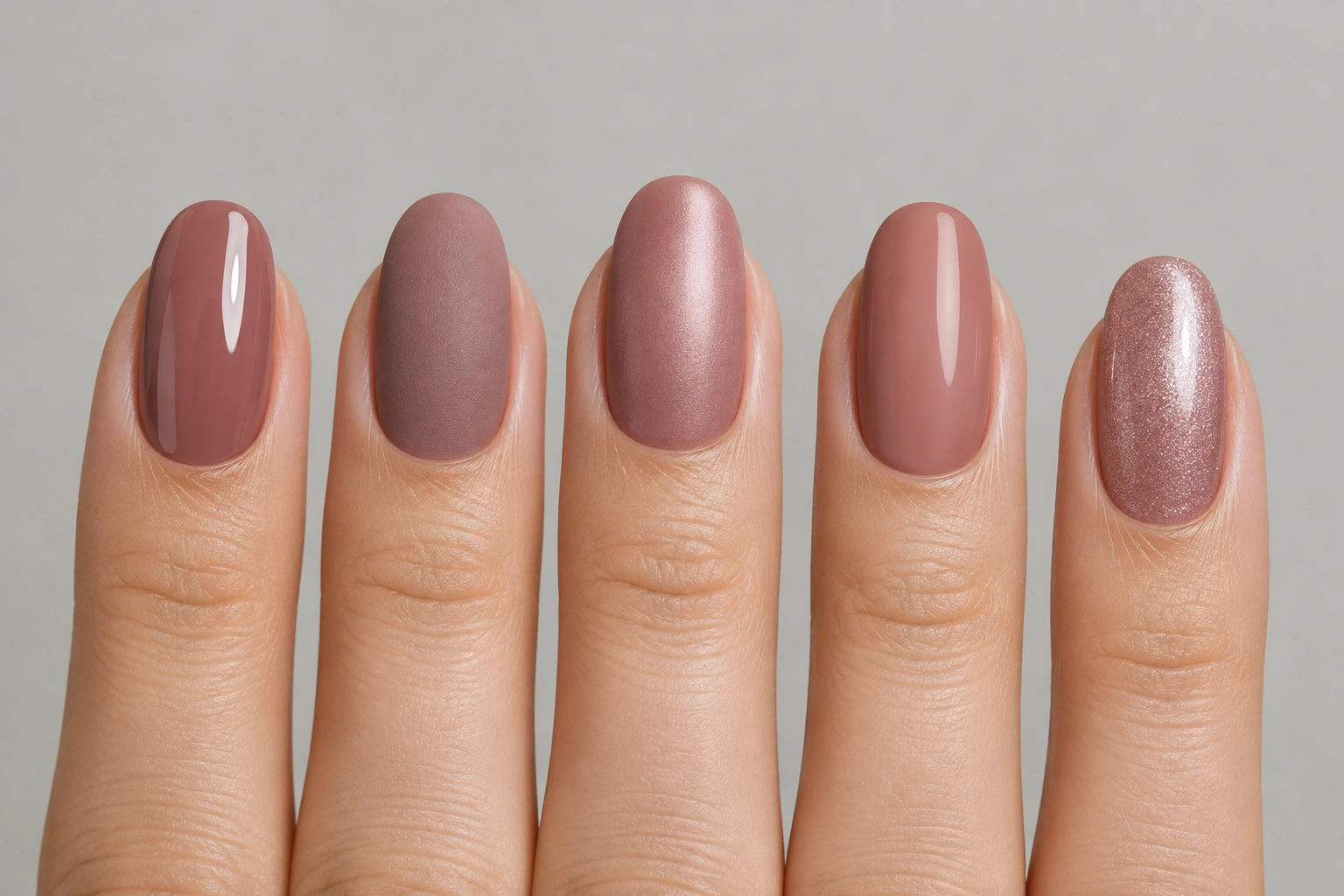
If you are choosing polish for the first time, finish matters just as much as color. Here is a simple comparison.
| Finish | What it looks like | Beginner takeaway |
|---|---|---|
| Glossy | Shiny, reflective, wet-looking | Best if you want a classic polished look |
| Matte | Flat, non-reflective, soft-looking | Good if you want a muted finish |
| Satin | Slight sheen, not fully shiny | A middle ground between matte and glossy |
| Cream | Smooth color with little or no sparkle | A simple everyday finish; may be glossy if topped |
| Shimmer | Contains fine reflective particles | Adds sparkle or glow, but not the same as a smooth glossy surface |
Glossy and shimmer are easy to confuse, but they are not the same. Glossy describes the surface shine. Shimmer describes tiny reflective particles in the polish. A shimmer polish can still be glossy, but it can also look more sparkly than mirror-like.
Matte is the opposite of glossy in the most obvious way. Matte polish absorbs more light, so it looks soft and flat. That can be a beautiful look, but it will not give you the wet shine many beginners expect.
Satin and cream finishes sit closer to the middle. Satin has a little glow without the strong reflection of glossy polish. Cream polish is usually smooth and solid in color, and it may become glossy if you add a clear top coat.
Glossy Finish vs. Cream Finish Without Top Coat
A plain cream polish without top coat usually looks smooth and solid, but not especially reflective. It gives color more than shine.
A glossy finish adds that extra light bounce. In practice, that usually means a cream polish looks more polished and glassy once you seal it with a clear glossy top coat. Without the top coat, the same cream formula may look softer, flatter, or a little more muted depending on the lighting.
What Makes Nail Polish Look Glossy
Glossy polish often looks best when the surface is smooth from the start. That means the nail plate is clean, the coats are thin, and each layer has time to settle.
A few things help create that effect:
- A smooth nail surface: ridges and dust can make shine look uneven
- Thin coats: thick polish is more likely to look lumpy or dull
- Drying time: if layers are still soft, the surface can get dents or streaks
- Top coat: a clear top coat often adds extra shine and helps seal the color
A few application mistakes can reduce gloss quickly. Overworking the brush can leave streaks, and brushing back and forth too much can disturb the layer underneath. Applying polish too thickly can also make the surface look uneven instead of reflective.
Formula also matters in real-world use, and lighting can change how shiny the same polish appears. A polish that looks very glossy in bright light may look softer indoors. But as a beginner, you will usually get the biggest improvement from application technique, not from chasing a special bottle.
If your polish seems to take forever to set, it may help to understand why some formulas dry slowly. This guide on why nail polish dries slowly can help you spot the usual causes.
How to Apply Glossy Nail Polish for a Smooth, Shiny Result
A glossy finish is easier to achieve when you work in thin, careful layers.
1) Clean and prep the nails
Remove old polish completely and wash off any oil or lotion. If the nail surface is greasy, polish may slide around and dry unevenly.
2) Use a base coat
A base coat helps the color go on more evenly. It also gives the polish a smoother surface to cling to, which can improve the final shine.
3) Apply thin color coats
Use one thin coat first, then a second thin coat if needed. Keep brush pressure light so you are guiding the polish instead of pressing it into the nail. Thick coats are one of the fastest ways to lose gloss because they dry unevenly and can look ridged.
4) Wait a few minutes between coats
Give each coat a few minutes to settle before adding the next one. If you rush, the brush can drag through the layer underneath and leave streaks. A good beginner rule is to wait until the surface looks mostly set, not wet and slippery, before applying the next coat.
5) Use light, even strokes
Start near the cuticle and pull the brush toward the tip in smooth strokes. Try not to go back over the same area repeatedly, especially once the polish starts to dry. That helps avoid dragging the previous layer.
6) Finish with a top coat
A clear top coat usually gives the manicure its most noticeable shine. It also helps smooth the look of the color underneath.
7) Seal the free edge
Lightly brush the top coat across the tip of the nail. This can help reduce early wear at the edge, where shine often disappears first.
If you want a practical guide to fixing tacky polish while you work, this article on how to make sticky nail polish dry is a useful follow-up.
What a Glossy Top Coat Does
A glossy top coat adds a clear shiny layer over the color polish. It can help the manicure look smoother, protect the surface from minor wear, and make the color underneath appear more finished.
If you leave a cream polish without top coat, the result is usually softer and less reflective. That can still look neat, but it will not have the same glassy shine. For the glossiest result, a regular glossy top coat is a simple choice, while a quick-dry glossy top coat can be more convenient if you want the manicure to set faster.
Why Glossy Polish Sometimes Looks Dull or Streaky
When glossy polish looks flat instead of shiny, the problem is usually one of a few common mistakes.
Thick coats
A heavy coat can dry unevenly and leave a cloudy or dull surface. Thin coats usually look smoother and more reflective.
Bubbles
Bubbles can form if polish is shaken too hard, applied too thickly, or brushed over too many times. Once bubbles appear, they interrupt the smooth surface that creates shine.
Not enough drying time
If the polish is still soft, the surface can pick up dents, fingerprints, or brush marks. Even if the color looks glossy at first, the finish may turn dull once it is disturbed.
Old or thickened polish
Older polish can drag, streak, or apply unevenly. If the formula has become very thick, the finish may not level out well.
Surface damage during application
Touching the nail too soon, bumping it, or going back over semi-dry polish can all spoil the reflective look.
If your polish is already refusing to set properly, you may find this guide on how to fix nail polish that won’t dry helpful.
How to Keep Glossy Nail Polish Looking Fresh Longer
Glossy polish tends to show wear more clearly than a matte finish, so a little maintenance helps.
Protect the surface
Try not to use your nails as tools. Scraping labels, opening cans, or picking at packaging can dull the top layer fast.
Reapply top coat if needed
If your manicure is still in good shape but the shine has faded, a fresh clear top coat can revive the look. As a simple rule, refresh the top coat when the color still looks intact but the finish has lost its gloss.
Know when to redo the manicure
If the polish is chipped, peeling, or scratched through in several places, a top coat usually will not fix it. In that case, removal and reapplication usually look better than touch-ups.
Avoid rough friction
Friction from cleaning, typing, or repeated contact with fabrics can slowly wear down shine. Gloves can help during chores.
Keep nails and cuticles moisturized
Dry surrounding skin can make a manicure look older than it is. A small amount of cuticle oil or hand cream helps the whole nail area look neater.
For polish that seems to set but still feels sticky, this related guide on why nail polish stays tacky after drying explains a common beginner issue.
How to Remove Glossy Nail Polish Safely
Glossy polish is removed the same basic way as most regular nail polish: with remover and gentle pressure.
Acetone remover
Acetone usually removes polish faster. That can be helpful if you are wearing multiple coats or a darker color. The trade-off is that it may feel more drying on nails and cuticles.
Non-acetone remover
Non-acetone remover is often the gentler choice if your nails already feel dry or sensitive. It may take a little longer, but many beginners prefer it for routine removal.
Gentle removal steps
- Soak a cotton pad with remover
- Press it onto the nail for a few seconds
- Wipe in one direction if possible
- Repeat instead of scrubbing hard
- Wash hands and apply moisturizer afterward
The main thing to avoid is aggressive rubbing. Scrubbing does not just remove polish faster; it can also roughen the nail surface and leave it looking dull.
For more on removal and dry nails, the guide on how to dry nail polish that won’t dry may also be useful if you are trying to manage your manicure timing better.
How to Decide Whether Glossy Nail Polish Is Right for You
Choose glossy polish if you want a classic, polished look with visible shine. It is a strong choice for beginners because it makes nails look neat and finished without needing nail art or special effects.
Glossy polish is a good fit if you do not mind a little upkeep. The shine can fade faster than with matte or satin finishes, especially if your hands get a lot of wear during the day.
Choose a glossy top coat if you already like your color but want more reflection. That is often the simplest way to upgrade a basic manicure.
Choose matte or satin instead if you want a softer look that hides some surface imperfections. Those finishes are less reflective, but they can be easier to live with if you prefer low-shine nails.
If you are unsure, a cream polish with a clear glossy top coat is the safest beginner choice. It gives you the classic shiny look without forcing you to commit to a highly reflective formula right away.
When to See a Nail Technician or Dermatologist
If your polish never looks smooth no matter how carefully you apply it, a nail technician can help you check whether the issue is technique, product, or nail surface texture.
See a dermatologist if you notice nail changes that are not just about polish appearance, such as sudden splitting, lifting, discoloration that remains after removal, or ongoing irritation around the nails. Polish should not be used to cover up a problem that needs attention.
FAQs About Glossy Nail Polish
Is glossy nail polish the same as shiny nail polish?
Yes, in everyday use, people usually mean the same thing. Glossy polish is the shiny, reflective finish most people picture when they think of a classic manicure.
Does every nail polish become glossy with top coat?
Not always, but a top coat usually makes polish shinier. The final result still depends on the color formula, how smooth the coats are, and whether the polish dried evenly.
Why does my glossy polish look dull after a day?
Daily friction, smudges, or a top coat that has worn down can all reduce shine. Thick application or poor drying can also leave the finish less reflective from the start.
Can I make cream polish look glossy?
Yes. A clear glossy top coat is the easiest way to turn a cream finish into a shinier manicure.
Is acetone bad for glossy nail polish removal?
Acetone is not “bad,” but it can be more drying. If your nails or cuticles feel dry, non-acetone remover may be the gentler choice.
Why does glossy polish show scratches so easily?
Because shine reflects light, even small marks can stand out. That is one of the trade-offs of glossy finishes: they look polished, but wear can be more visible.
How can I keep the shine without redoing my nails?
Protect the manicure from friction, moisturize the nail area, and add a fresh clear top coat if the surface is still intact.
Glossy nail polish is a simple, beginner-friendly finish that gives nails a clean reflective look. Once you know how to prep, apply, and protect it, the result is much easier to control than many new polish wearers expect.