
Brittle nails need flexibility and moisture, not more hardness. Oil nails and cuticles at least twice a day, use hand cream after every wash, wear gloves for wet work, keep nails short with a rounded shape, file with a fine glass file, and avoid strong formaldehyde-based hardeners and frequent acetone. Improvement shows in new growth over 3 to 6 months.
Brittle nails snap, crack and split at the tips or peel into thin layers. Doctors call these problems onychoschizia (peeling layers) and onychorrhexis (lengthwise splits and ridges). They are very common, especially with age and frequent handwashing. This guide covers brittle nails specifically. For other nail types, see our complete guide to strengthening nails.
- Brittle is dry, not soft: it needs moisture and flexibility.
- Skip strong hardeners, which can make brittle nails crack more.
- Short, rounded shape reduces snapping at corners.
- Seal and protect: oil daily, gloves always, and a flexible base coat.
Why Nails Become Brittle

- Repeated wetting and drying, which loosens the layers of the nail plate.
- Dehydrating products: acetone, sanitizer, detergents, and some nail dehydrators. See can a nail dehydrator make nails brittle?.
- Too much hardener, especially formaldehyde-based formulas used for months.
- Age: nails tend to get drier and more brittle over time.
- Health factors such as iron deficiency, thyroid disease, psoriasis or fungal infection.
Brittle vs Weak Nails: Why the Difference Matters
| Brittle nails | Weak (soft) nails | |
|---|---|---|
| Feels | Hard, dry, rigid | Soft, thin, bendy |
| Breaks by | Snapping, cracking, splitting | Bending and tearing |
| Needs | Moisture and flexibility | Protection and some rigidity |
| Hardener? | Usually avoid | Short courses can help |
If your nails bend more than they snap, follow our weak nails guide instead.
A Brittle Nail Care Plan
1. Moisturize more than you think you need
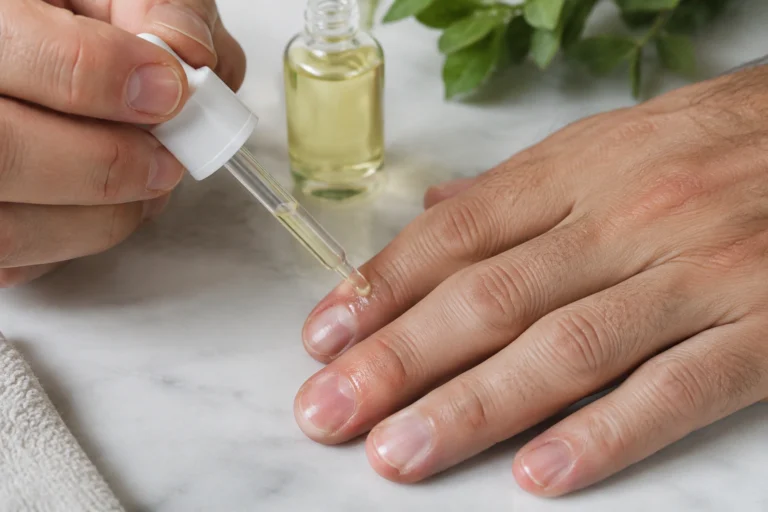
Apply nail or cuticle oil twice a day and before bed, and hand cream after every wash. Rich creams with ingredients like urea, lactic acid or petrolatum help hold water in the nail. Read are nail oils good for brittle nails? and the best nail oils for dry, brittle nails.
2. Protect from water and chemicals
Gloves for dishes, cleaning and hair dye. Dry hands well and re-apply cream after using sanitizer.
3. Keep a short, rounded shape
Round or soft square shapes have no sharp corners to snag. Short length reduces leverage on cracks.
4. File gently, one direction, glass file
Fine glass files seal the edge rather than fraying it. Never saw back and forth on brittle nails.
5. Use a flexible protective coat
A nourishing or flexible base coat shields the nail without making it rigid. Avoid strong hardeners, or use them only briefly if a dermatologist suggests it.
6. Reduce acetone
Change polish less often and use acetone-free remover for regular polish.
Salon Options for Brittle Nails
A thin soft gel overlay can protect brittle nails that keep splitting while they grow, especially for people with busy hands. Gel overlays are usually more flexible than dip powder or acrylic, which are very hard and can transfer stress to a brittle nail. Whatever you choose, ask for minimal filing and soak-off removal, and take breaks between sets. Brittle nails should avoid enhancements altogether if they are painful, lifting or infected.
Can Diet Help Brittle Nails?
A balanced diet with enough protein, iron and zinc supports healthy nail growth. Biotin has shown some benefit for brittle nails in small studies, but evidence is limited and high doses can affect lab test results, so ask your doctor before taking it. Read more in natural nail strengthening.
Daily and Weekly Routine for Brittle Nails
Oil morning and night, cream after washing, gloves for wet chores.
Gently shape with a glass file, refresh a flexible base coat, check for small splits and seal them.
Take photos to track the healthier nail growing from the cuticle.
A full plan is in our nail strengthening routine. Brittle toenails have some extra causes; see why toenails get brittle.
See a dermatologist if brittle nails come with discoloration, thickening, pitting, lifting from the nail bed, pain, or if several nails change suddenly. These can signal fungal infection, psoriasis, thyroid or iron problems.
Frequently Asked Questions
Moisture and protection: oil twice daily, rich hand cream after washing, gloves for wet work, short rounded nails and a flexible base coat. Strong hardeners usually make brittle nails worse.
Usually not. Hardeners make nails more rigid, and brittle nails are already too rigid and dry. A flexible or nourishing base coat is a better choice.
Short round, oval or soft square shapes. They have no sharp corners, so they snag and split less.
A thin soft gel overlay is usually more flexible and easier to soak off. Dip powder is harder and often needs more filing to remove.
Expect fewer splits within a few weeks of consistent care, and a fully new nail in about 4 to 6 months.
If they are discolored, thick, pitted, painful, lifting, or not improving after months of good care, see a dermatologist.