
How Long Does a Base Coat Take to Dry Before Nail Polish?

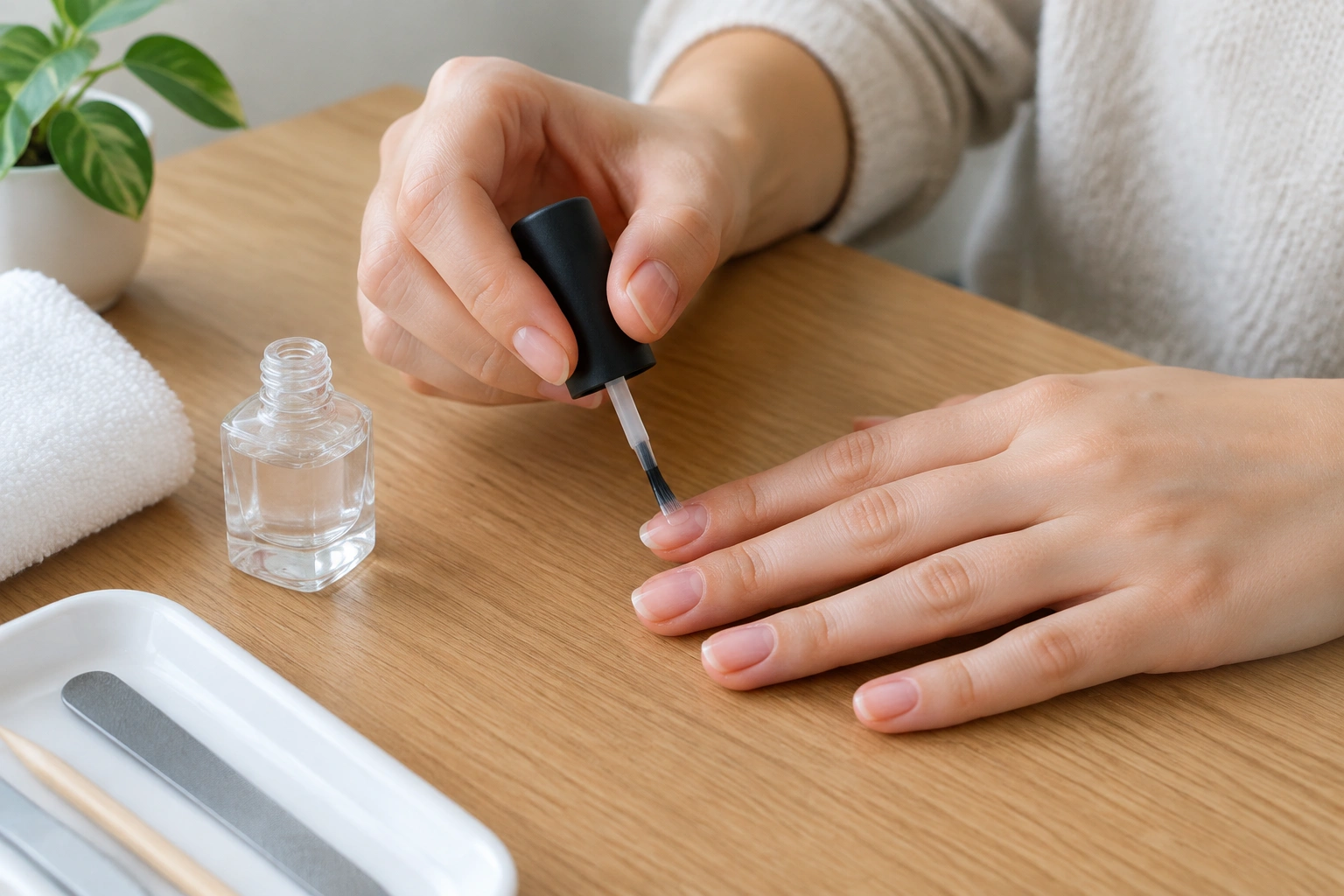
If you are learning nail polish basics, base coat timing can feel oddly confusing. The short answer is that a base coat usually dries in a range, not one exact minute count. A thin coat may feel dry to the touch fairly quickly, but that does not always mean it is ready for color polish.
The safest beginner rule is simple: wait until the base coat feels dry to the touch and looks even, then apply your color in thin layers. If the coat is thick, the room is humid, or the formula is slow-drying, give it more time.
For a broader look at polish timing, you can also read how long regular nail polish takes to dry and how long top coat takes to dry.
How Long a Base Coat Usually Takes to Dry
A regular base coat often feels dry enough for the next step within a few minutes if it is applied thinly. A practical beginner-friendly estimate is about 2 to 5 minutes for a thin base coat, but product instructions should always override that general range.
Drying time changes with the formula, the brand, how much product you used, and even the room you are working in. Some base coats are also designed to stay a little tacky by design, which is different from still being wet.
Here is the beginner-friendly way to think about it:
- Thin coat + normal room conditions: usually faster
- Thick coat + humid room: usually slower
- Quick-dry base coat: usually faster than a standard formula
- Sticky or ridge-filling base coat: may need extra time because it is often thicker
If you want a quick comparison, Essie’s product guidance and other brand instructions are worth checking before you paint, because the bottle directions always matter more than a general rule.
Dry to the Touch vs. Ready for Polish
This is where many beginners get tripped up. A base coat can feel dry on the surface but still not be fully ready for the next layer.
Dry to the touch
This means the surface no longer feels wet or slippery when you lightly test it. That is a good sign, but it does not guarantee the layer underneath has settled completely.
Tacky
Tacky means slightly sticky. With some base coats, that is normal and even useful. The key is that it should feel intentionally tacky, not wet, soft, or easy to drag around.
Fully ready for polish
Fully ready means the base coat has set enough that your color layer can go on without pulling, streaking, or creating bald spots. For beginners, this is usually the point where the coat looks smooth, feels mostly dry, and does not shift when touched very lightly.
A base coat does not need to feel rock-hard before you continue. It just needs to be stable enough that the next layer will sit on top cleanly.
What Changes Base Coat Drying Time
Several simple things affect how long a base coat takes to dry.
Coat thickness
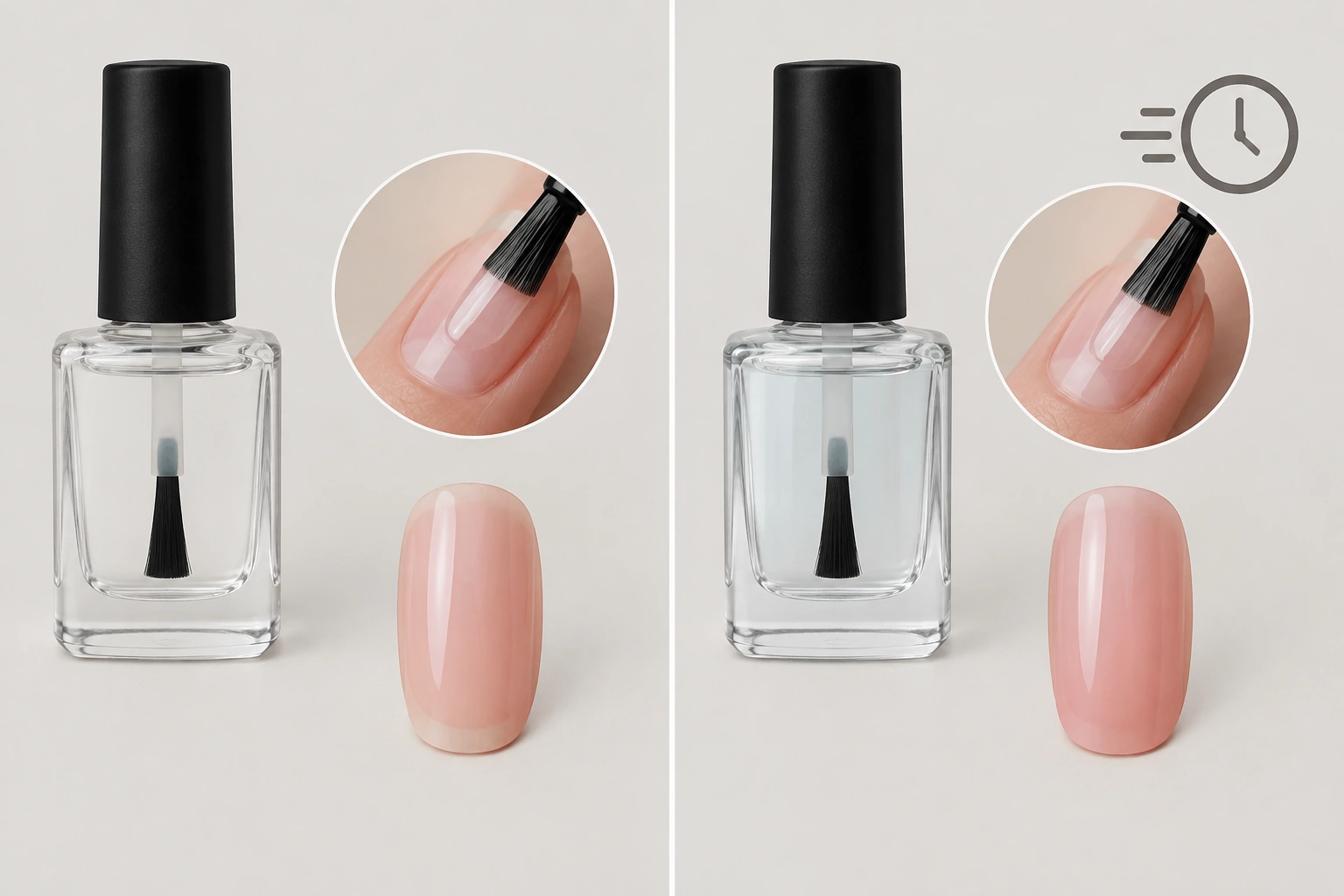
Thicker coats dry more slowly than thin ones. This is the biggest reason people think their base coat is “taking forever.” If the layer looks cloudy, pooled, or heavy around the edges, it probably needs more time.
Formula type
Some formulas are made to dry faster. A quick-dry base coat is usually designed to speed up the wait, while a ridge-filling or more cushioning base coat may take longer because it goes on thicker.
Humidity
Moist air slows drying. If you paint in a bathroom after a hot shower, your base coat may stay sticky longer than you expect.
Airflow
A fan placed at a distance may help the manicure feel more comfortable while you wait, but avoid blowing directly on the nails close up. That can add moisture and make the surface uneven.
Nail prep and leftover product
If there is oil, lotion, or old polish residue on the nail, the base coat may not spread evenly. Uneven application often leads to thicker patches, and thicker patches dry more slowly.
How to Tell When Your Base Coat Is Dry Enough
You do not need special tools to check. Use simple, gentle cues.
Look at the finish
A ready base coat usually looks more even and less glossy-wet than it did right after application. It may still have a slight sheen, but it should not look puddled.
Do a light touch test
Touch one nail very lightly with the tip of another finger. Do not press, rub, or drag the nail surface. If it feels wet or leaves a visible mark, wait longer. If it feels dry and does not shift, you are probably ready for color.
Watch for drag
When you apply the color coat, the brush should glide smoothly. If the base coat starts to move, streak, or clump under the brush, it needed more time.
Check the edges
The free edge and sidewalls often dry more slowly if the coat was applied too heavily there. If those areas still look soft, give the manicure a little longer before moving on.
A useful rule: if you are unsure, wait a bit more rather than rushing the next layer. That small pause usually saves you from smudges later.
How to Make Base Coat Dry Faster
You do not need complicated tricks. Small adjustments make the biggest difference.
Apply thinner coats
This is the easiest fix. Wipe excess product from the brush before painting, then use one smooth layer instead of trying to build coverage in one pass.
Keep the room comfortable
A dry, moderately cool room works better than a steamy one. If the air feels heavy, your polish may act slower.
Use a quick-dry base coat if timing matters
If you often do your nails in a hurry, a quick-dry formula can be worth trying. It is not magic, but it may shorten the wait enough to make the process easier.
Avoid overworking the brush
Going back and forth over the same nail can leave the layer uneven. One smooth pass usually dries more predictably.
For more timing context, how long nail polish takes to dry completely can help you understand why each layer needs its own drying window.
Regular Base Coat vs. Quick-Dry Base Coat
| Type | What to expect | Best for | Trade-off |
|---|---|---|---|
| Regular base coat | Usually more flexible in everyday use, but may need more waiting time | Beginners who do not mind a short pause | Slower drying in humid or thick applications |
| Quick-dry base coat | Designed to be ready sooner | Busy routines and impatient hands | May still need careful thin application to work well |
A quick-dry formula can save time, but it does not replace good technique. If the coat goes on too thick, even a fast formula can still feel slow.
A regular base coat is perfectly fine if you are willing to wait a little longer. The better choice is the one that fits your routine and helps you apply polish neatly.
Common Mistakes That Make Base Coat Stay Sticky
Most slow-drying problems come from technique, not from the product alone.
Applying too much product
A thick coat traps more solvent and takes longer to settle. It also makes the next polish layer more likely to bunch up.
Painting in a humid space
Bathroom steam, warm air, and damp conditions can all slow the process.
Moving on too soon
If you start color before the base coat is ready, the brush can pull the base layer around. That often leads to streaking or patchy coverage.
Ignoring product instructions
Some formulas are meant to stay slightly tacky. Others are meant to dry more fully before the next step. The bottle directions matter.
Trying to “fix” it while it is still wet
If you keep brushing over a soft base coat, you can create ridges and uneven spots that are harder to cover later.
If your base coat still feels sticky even when you applied it correctly, the formula itself may simply be slower-drying or designed to stay a bit tacky. In that case, a little extra wait time is often the simplest fix.
If you want a deeper look at the next step in the process, how long top coat takes to dry is a helpful follow-up after you finish your manicure.
When to Apply Color and Top Coat After Base Coat
Here is the simple beginner rule I recommend:
- Apply one thin base coat.
- Wait until it no longer looks wet.
- Do a very light touch test without pressing or dragging the nail surface.
- If the base coat does not move, apply your color polish in thin layers.
- Finish with top coat after the color layer is ready.
Do not treat “slightly tacky” as a universal green light unless your specific base coat instructions say that is normal. If the layer is still wet enough to move under your finger, it is too soon.
A simple decision test: if it no longer looks wet and a very light touch does not move it, apply color. If it smears or shifts, wait longer.
FAQs
How long does a base coat take to dry before polish?
There is no single exact minute that fits every base coat. A thin layer may be ready within a few minutes, but thicker formulas or humid rooms can take longer. Follow the product instructions when they are available.
Can I put color polish on right after base coat?
Only if the base coat is dry enough not to move under the brush. If it still feels wet or leaves marks, wait a little longer.
Is tacky base coat dry enough?
Sometimes, yes. A slight tackiness can be normal with certain formulas. What you want to avoid is a wet or shifting surface.
Why is my base coat still sticky after several minutes?
The most common reasons are a thick layer, a humid room, or a formula that simply dries more slowly. Some base coats are also meant to stay a little tacky, so check the bottle directions.
Does quick-dry base coat really dry faster?
Usually, yes. It is made to reduce waiting time. Even so, thin application still matters.
What happens if I apply polish too soon?
The color coat can drag the base coat around, which may cause streaks, bubbles, or uneven coverage.
Final Takeaway
If you remember only one thing, make it this: a base coat should feel dry to the touch and stable before you add color. Thin coats, a comfortable room, and a little patience make the biggest difference. Once you get used to the feel of a ready base coat, the rest of the manicure becomes much easier.

